 We talk a lot about 1oo2 and 2oo3, but most trips in plants still run on simple 1oo1 logic.
 Plain language:
1oo1 = “one out of one” must act to trip.
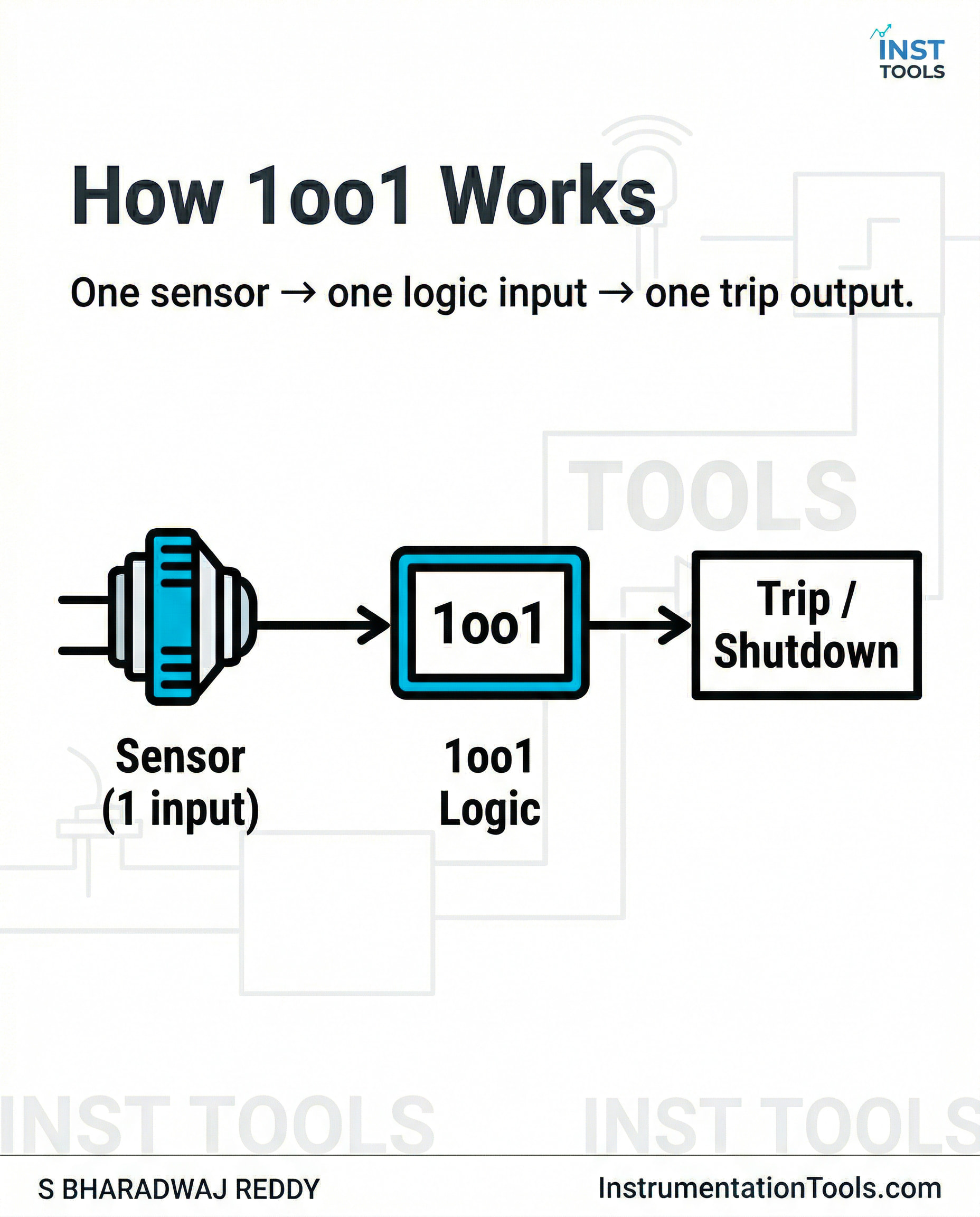
You have a single sensor/input. If it goes into trip condition, the logic trips. No second opinion.
1oo1 Voting Logic
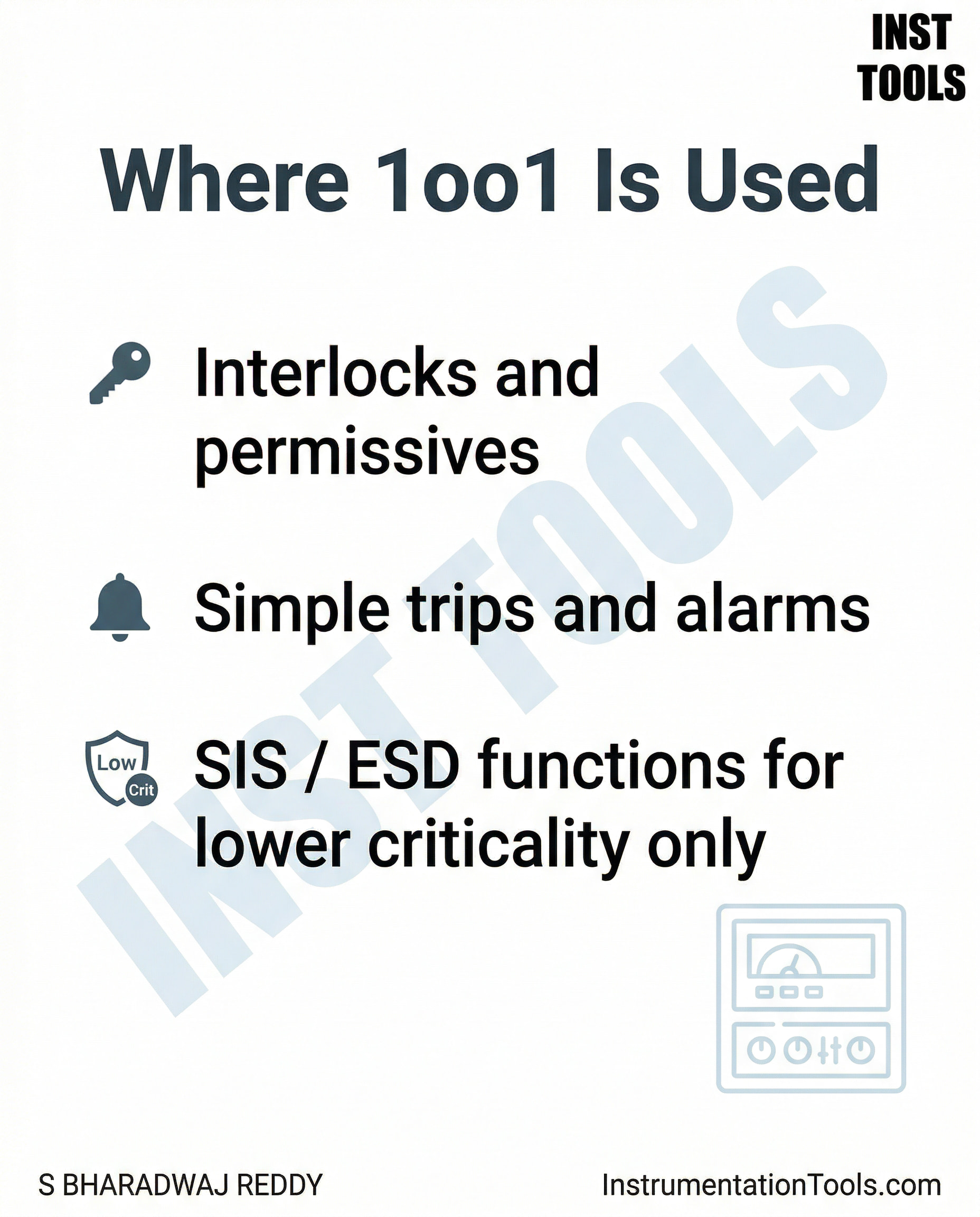
 Where you see 1oo1:
 Basic permissives and interlocks
 Simple trips on PLC/DCS
 Low-risk shutdowns
 Sometimes in SIS/ESD for non-critical or low SIL demands
 Behavior with a single sensor:
 Sensor healthy + process safe → no trip
 Sensor detects trip condition → shutdown
 Sensor fails dangerous → demand may be missed
Sensor fails safe → spurious trip
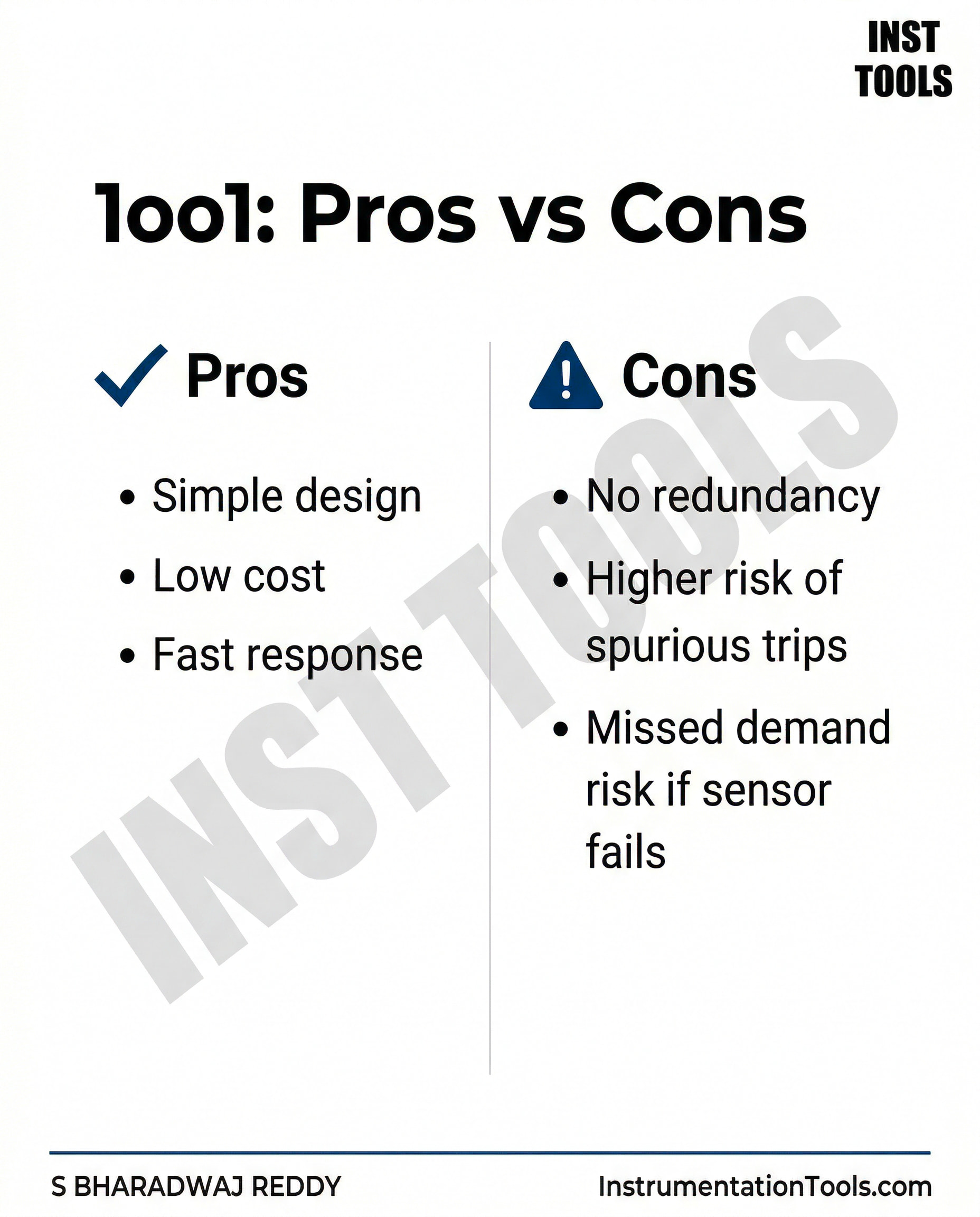
 Pros:
Pros:
 Simple logic, easy to design and understand
 Low cost (one sensor, one logic path)
Fast to implement and maintain
 Cons:
Cons:
 No fault tolerance (one bad sensor = risk)
More vulnerable to spurious trips
Limited use in higher SIL/SIS applications
 Tiny example:
 High-high level switch on a small tank. If the float hits HH, one switch changes state and the pump trips. That’s 1oo1.
 Same idea with a single gas detector tripping a local fan or small skid.
READ FULL ARTICLE HERE: Voting Concept in Safety and Control System
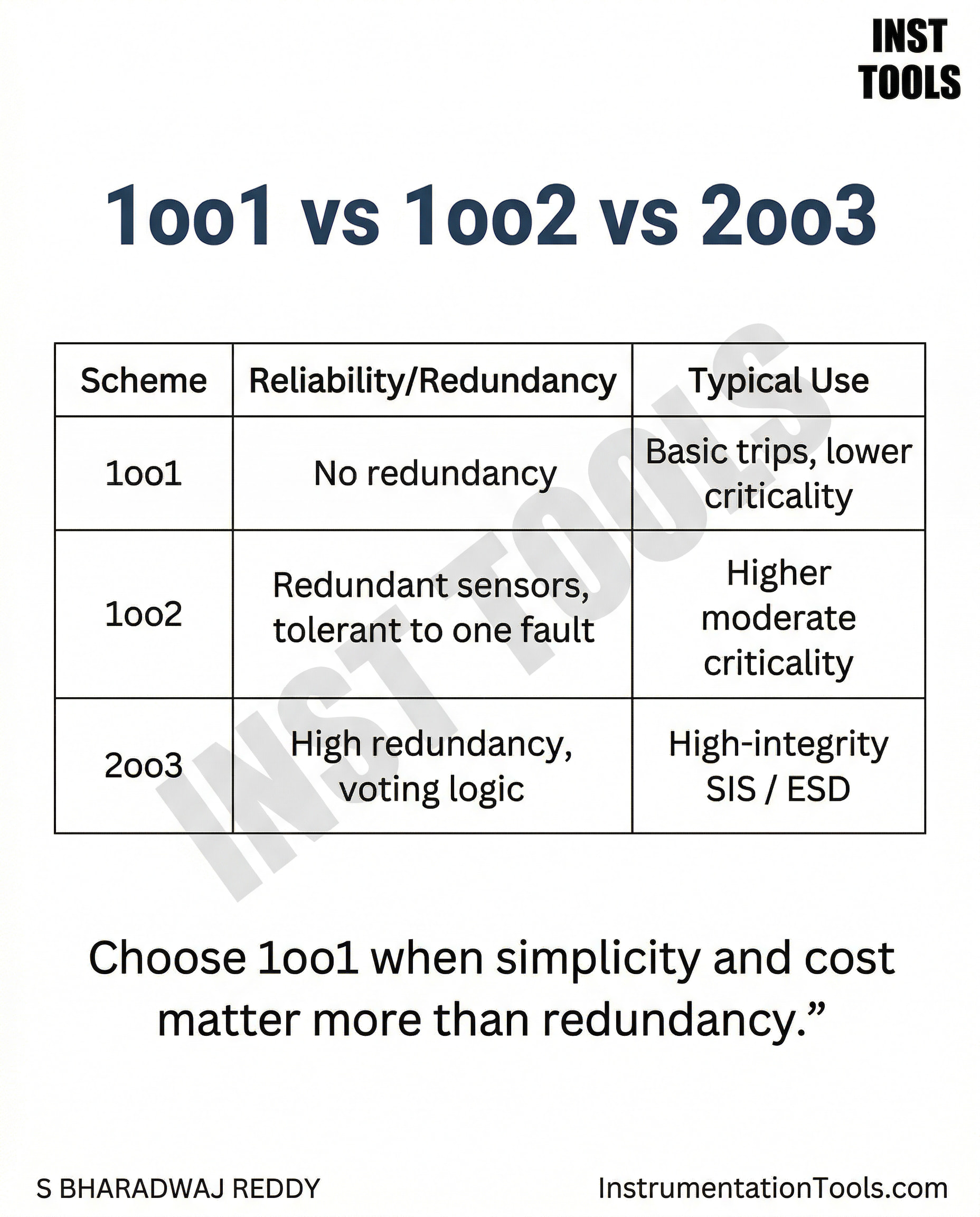
 Quick comparison:
1oo1: simple, no redundancy, lowest cost
1oo2: higher availability, but can trip on 1 bad sensor
2oo3: better fault tolerance, but more complex and expensive
 When to choose 1oo1?
Use it when the consequence is limited, access for testing is good, and simplicity is more valuable than high availability.
 Where do you still prefer 1oo1 in your plant, and why?
#instrumentation #SIS #interlocks #PLC #processsafety