 What is 2oo3 (Two out of Three) Voting Logic in Safety Systems?
In safety-critical industrial processes, false trips and missed trips can both be dangerous.
To improve reliability and safety, systems often use 2oo3 voting logic.
Let’s break it down simply. 
 What does 2oo3 mean?
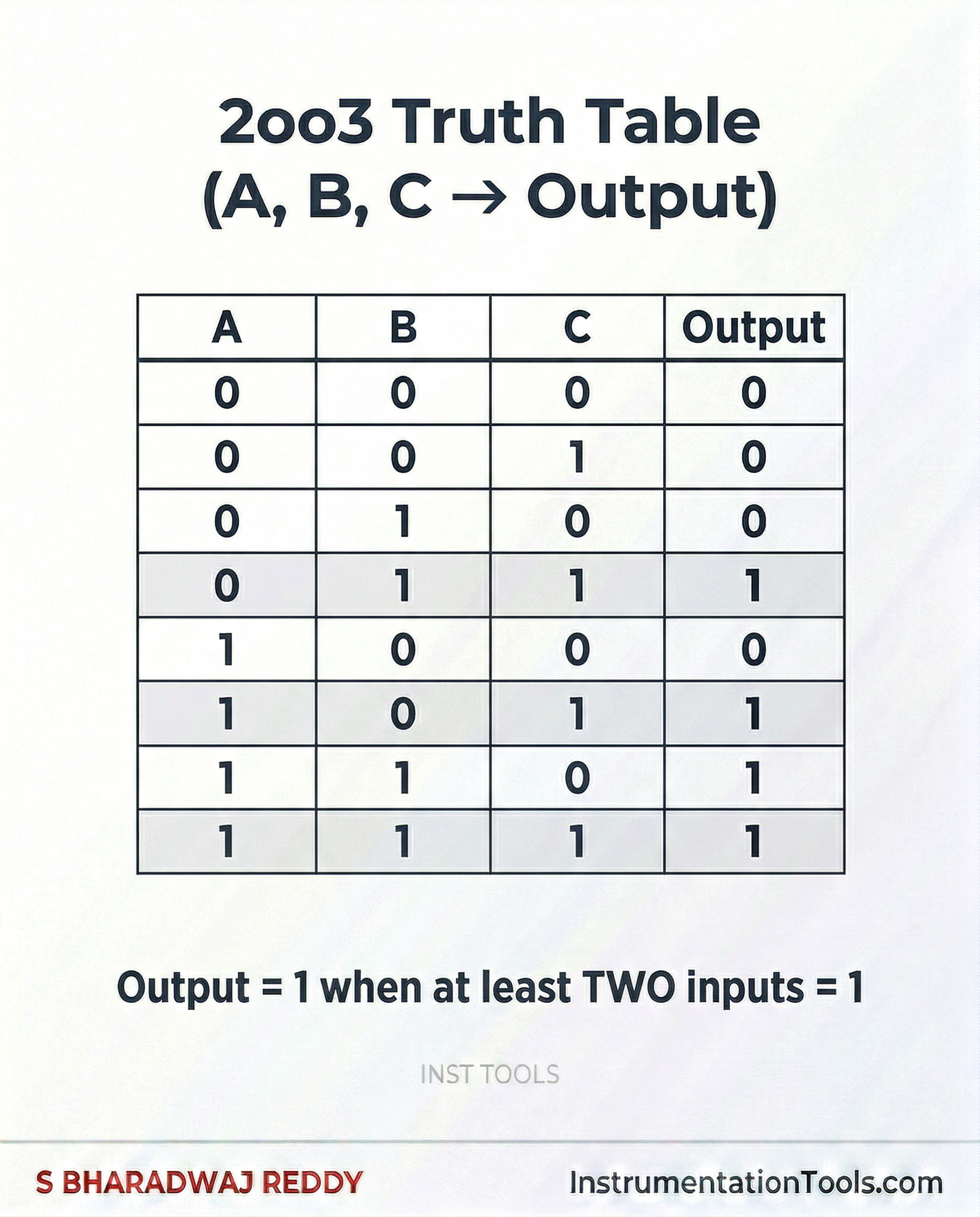
 2oo3 = Two out of Three
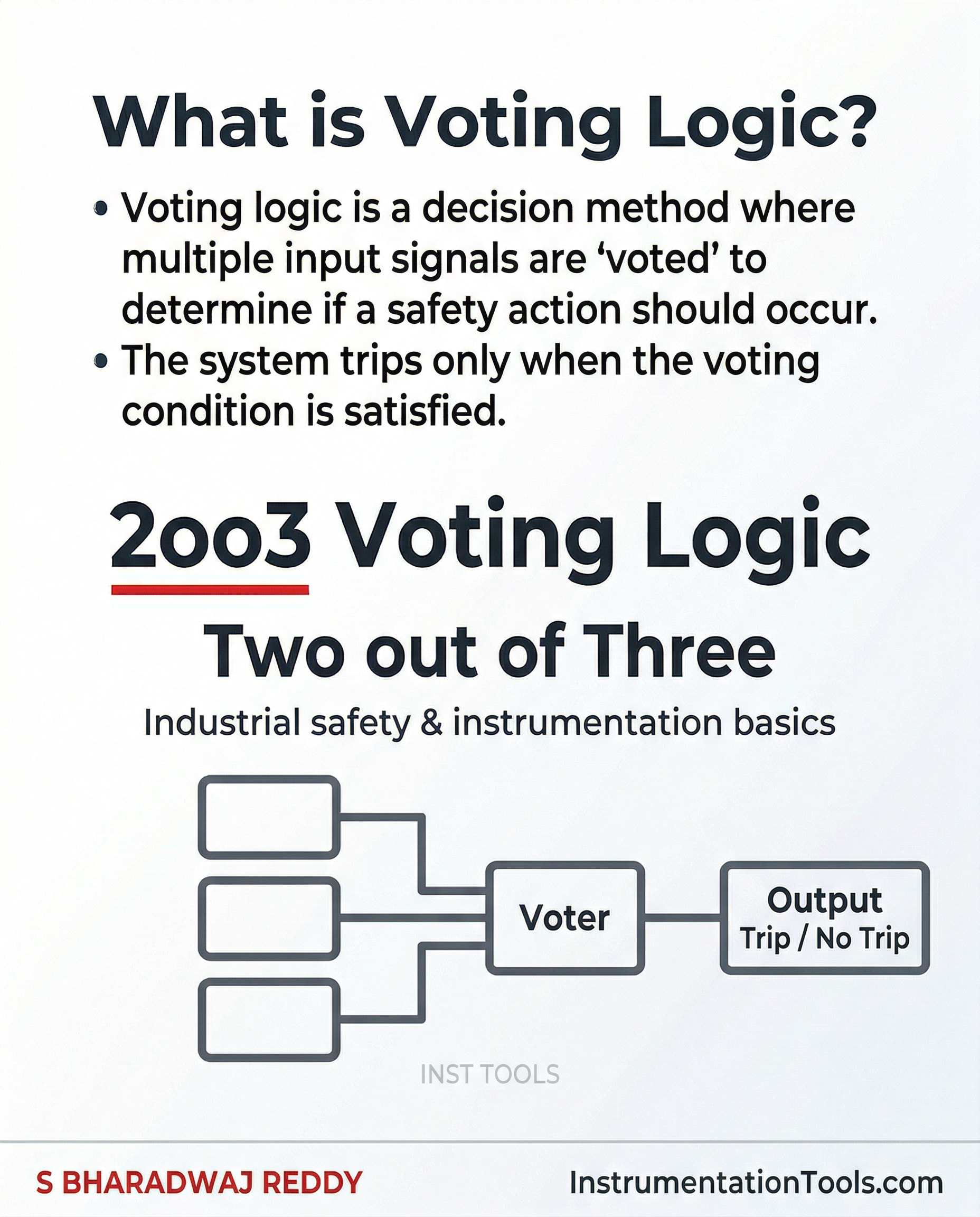
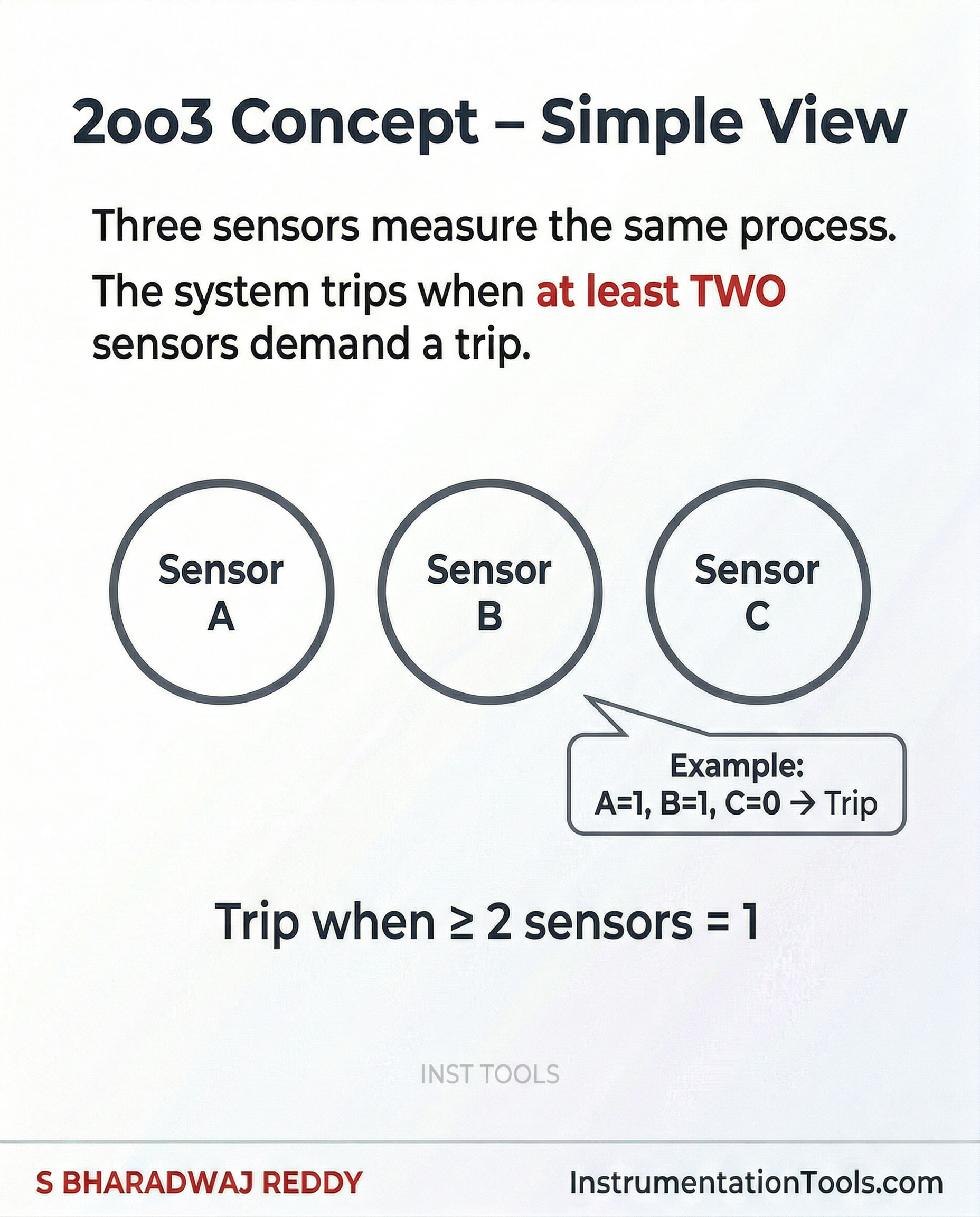
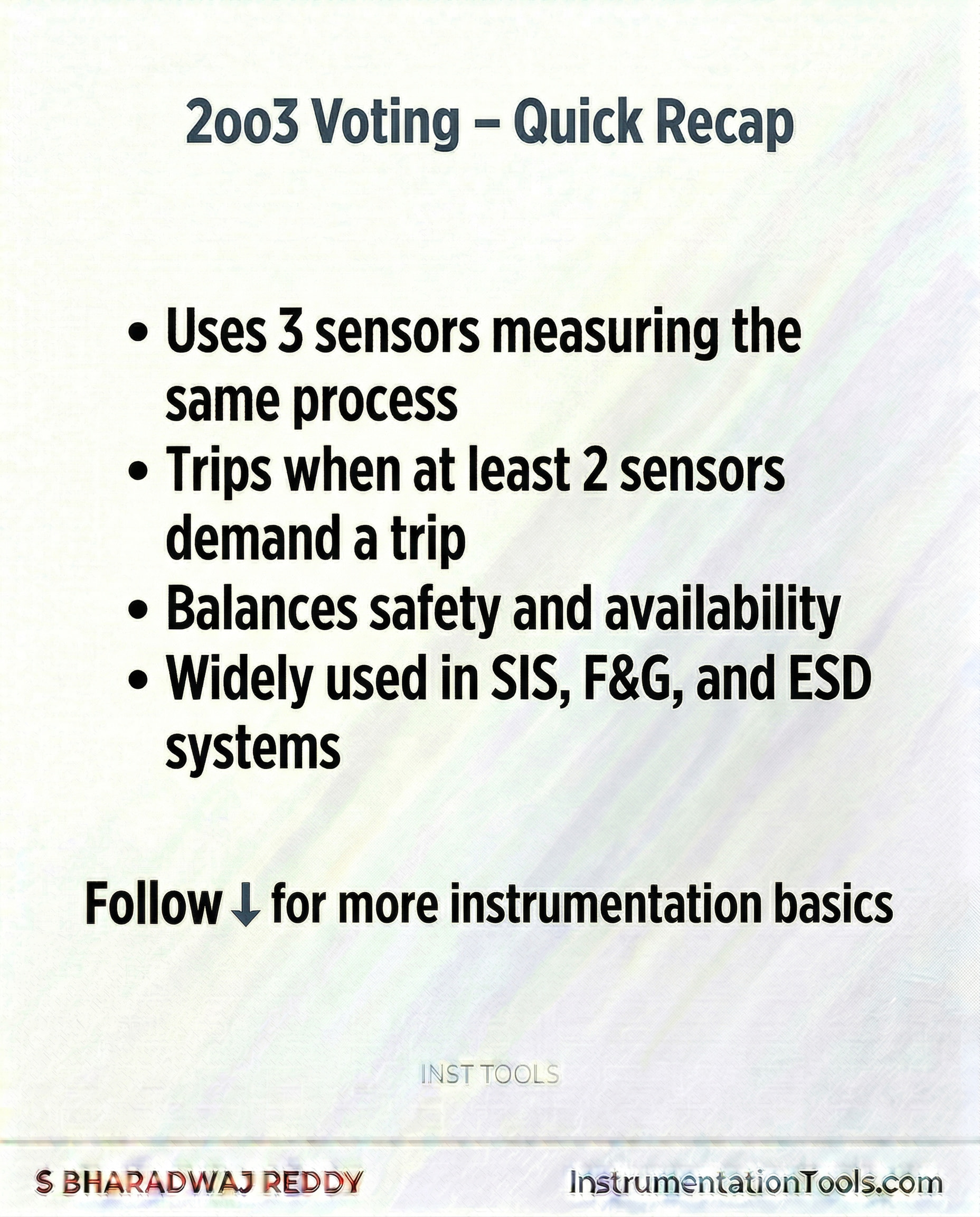
This means the safety system requires at least two signals out of three sensors to agree before taking an action.
2oo3 Logic
 How it works
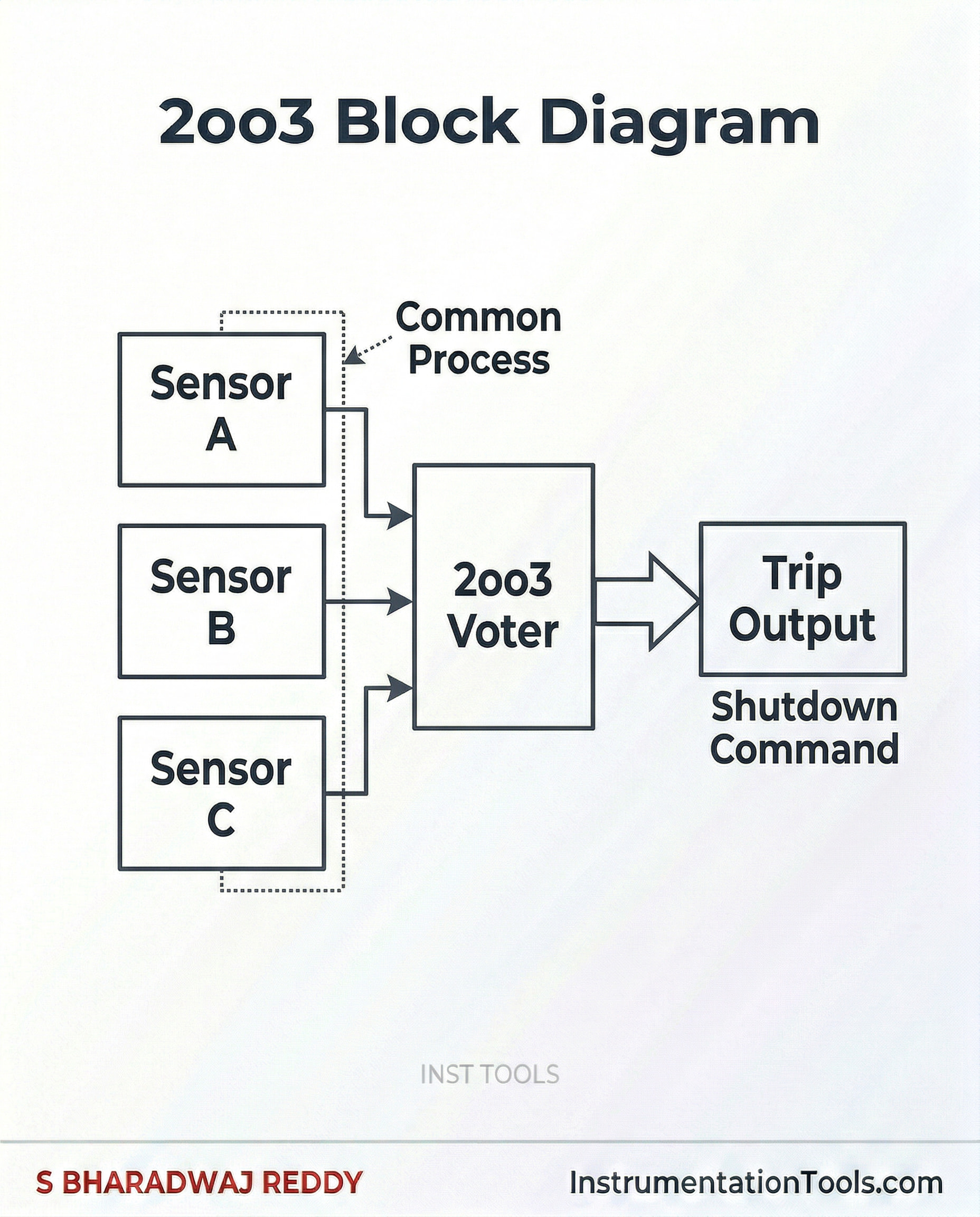
Imagine three pressure transmitters monitoring the same process.
• PT-1
• PT-2
• PT-3
If any two transmitters detect a high pressure, the system will trigger the shutdown.
 2 sensors detect danger → Trip occurs
 Only 1 sensor detects danger → No trip
 Why industries use 2oo3 voting
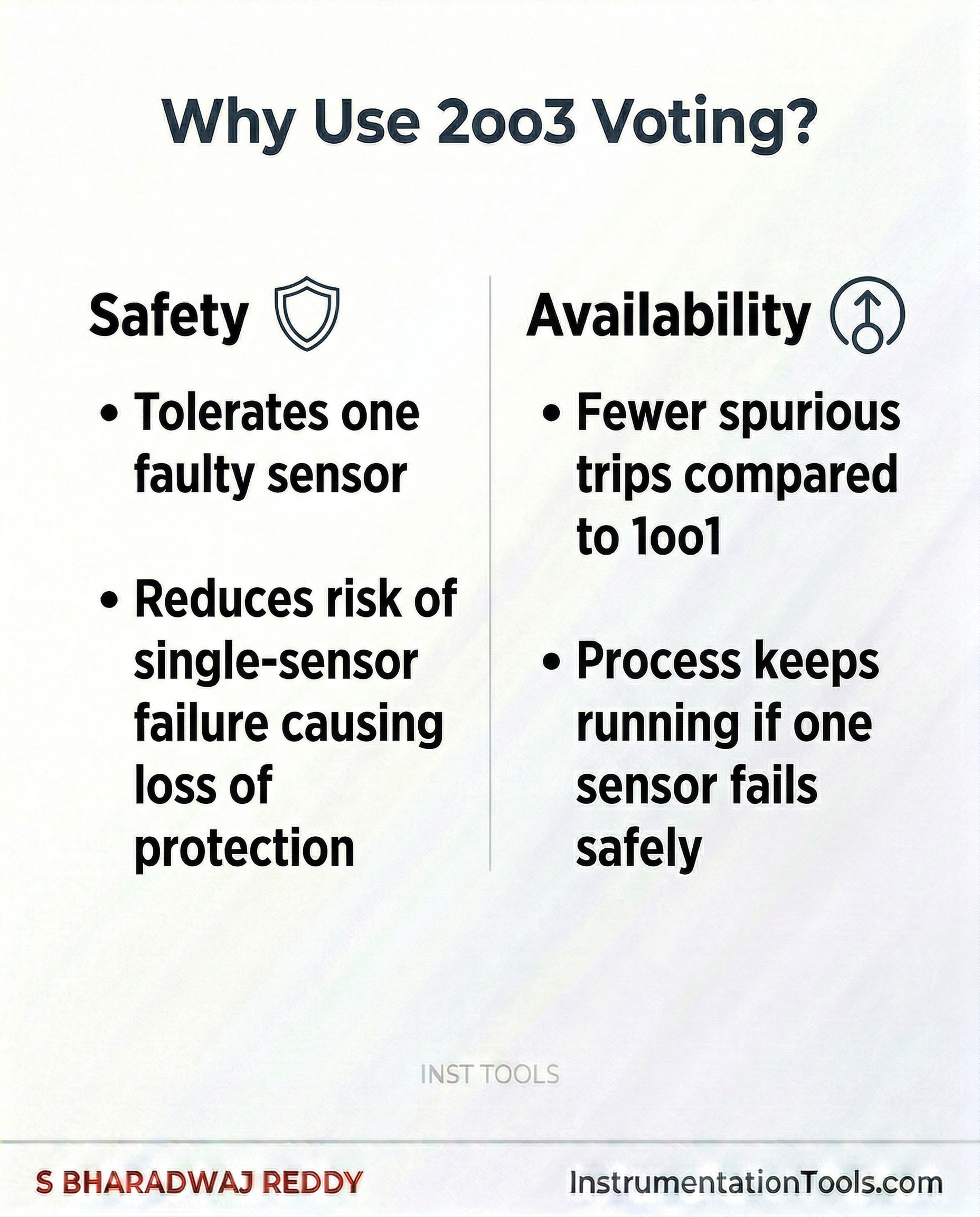
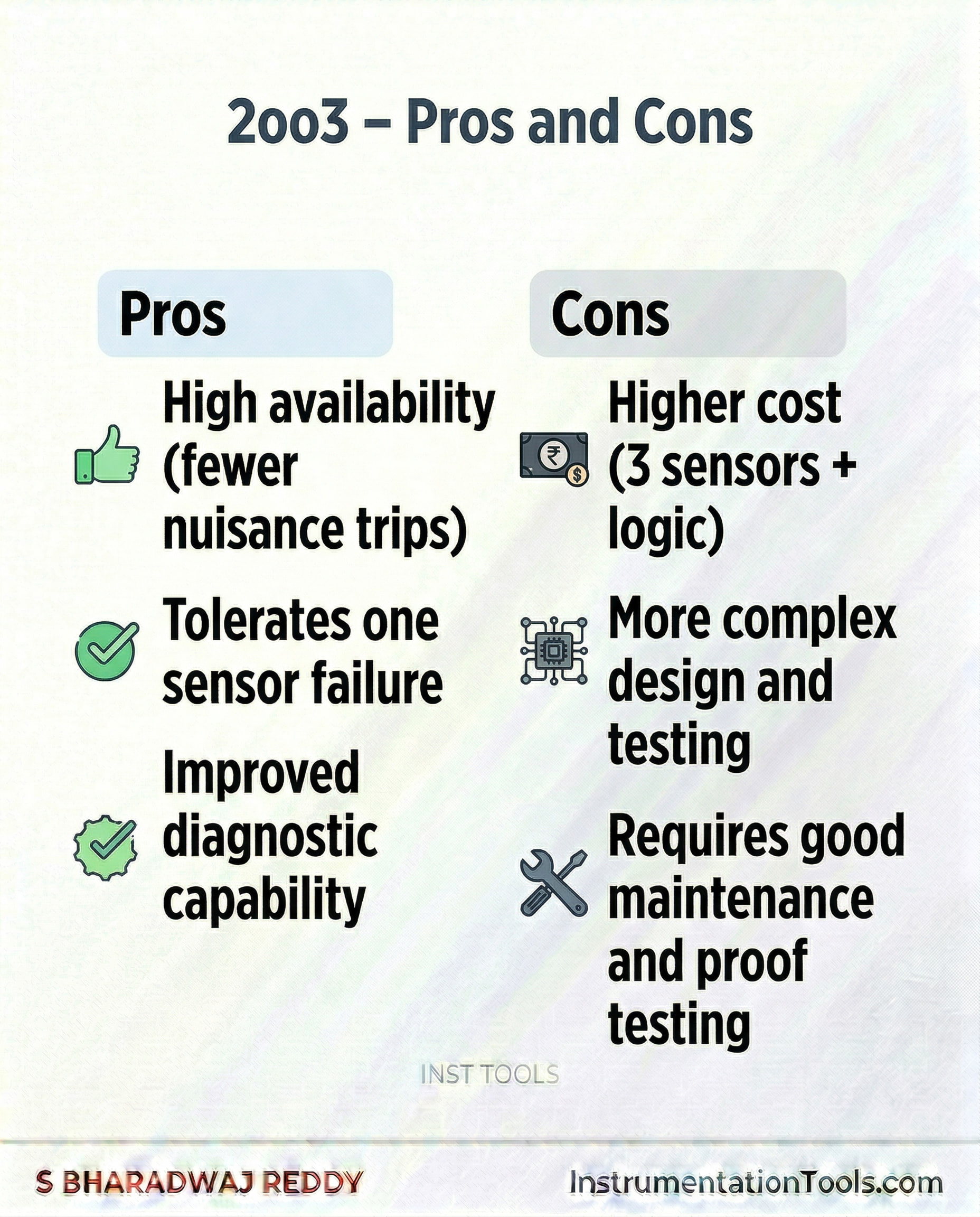
This logic improves system reliability by balancing safety and availability.
 Reduces false trips
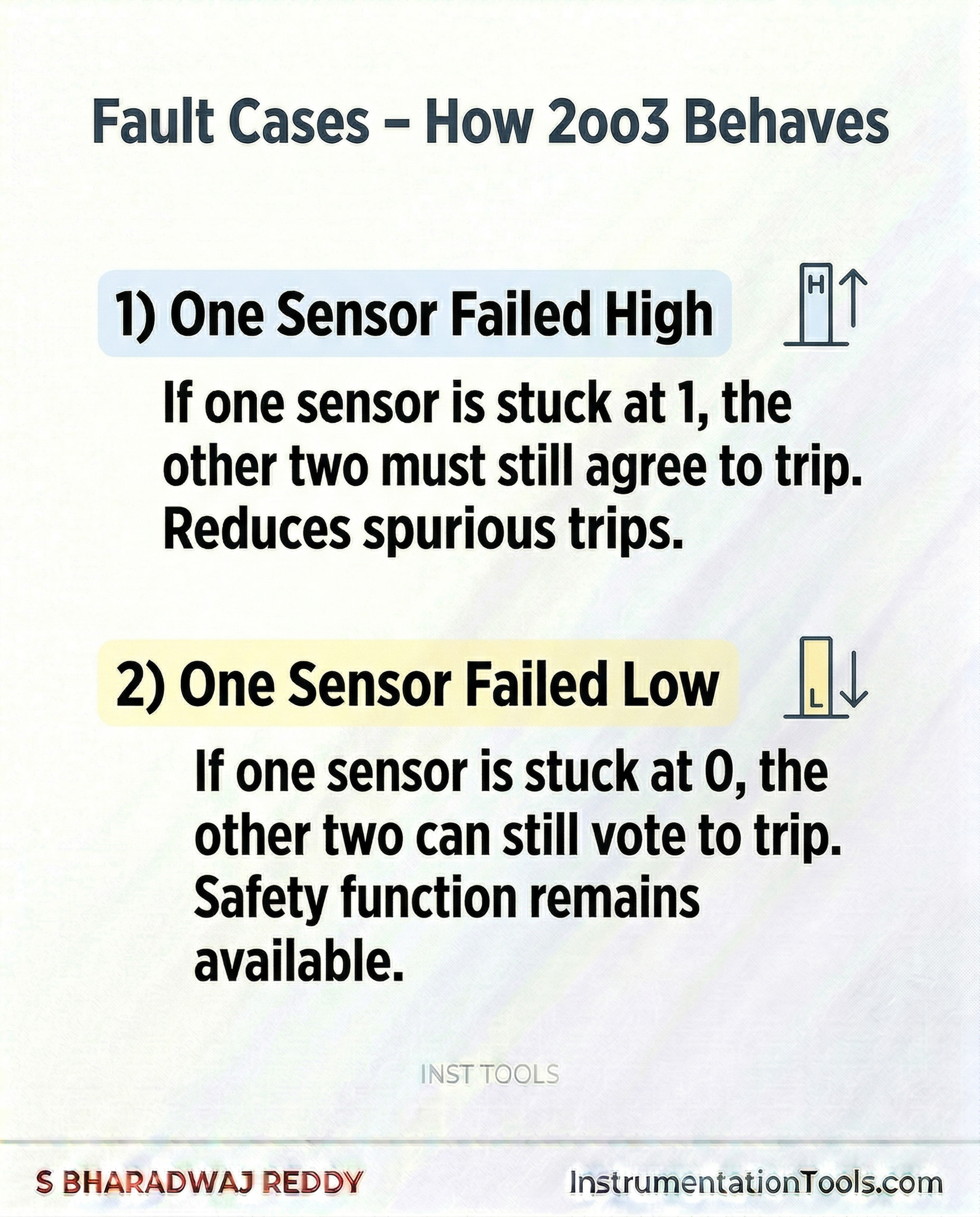
A faulty sensor alone cannot shut down the plant.
Improves safety reliability
If one sensor fails or drifts, the other two can still detect the real condition.
Allows maintenance
One sensor can be faulty or under maintenance while protection still exists.
 Example scenario
Pressure Trip Limit = 100 bar
Transmitter… Reading
PT-1 …105 bar
PT-2 …103 bar
PT-3…92 bar
Two transmitters detect High Pressure
Safety system trips
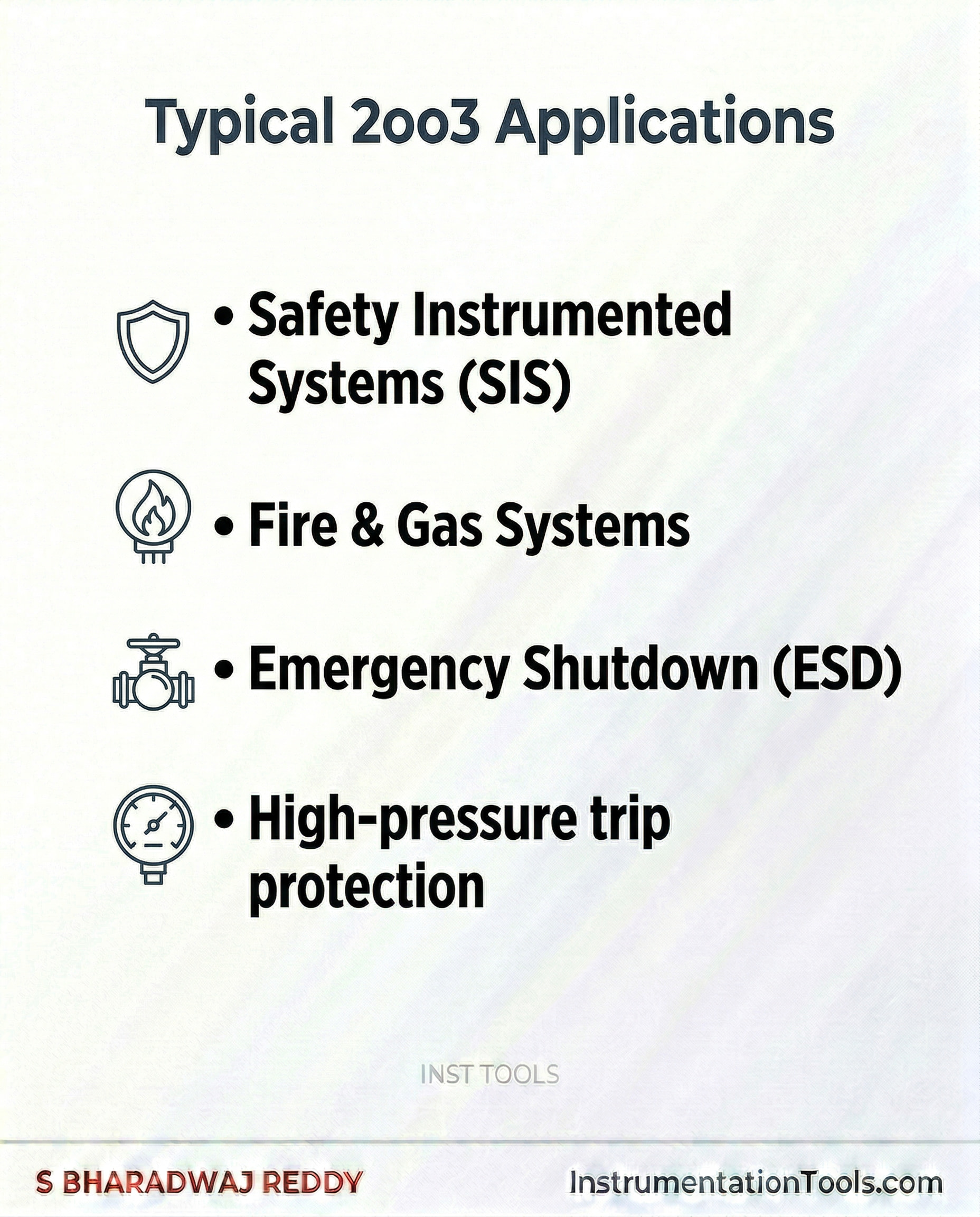
 Where 2oo3 voting is commonly used
• Emergency Shutdown Systems (ESD)
• Burner Management Systems (BMS)
• High Integrity Pressure Protection Systems (HIPPS)
• Critical reactor protection systems
 Key Idea
 1 sensor faulty → system still safe
 2 sensors detect danger → trip activated
 Better balance between safety and availability
 In simple words
2oo3 logic ensures the plant does not trip because of a single bad sensor, but still shuts down when a real dangerous condition occurs.
#ProcessSafety #Instrumentation #FunctionalSafety #SIS Automation #OilAndGas #ControlSystems