 2oo3D Voting Logic Explained (Two out of Three with Diagnostics)
In Safety Instrumented Systems (SIS), reliability and fault detection are critical.
One advanced architecture used in modern safety systems is 2oo3D voting logic.
Let’s break it down 
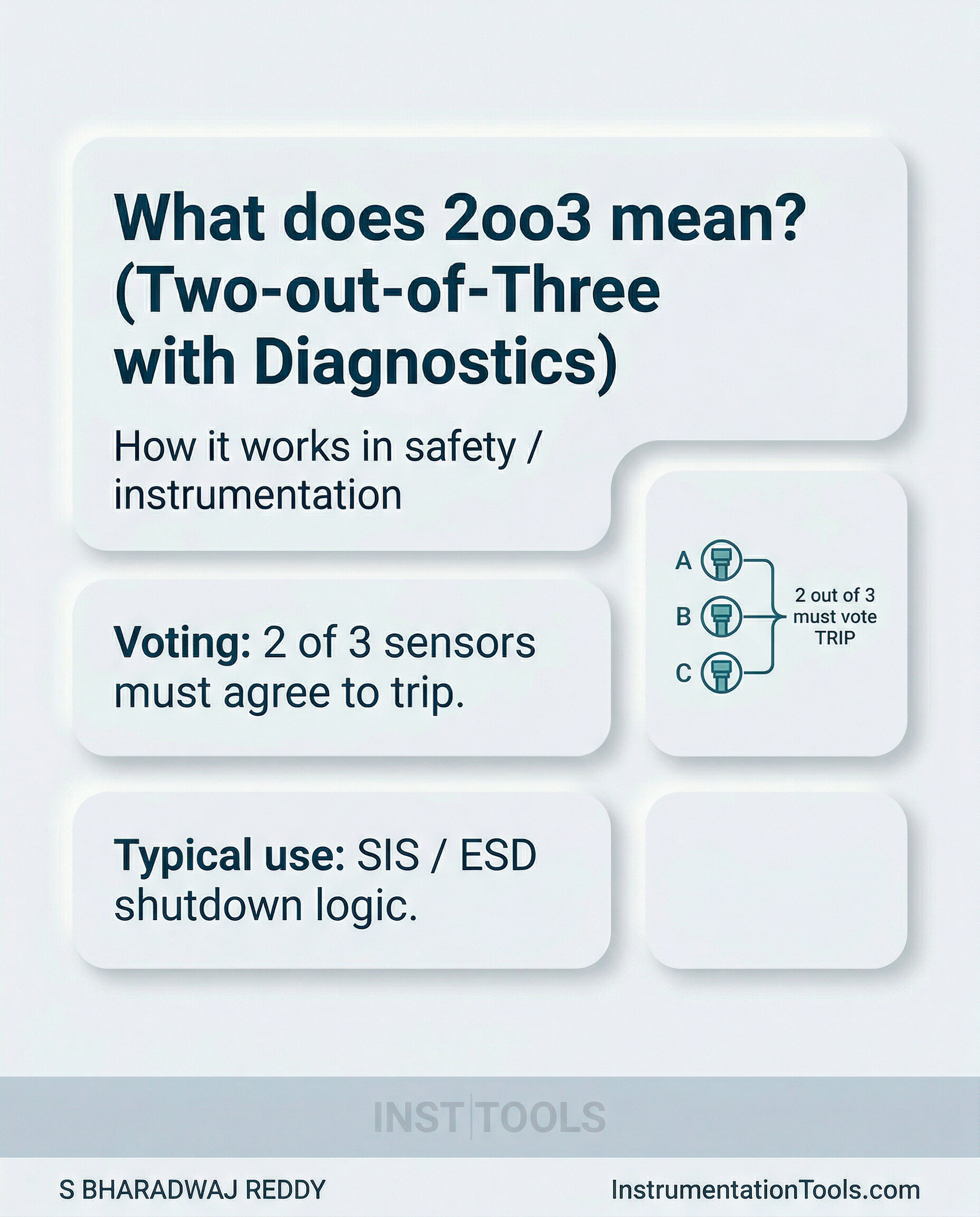
 What does 2oo3D mean?
 2oo3 = Two out of Three sensors required to trip
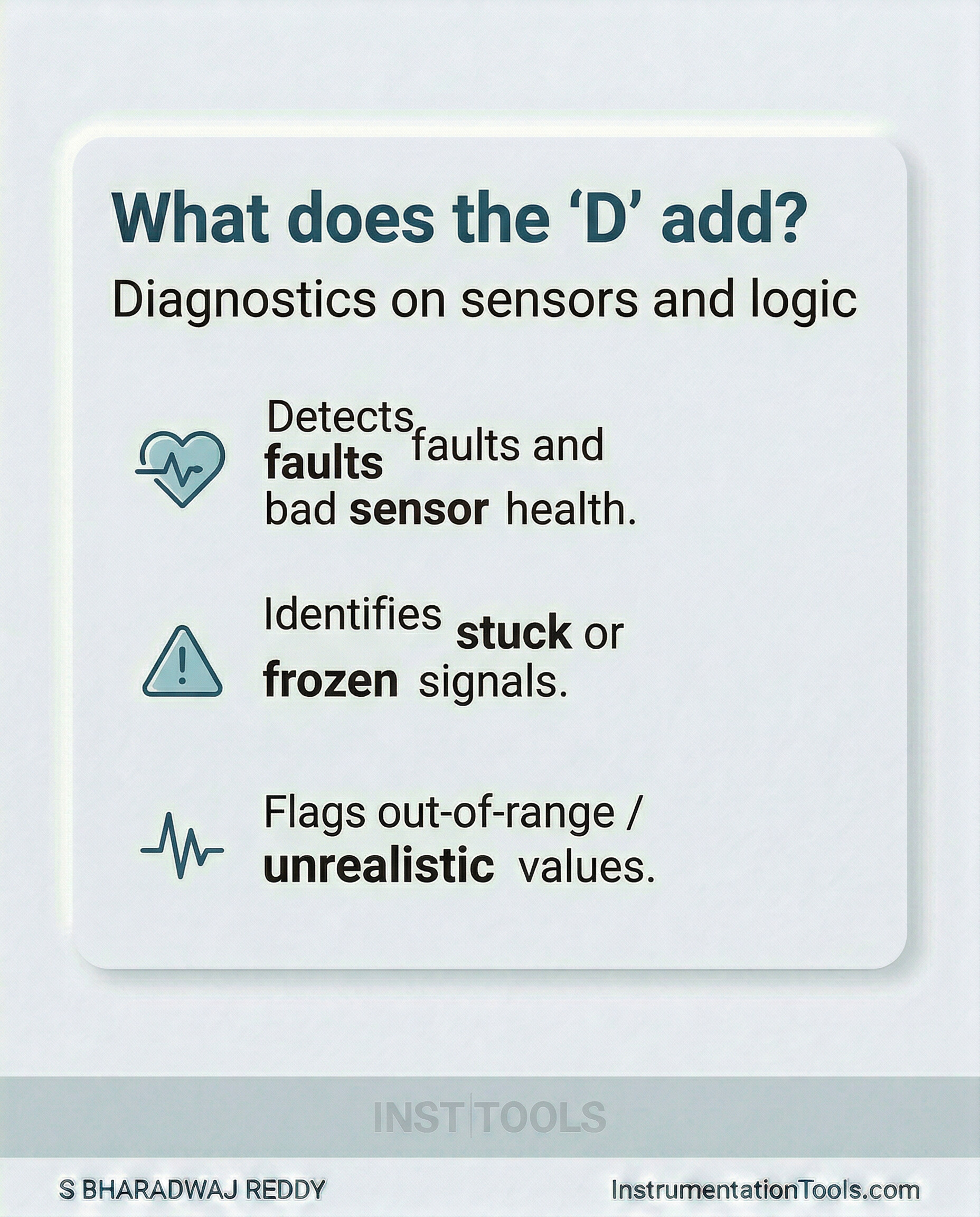
D = Diagnostics
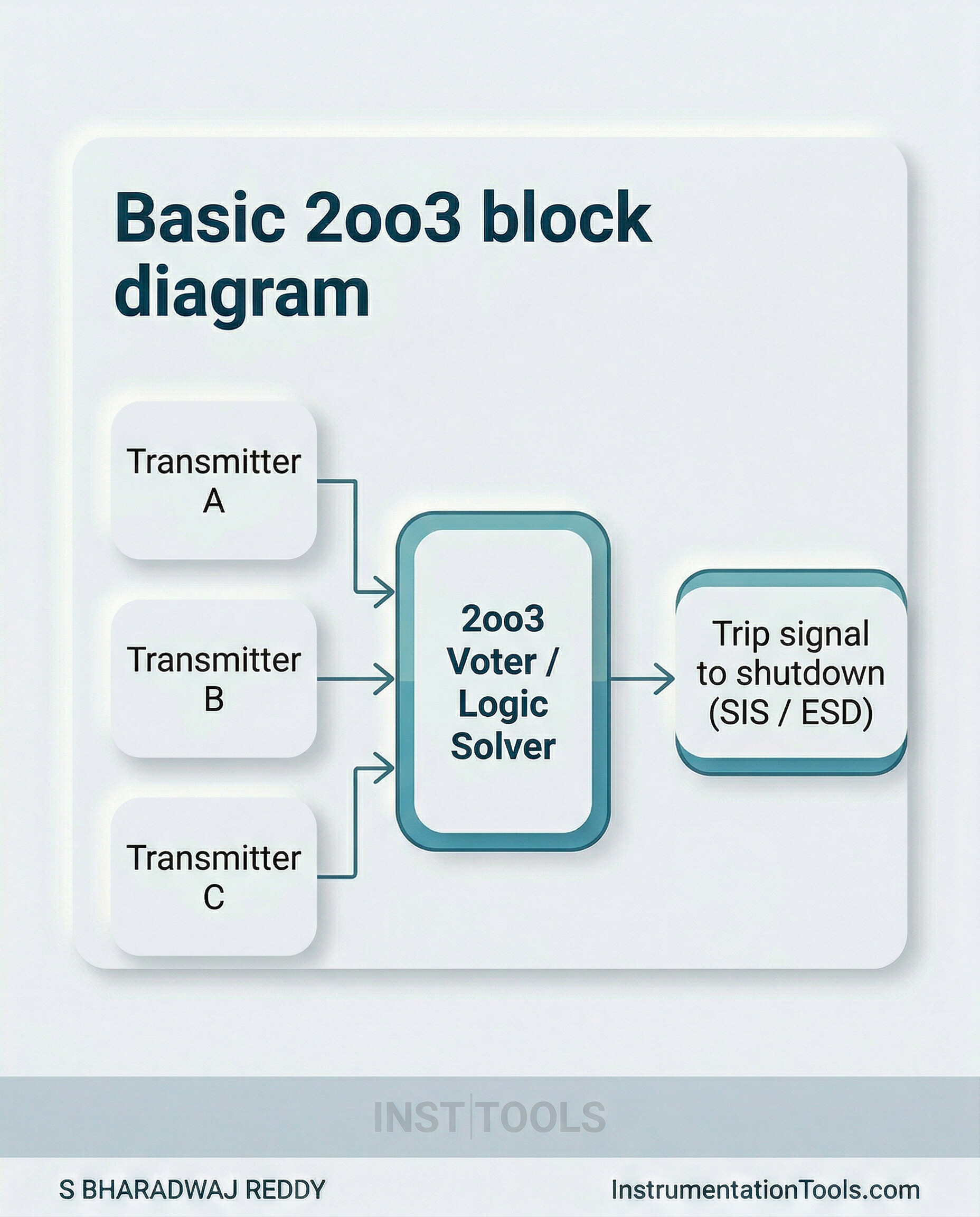
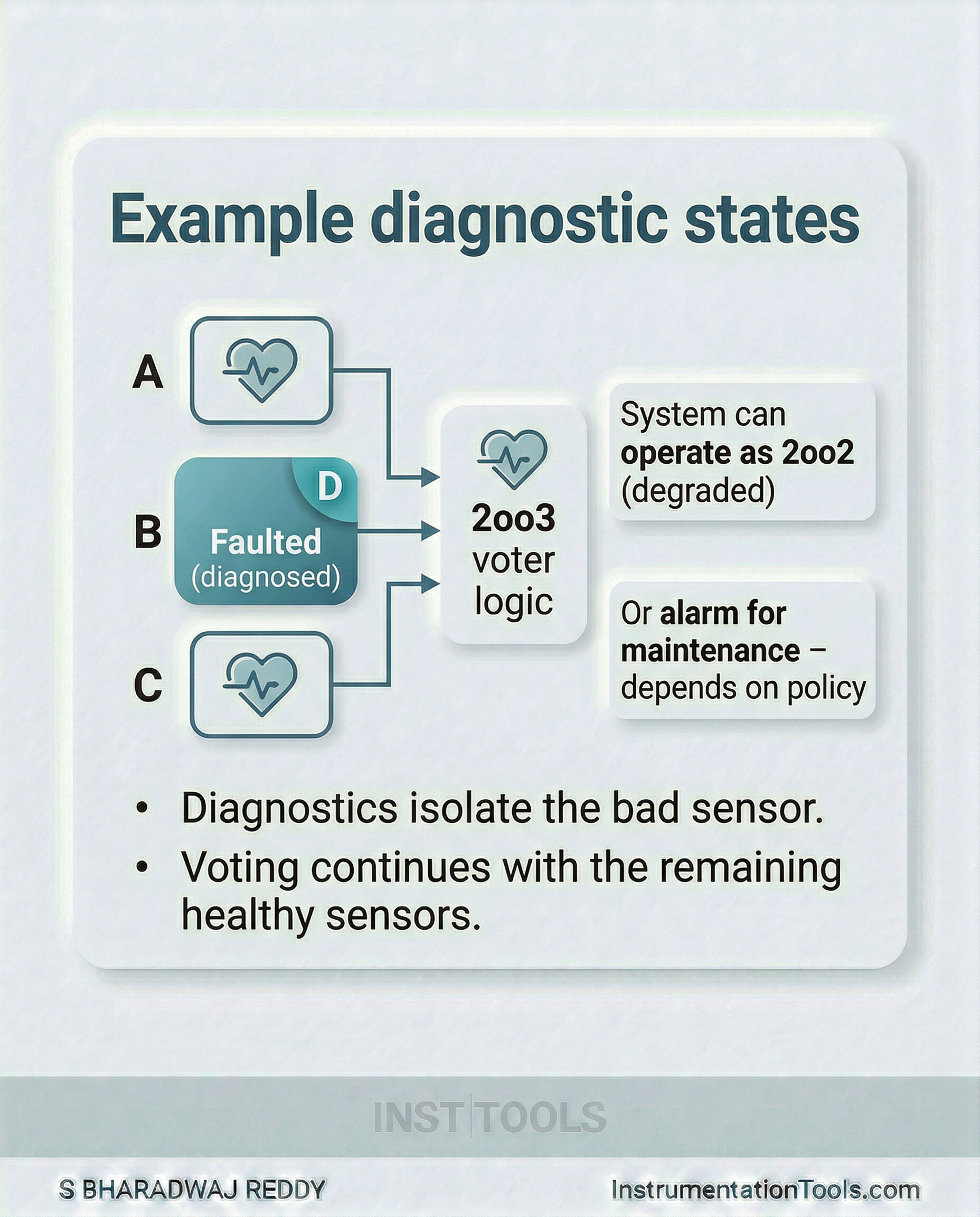
The system uses three sensors, and at least two must agree before a shutdown occurs, while diagnostics continuously monitor sensor health.
 How it works
Three sensors measure the same process variable.
 Sensor 1
Sensor 2
Sensor 3
If any two sensors detect a dangerous condition → Trip occurs
At the same time, the system performs continuous diagnostics.
 Role of diagnostics
Diagnostics help identify sensor faults or deviations before they cause problems.
 Detects faulty or drifting sensors
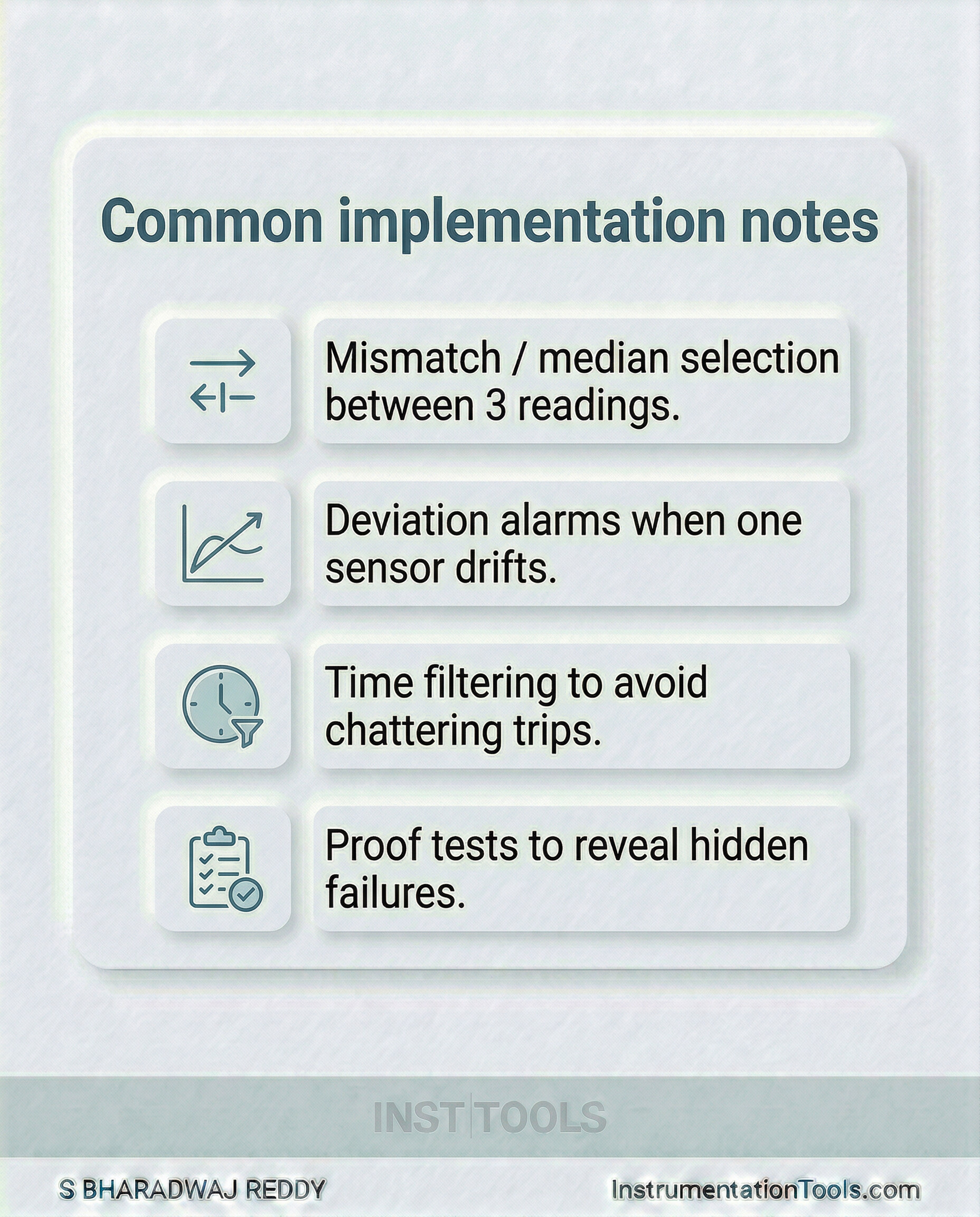
Identifies signal mismatches
Prevents hidden failures
Maintains protection in degraded mode
 Where 2oo3D is commonly used
 Reactor protection systems
Turbine protection systems
High Integrity Pressure Protection Systems (HIPPS)
Critical shutdown systems in oil & gas plants
 Key advantages
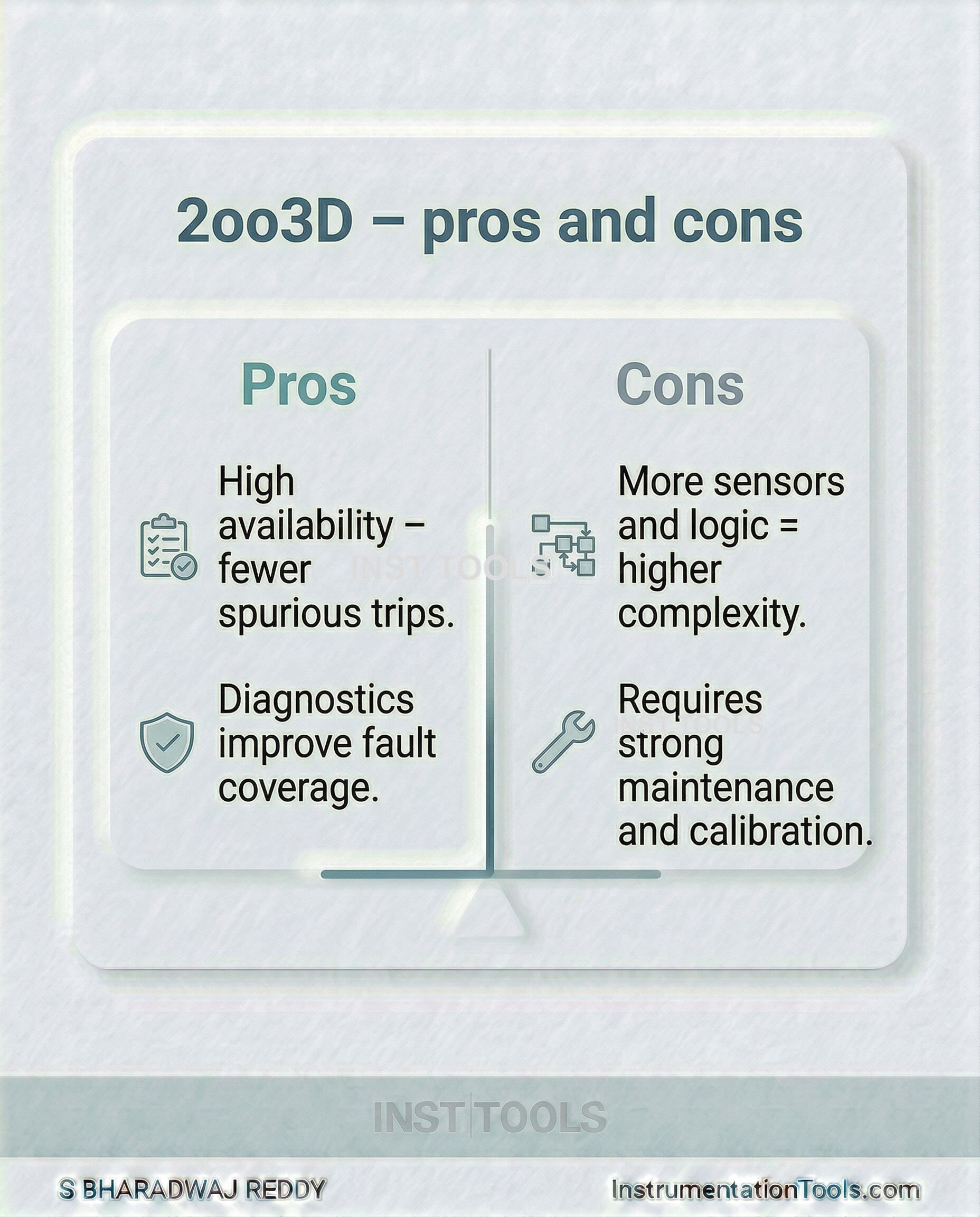
 High safety reliability
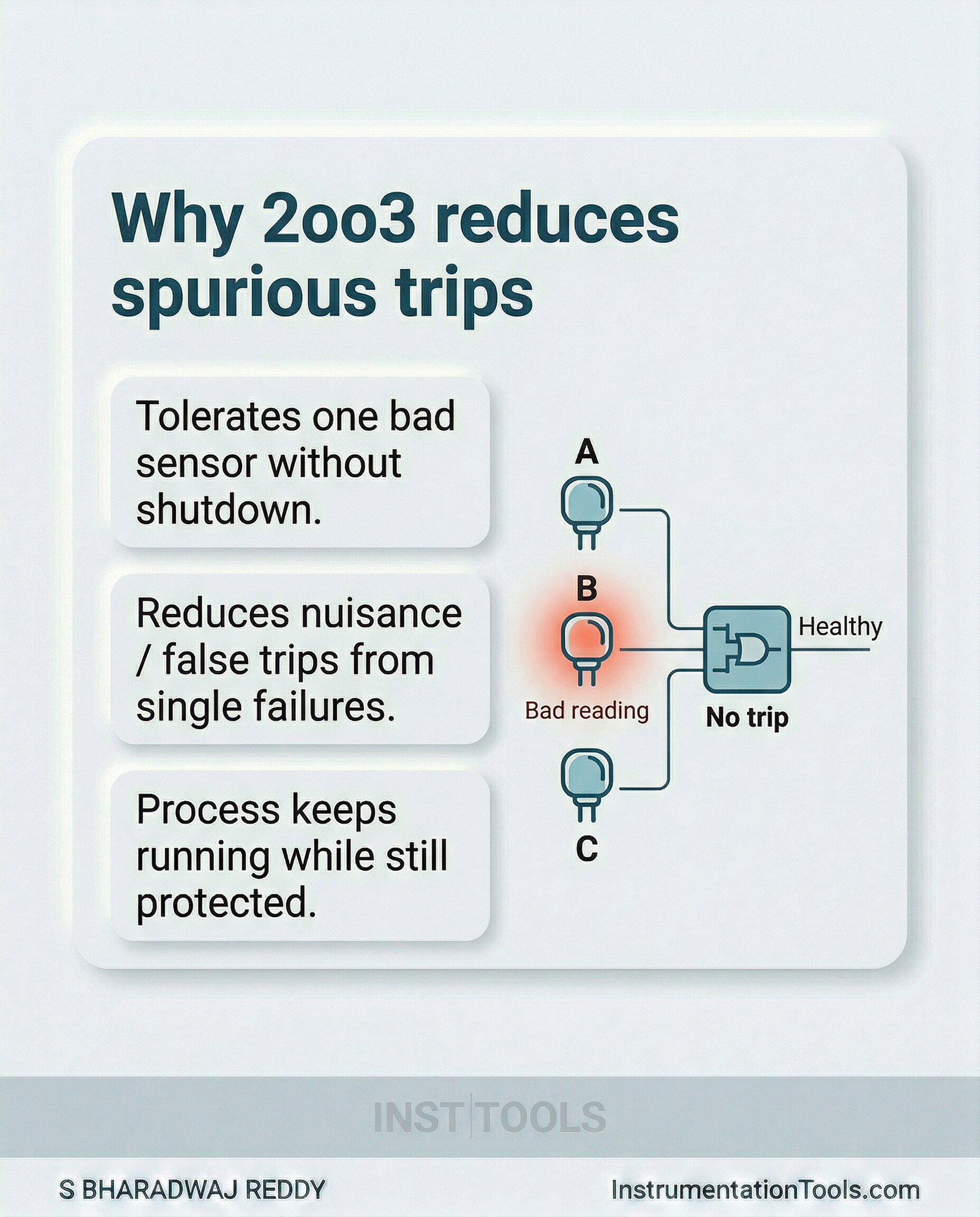
Tolerates one faulty sensor
Reduced nuisance trips
Continuous fault monitoring
 Simple idea
 Two sensors must agree to trip
 One faulty sensor can be tolerated
 Diagnostics continuously monitor system health
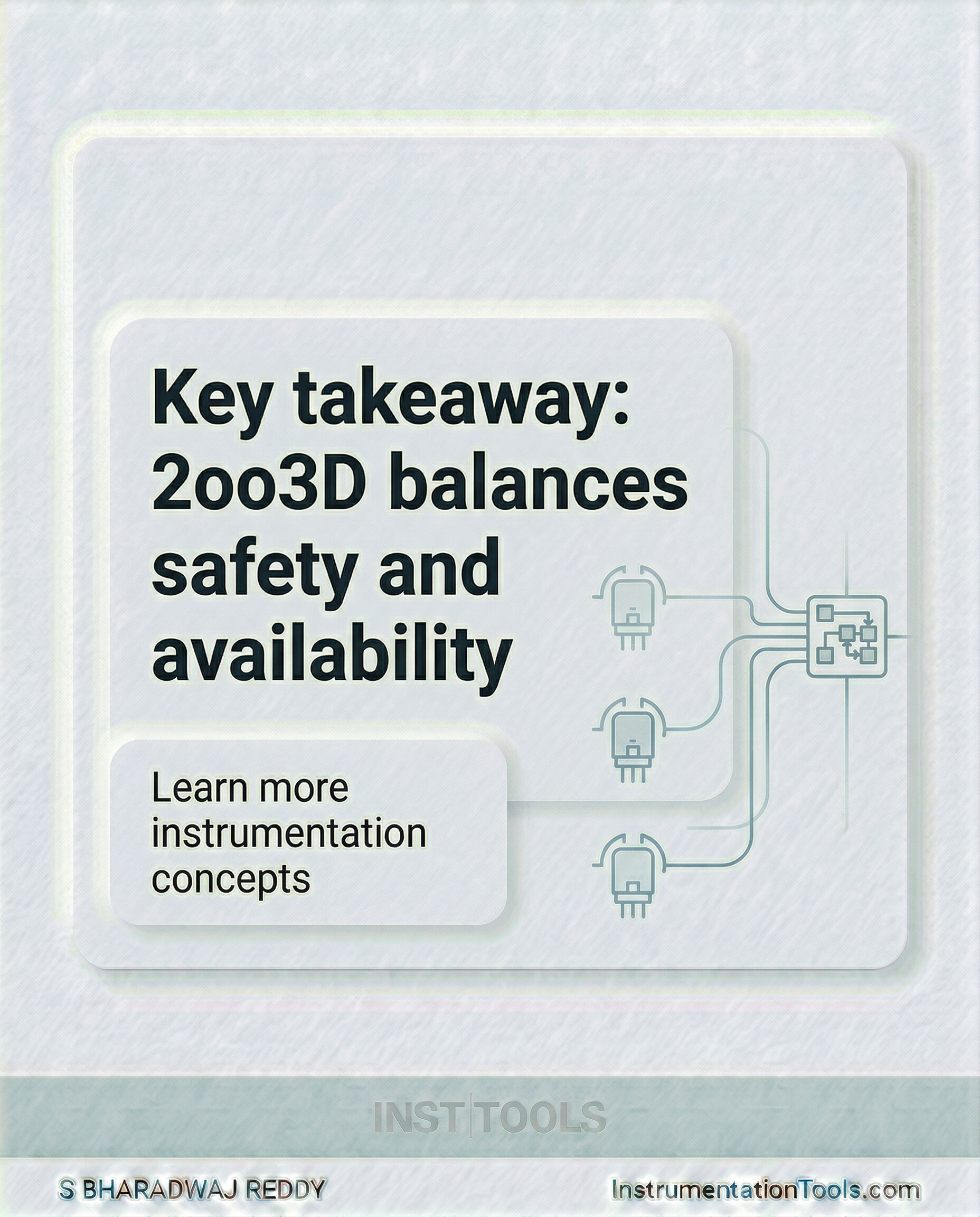
This architecture provides one of the best balances between safety, reliability, and plant availability.

#ProcessSafety #FunctionalSafety #SIS #Instrumentation #IndustrialAutomation #ProcessControl #OilAndGas #SafetyEngineering Automation #ControlSystems
 FOLLOW US
 WhatsApp: Instrumentation Tools - WhatsApp channel
Telegram: Telegram: Join Group Chat
Instagram: https://www.instagram.com/instrumentationtools/
Facebook: https://www.facebook.com/instrumentationtoolss/
LinkedIn: Instrumentation Tools | LinkedIn
YouTube: https://youtube.com/instrumentationtools?sub_confirmation=1
JOIN Courses: https://automationcommunity.com/