 Safety PLC Architectures Explained — 1oo1 vs 1oo2 vs 2oo3
In Safety PLC systems, architecture defines:
 How reliable the protection system is during failures
The most common architectures are 
 1oo1 Architecture (One out of One)
 Single sensor / single channel
One signal is enough for action
 Simple design
Low cost
 No redundancy
If the only device fails → Protection may be lost
 1oo2 Architecture (One out of Two)
Two channels working together
One healthy channel can maintain protection
Better reliability
Fault tolerance available
More hardware & complexity
Common in SIL 2 systems
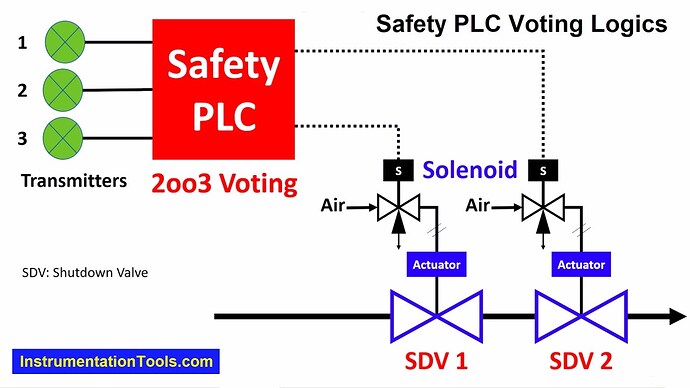
 2oo3 Architecture (Two out of Three)
Three channels with majority voting
Any 2 signals out of 3 decide action
High reliability
Can tolerate one faulty device
Reduces nuisance trips
Widely used in SIL 3 applications
 Simple comparison
1oo1 → Simple but no backup
1oo2 → Redundancy available
2oo3 → Best balance of safety & availability
 Where used
1oo1 → Basic protection systems
1oo2 → Medium critical safety loops
2oo3 → ESD, HIPPS, turbine protection
SIS Videos
 Key takeaway
 More redundancy = Higher reliability
 Better voting logic = Better fault tolerance
 Architecture selected based on required SIL
 Simple understanding
1oo1 = One chance
1oo2 = Backup available
2oo3 = Majority decides safely
#SafetyPLC #FunctionalSafety #SIS Automation #Instrumentation #ProcessSafety #ControlSystems #Engineering #IEC61511 #IndustrialAutomation 