 Bypass Logic in Safety PLC — Temporary Convenience, Permanent Responsibility
Every safety function exists for a reason…
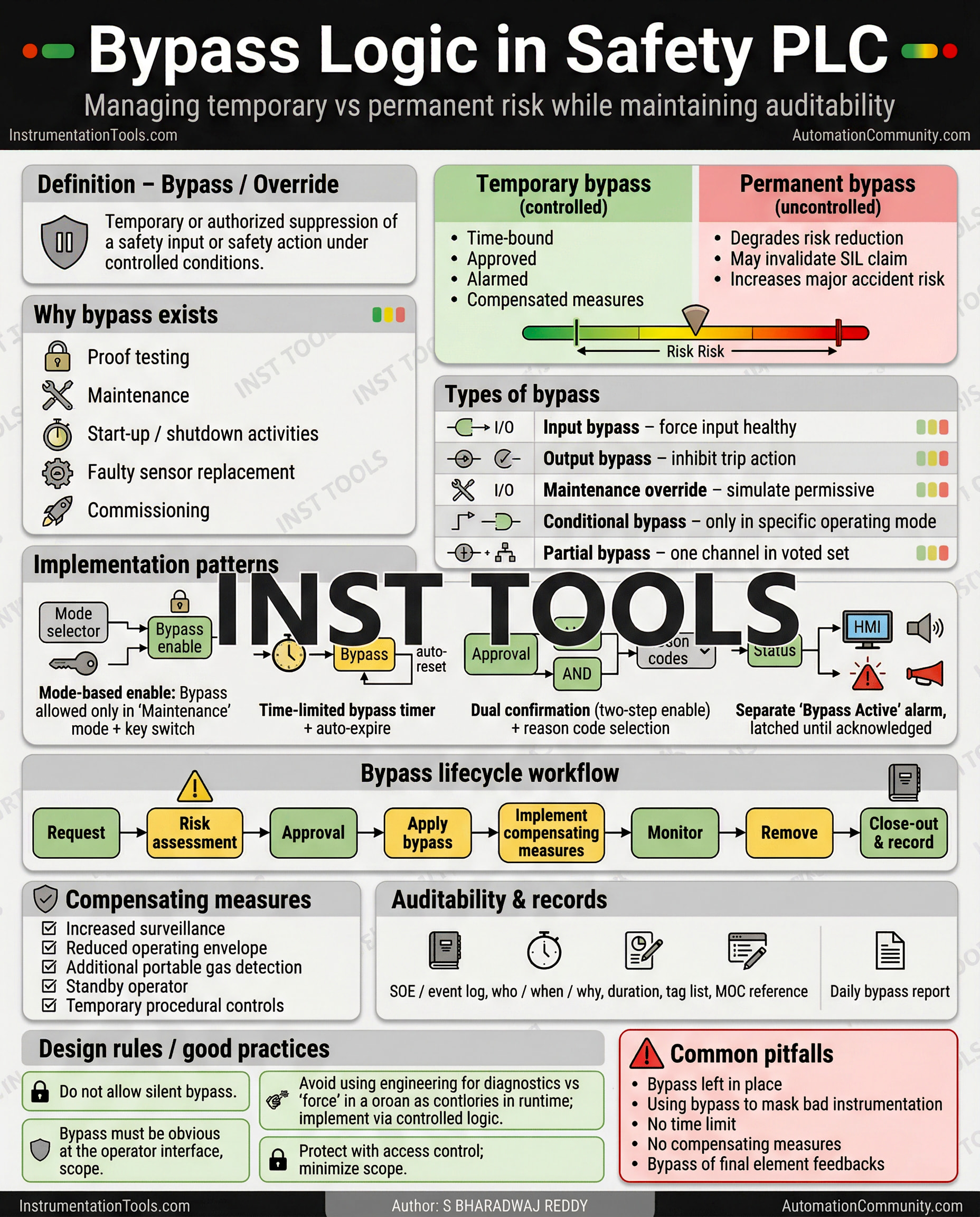
But sometimes maintenance, testing, or startup activities require a temporary bypass 
 What is a Safety Bypass?
 Temporary disabling of a safety function or input
Used during maintenance, testing, or troubleshooting
Implemented under strict procedures and approvals
 Why bypasses are used
 Instrument calibration
Valve maintenance
Proof testing
Plant startup activities
 Without bypasses, some maintenance tasks become impossible.
 The hidden danger
When a bypass is active:
 Risk is increased
Protection is reduced
Hazard exposure becomes higher
 Temporary Bypass (Acceptable)
Approved by operations & safety teams
Time-limited
Alarmed and documented
Removed immediately after work completion
 Controlled risk
 Permanent Bypass (Dangerous)
Left active indefinitely
Often forgotten after maintenance
Reduces actual SIL performance
Creates hidden safety gaps
Many major incidents have involved forgotten bypasses.
 Good Safety PLC Practices
Bypass authorization required
Operator indication on HMI
Bypass alarms active
Automatic timeout where possible
Event logging and audit trail
 Key questions before applying a bypass
 Why is the bypass needed?
How long will it remain active?
What risk is introduced?
Is there an alternative protection layer?
 Golden Rule
A bypass should be temporary and visible.
If a bypass becomes permanent, the plant may no longer be operating with the protection level it was designed for.
 Simple understanding
Temporary bypass = Managed risk
Permanent bypass = Hidden risk
#SafetyPLC #SIS #FunctionalSafety #ProcessSafety #BypassManagement #Instrumentation Automation #ControlSystems #IEC61511 #Engineering 