Control system instrumentation is the automation layer that sits above field devices and turns raw measurements into safe, reliable monitoring, control, and corrective actions. In most plants you’ll encounter four mainstream setups: PLC-only, PLC + SCADA, DCS + SCADA, and hybrid PLCs + DCS + SCADA—chosen based on process size, criticality, and operator workload.
Control system instrumentation
-
PLC (Programmable Logic Controller): rugged controller for discrete and continuous control; excels in machine control, skids, and small units.
-
DCS (Distributed Control System): integrated platform for large/complex continuous processes with built-in redundancy, historian, batch/sequence options, and global engineering tools.
-
SCADA (Supervisory Control & Data Acquisition): the operator window—HMI graphics, trends, alarms, reports, and remote supervision of multiple controllers.
-
Historian: time-series database for fast trending, KPIs, and analysis.
-
I/O & Networks: local/remote I/O, redundant controllers, switches, and segmented networks to keep operations robust and secure.
These subsystems collaborate to observe → decide → act while giving people a clear, safe view of what’s happening.
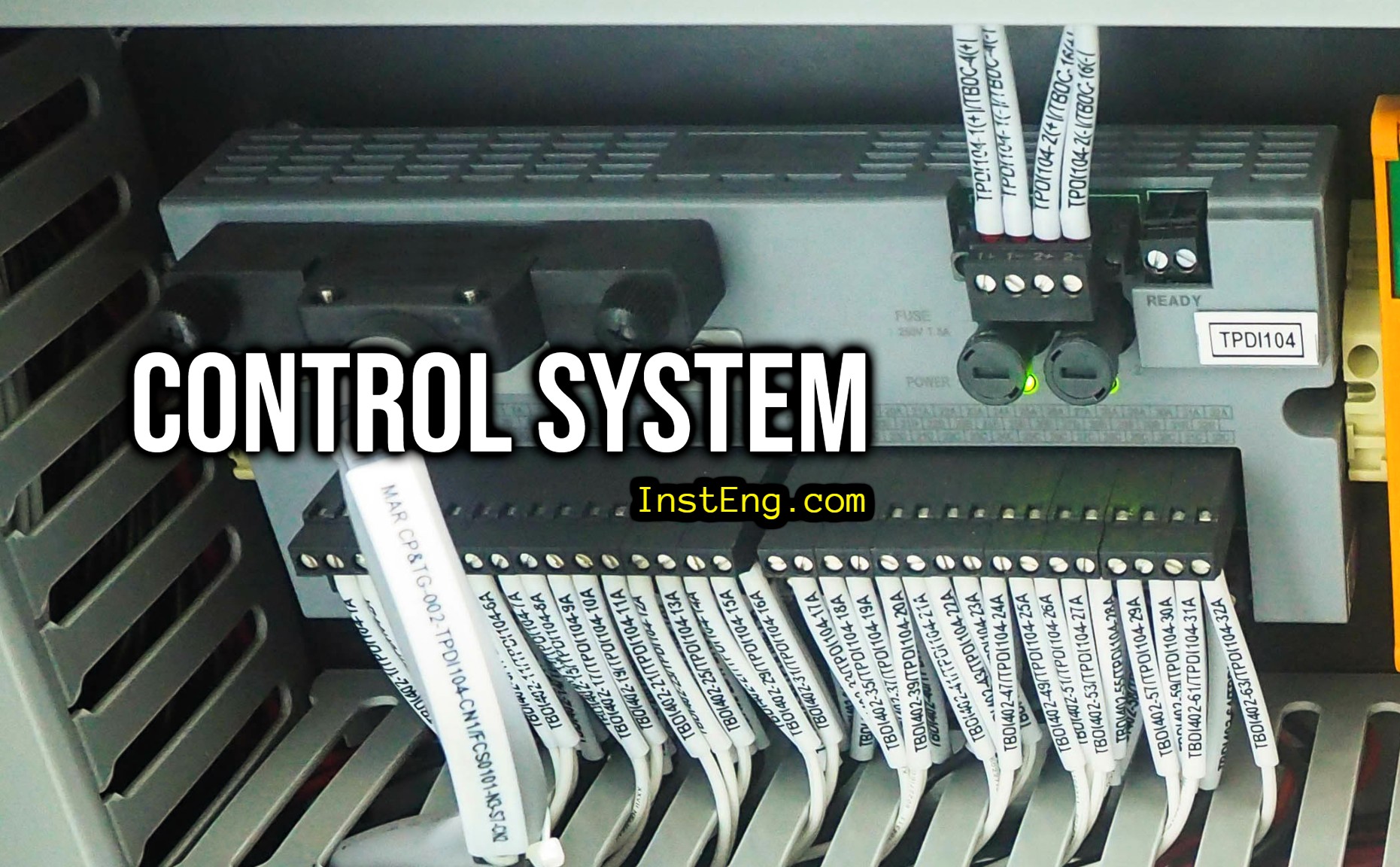
Typical architectures you’ll actually see
-
PLC-only for compact systems (packaged skids, utilities).
-
PLC + SCADA where multiple small PLCs report to a plant SCADA for unified HMI/alarm/trends.
-
DCS + SCADA for large plants—DCS handles control, SCADA provides enterprise-wide supervision/dashboards.
-
Hybrid PLCs + DCS + SCADA when OEM skids arrive with their own PLCs and a DCS sits above for coordination.
All aim to deliver continuous monitoring, operator intervention when needed, and automated protective actions.
Redundancy & availability (your first reliability toolkit)
High-consequence processes expect redundant CPUs, networks, servers, and power so a single fault doesn’t stop the plant. Redundant field measurements for critical services are common. System sizing and redundancy decisions are driven by I/O count, process hazards, and required uptime—not brand preferences.
Programming languages (IEC 61131-3 snapshot)
Modern controllers follow IEC 61131-3, which standardizes programming options: Ladder Diagram (LD), Function Block Diagram (FBD), Sequential Function Chart (SFC), and Structured Text (ST) (with Instruction List).
HMI & alarms (design them on purpose, not by accident)
Operator displays should be engineered, not decorated. ISA-101 provides principles for HMI usability and performance; ISA-18.2 (with IEC 62682) defines the alarm management lifecycle—philosophy, rationalization, implementation, and continuous monitoring—so the right alarms reach the operator at the right time.
Cybersecurity is part of control engineering now
Treat the control layer like critical infrastructure: zone & conduit segmentation, least-privilege accounts, secure remote access, patch/backup regimes, and vendor-managed risks. The ISA/IEC 62443 family outlines lifecycle practices for secure industrial automation and control systems—use it to guide strategy and day-to-day controls.
How the work actually flows (from design to handover)
-
Define scope & architecture: choose PLC/DCS/SCADA mix, redundancy targets, and networks based on I/O, hazards, and operations staffing.
-
Engineer I/O and addressing: maintain the I/O list as the contract between wiring and software; assign module/slot/channel, scaling, and alarm attributes.
-
Build HMIs & alarms: apply ISA-101 display practices and align alarm priorities/deadbands with ISA-18.2.
-
Test early, test often: write FAT/SAT procedures that prove logic, graphics, comms, and failovers; include redundancy switchover and alarm floods scenarios.
-
Commission & hand over: loop checks, function tests against Cause & Effect, operator run-throughs; deliver as-built code & configs plus historian/HMI backups.
Where PLC vs DCS vs SCADA makes the most sense (rule-of-thumb)
-
PLC: fast, deterministic control for machines, drives, and packaged equipment.
-
DCS: unified control for large continuous units (crackers, boilers, reactors).
-
SCADA: site-wide or multi-site visualization, remote supervision, and reporting.
Hybridizing is normal—lean into it with clear interfaces, time sync, and alarm ownership.
Commissioning realities you should expect
Expect to verify every point end-to-end (field → I/O → logic → HMI), practice failover while running, exercise interlocks with operators watching the Cause & Effect, and capture “as-found/as-left” settings for future audits. Plan for alarm tuning during start-up—real plants never behave exactly like simulations.
FAQ — Control System Instrumentation
1) What’s the difference between PLC, DCS, and SCADA?
A PLC executes control, a DCS coordinates large/complex processes with integrated tools and redundancy, and SCADA is the supervisory layer for HMI, trends, alarms, and reports across one or many controllers. Hybrids are common in real plants.
2) When should I pick a DCS instead of multiple PLCs?
When you need tight operator integration, standardized engineering, embedded historian/alarm tools, and high availability across a large continuous process, a DCS usually reduces lifecycle friction compared with stitching many PLCs together.
3) Which programming languages should a beginner learn first?
Start with Ladder (LD) and Function Block Diagram (FBD), then add Structured Text (ST) for complex logic and SFC for sequences—these are standardized by IEC 61131-3.
4) How do I prevent alarm floods?
Adopt an alarm philosophy and run rationalization (severity, priority, shelving, deadbands). Manage alarms as a lifecycle per ISA-18.2/IEC 62682 and design HMIs following ISA-101 so operators see what matters.
5) What does good HMI design look like?
High-contrast, context-rich, clutter-free displays with consistent symbols, trend panes near key values, and clear navigation. ISA-101 provides patterns to improve operator effectiveness and safety.
6) Do I need redundancy everywhere?
Match redundancy to consequence of failure—controllers, networks, servers, and power feed redundancy for critical services; add redundant transmitters for high-risk measurements. Over-redundancy adds cost and complexity with little benefit.
7) Where does cybersecurity fit?
From design day one: segment into zones and conduits, restrict remote access, manage credentials, and maintain patches/backups. Use ISA/IEC 62443 as your reference.
8) How do SCADA and historian differ?
SCADA shows/controls in real time (graphics, alarms). A historian stores time-series data for fast trending, analytics, and reports; SCADA often feeds it.
9) Can I virtualize PLC/DCS/SCADA servers?
Many plants virtualize servers (SCADA/historian/app nodes) for resiliency and recovery. Controllers remain hardware—virtual PLCs aren’t typical for production safety/availability.
10) What documents should I expect at handover?
As-built P&IDs, I/O list, C&E, control narratives, HMI graphics, PLC/DCS backups, network configs, alarm philosophy, historian tags, and FAT/SAT records.
11) Is a separate SIS mandatory?
Where risk analysis demands it, yes—SIS design follows IEC 61511; even if basic trips live in PLC/DCS, safety functions often require independent logic and proof-testing. (General industry practice; align with owner requirements.)
12) How do I choose between “PLC + SCADA” and “DCS + SCADA”?
If the plant is modular and OEM-heavy, PLC + SCADA can be agile. If it’s unitized/continuous with high operator load and strict uptime, DCS + SCADA typically wins for lifecycle consistency.