A poorly selected control valve ruins the entire loop.
Even with:
- perfectly tuned PID
- accurate and calibrated transmitters
…you will not get stable control if the valve is the weak link. Wrong size, wrong characteristic, or poor maintenance will show up as cycling, offsets, and frustrated operators.
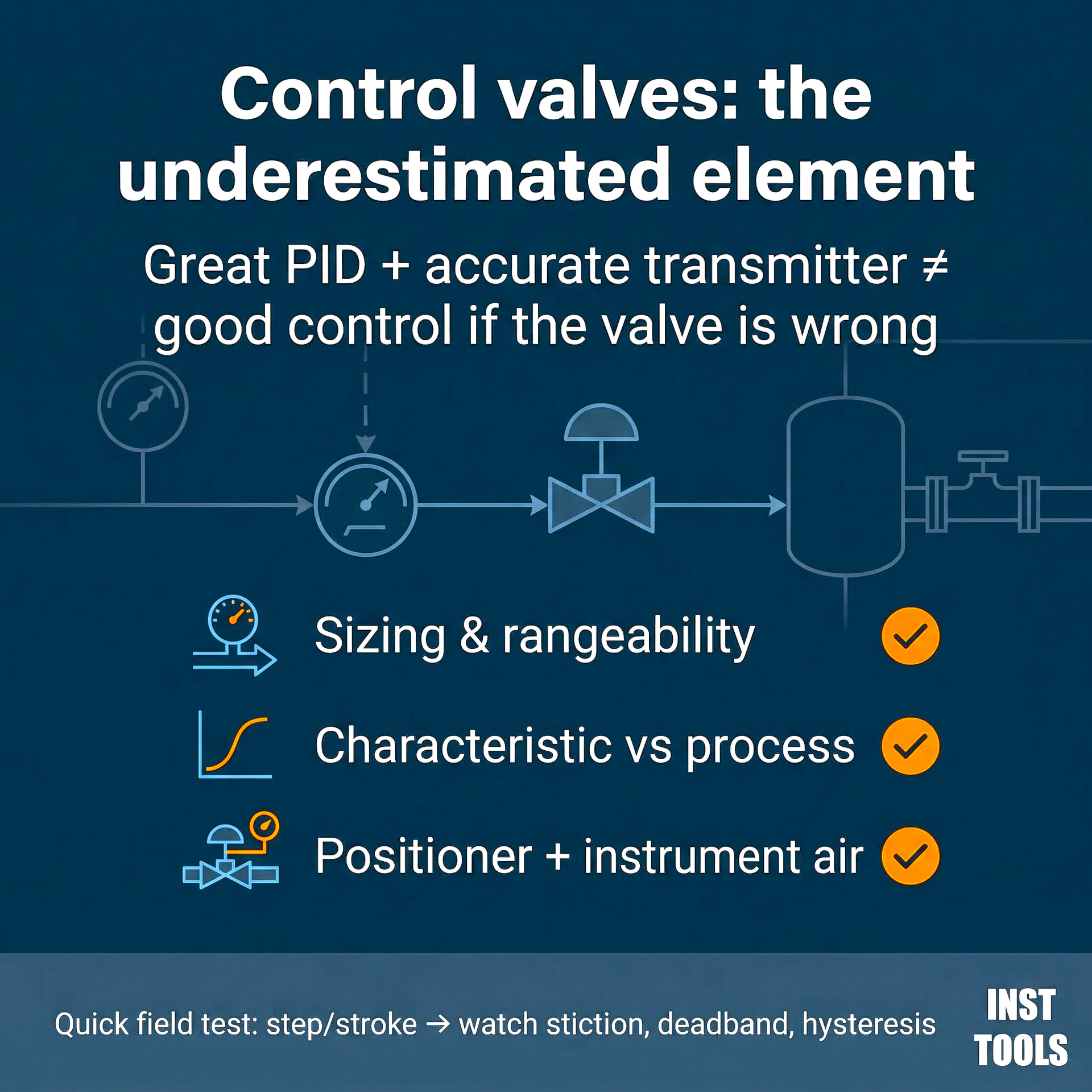
Control Valve Loop Problems
When a loop misbehaves during the Commissioning/startup, start by checking the valve:
-
Sizing & rangeability
- Is the valve operating mostly between 20–80% open?
- Is it oversized and “snapping” at low openings?
-
Valve characteristic vs process
- Inherent equal-percentage vs linear is one thing.
- What matters is the installed characteristic in your piping and pressure drops. Does the response feel smooth or aggressive in the normal operating range?
-
Positioner health & air supply
- Sticky I/P, loose linkages, hunting positioner.
- Wet/dirty instrument air, pressure drops, small leaks.
A simple field test: stroke or step the valve.
-
Command 0 → 25% → 50% → 75% → 100% and back.
-
Watch for stiction (no movement then jump), deadband, hysteresis, sluggish response, air leaks.
When the valve is right, you see it everywhere: tighter loop, lower variability, better product quality, less steam/energy waste, and fewer operator interventions.
In your troubleshooting routine, how often do you include proper valve diagnostics before touching the PID tuning?
#instrumentation #processcontrol #controlvalves Automation #PID #maintenance #insttools