 Fail-Safe vs Fault-Tolerant Systems — Know the Difference
In safety and control systems, both sound similar…
But their behavior during failure is completely different 
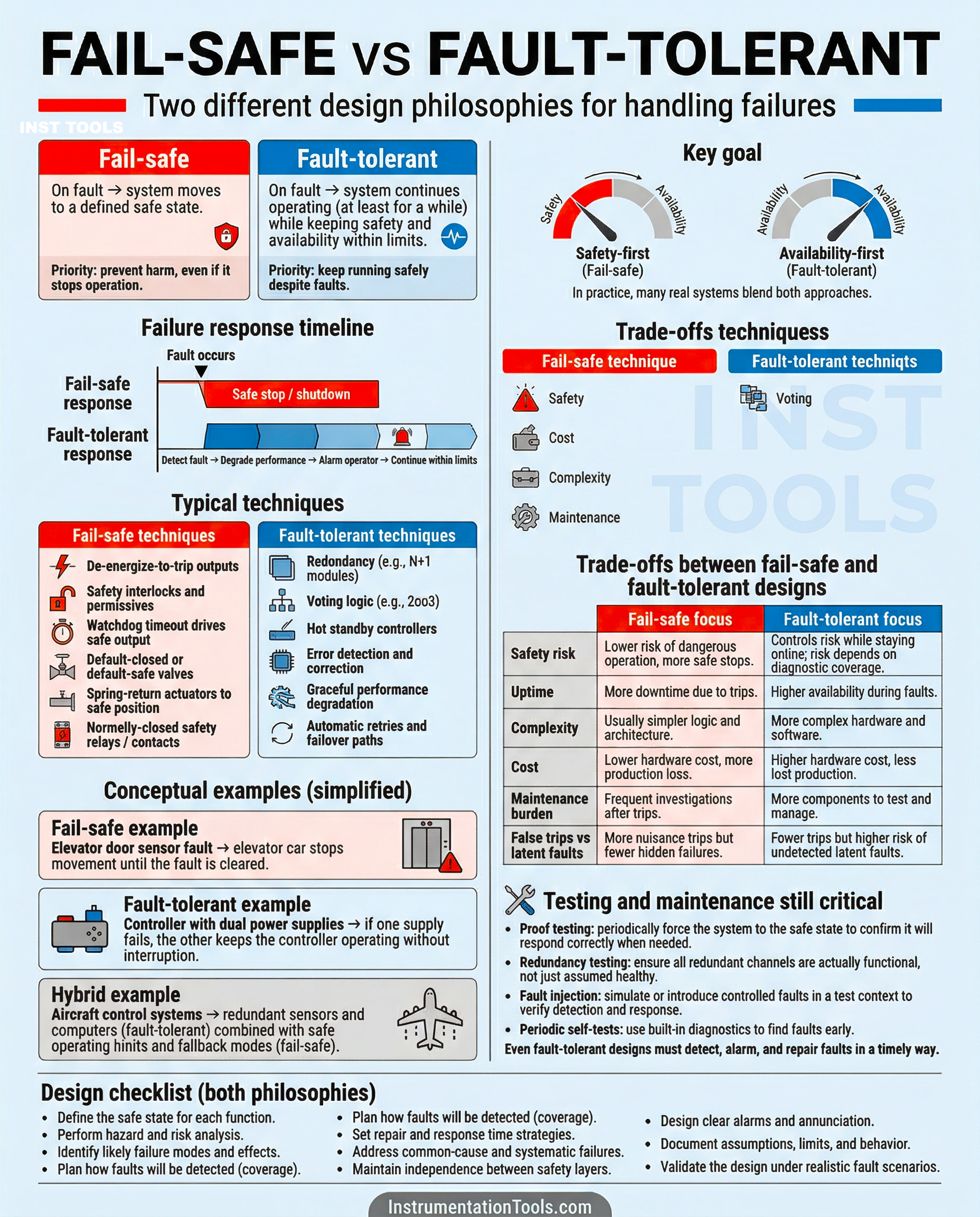
 Fail-Safe System
 Designed to go to a safe state when failure occurs
 Example:
 Power loss → Valve closes
Signal failure → System trips
 Prioritizes safety over operation
 Process may stop
 Goal: Prevent accidents
 Fault-Tolerant System
Designed to continue operation even if a failure occurs
Example:
One controller fails → Others keep running
One sensor fails → System still works
Uses redundancy (1oo2, 2oo3, TMR)
Maintains system availability
Goal: Avoid interruption
Key Differences
Fail-Safe → Stops system safely
Fault-Tolerant → Keeps system running
Fail-Safe → No redundancy required
Fault-Tolerant → Requires redundancy
Fail-Safe → Focus on safety
Fault-Tolerant → Focus on availability + reliability
WATCH VIDEO:
 Where used
Fail-Safe → Safety PLC, SIS, ESD systems
Fault-Tolerant → DCS, critical control systems, servers
 Simple understanding
Fail-Safe = Stop safely when failure happens
Fault-Tolerant = Continue working despite failure
 Best systems use both concepts together for maximum safety and reliability
#FunctionalSafety Automation #SIS #ControlSystems #Instrumentation #Engineering #IndustrialAutomation #ProcessSafety #Reliability #SafetyEngineering 