 What is Functional Safety? — Explained for Engineers
In automation, safety is not just hardware…
It’s about how systems respond when things go wrong 
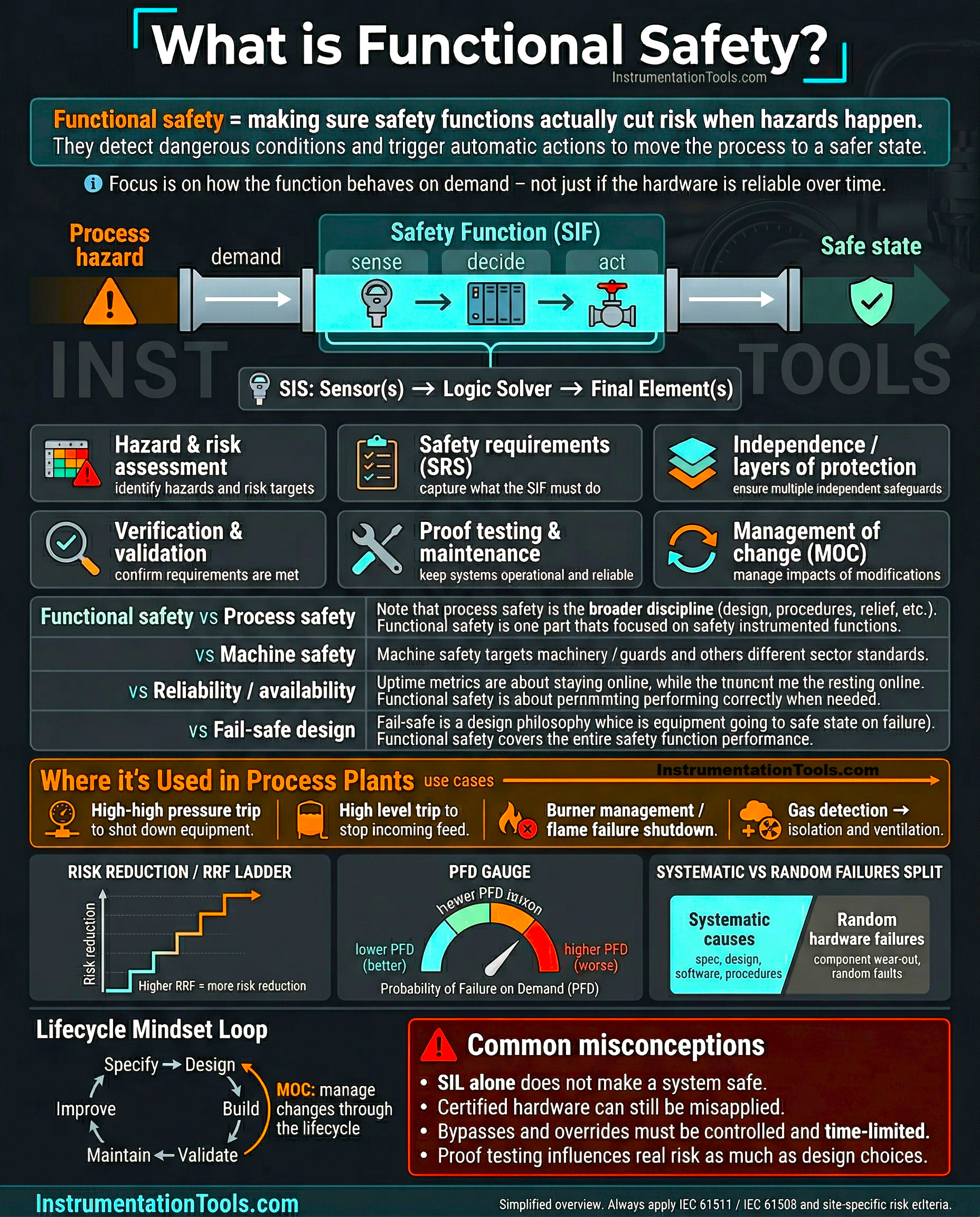
What is Functional Safety?
 Ensuring a system operates safely under normal and abnormal conditions
Focus on automatic protection when failures occur
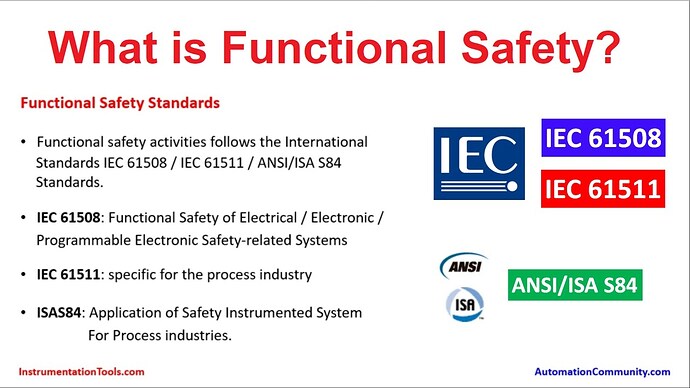
Defined by standards like IEC 61508 / IEC 61511
 Simple idea
 If something fails → System should go to a safe state
Examples:
 High pressure → Shutdown
Gas leak → Trip system
 Why it is important
 Prevents accidents & hazards
Protects people, equipment & environment
Reduces risk in critical processes
Ensures compliance with safety standards
WATCH VIDEO:
 Where it is used
 Oil & Gas plants
 Chemical industries
Power plants
Process industries
 Key elements
 Sensors → Detect abnormal condition
Logic Solver (Safety PLC) → Makes decision
Final Element (Valve/Trip) → Takes action
Together they form a Safety Instrumented System (SIS)
 Key concept
Not about avoiding failure
It’s about handling failure safely
 Important
 Safety ≠ Just alarms
 Safety = Automatic protective action
 Simple understanding
Control System = Runs the process
Functional Safety = Protects the process when control fails
#FunctionalSafety #ProcessSafety #SIS Automation #Instrumentation #ControlSystems #Engineering #IndustrialAutomation #IEC61511 #SafetyEngineering