
 HIPPS: The Safety System That Stops High Pressure Before It Becomes a Disaster!
Imagine a pipeline or process vessel designed for a maximum pressure of 100 bar.
But upstream equipment can potentially generate:
 150 bar
Allowing that pressure to reach the downstream equipment could cause:
 Overpressure
Equipment damage
Pipeline rupture
Fire or toxic release
So how can we protect the lower-pressure section?
 HIPPS — High Integrity Pressure Protection System
 What is HIPPS?
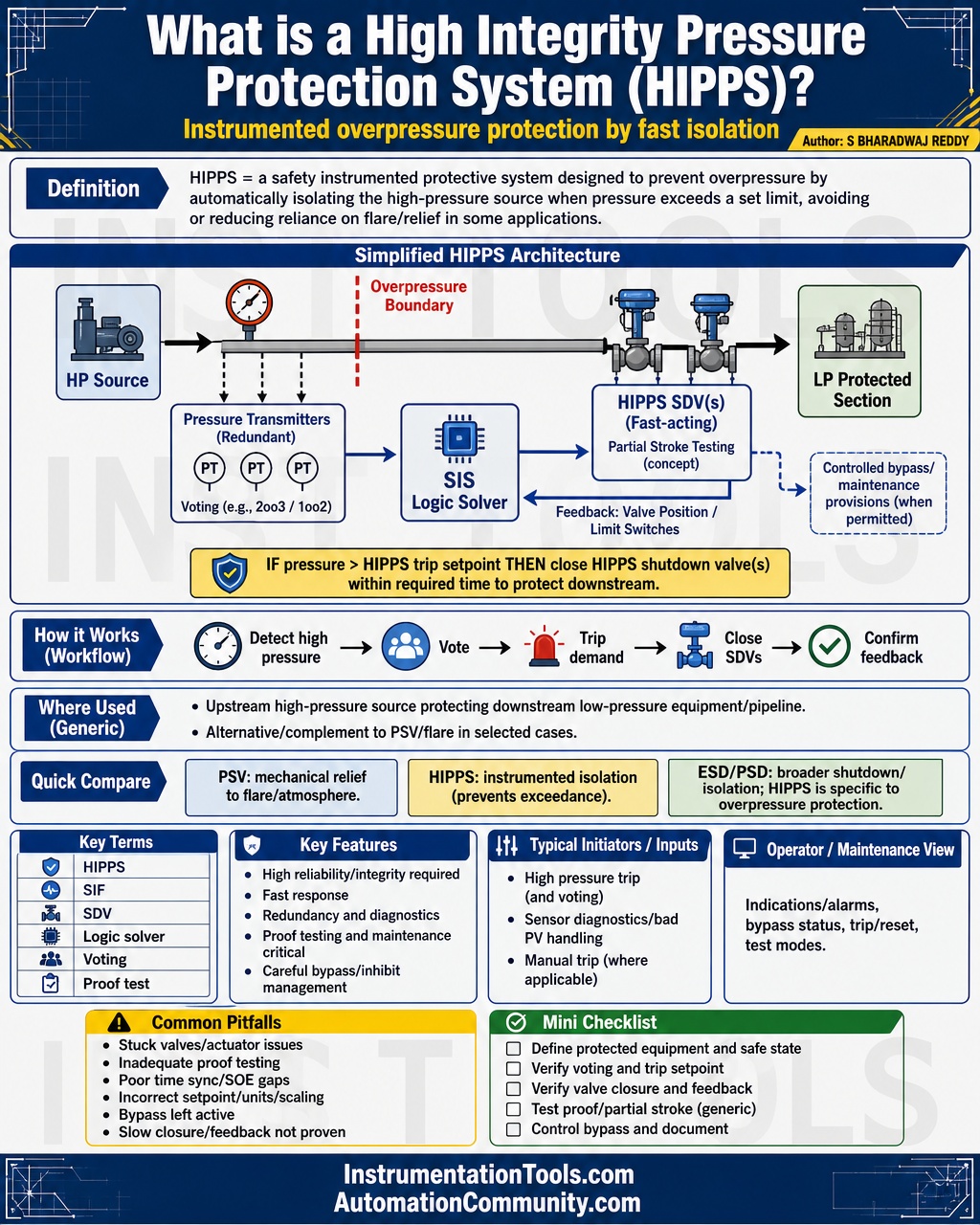
HIPPS is a high-integrity safety system designed to prevent excessive pressure from reaching downstream equipment by detecting an overpressure condition and rapidly isolating the high-pressure source.
In simple terms:
HIPPS is typically implemented as a Safety Instrumented System (SIS) and is designed according to functional-safety requirements.
 How Does HIPPS Work?
A typical HIPPS arrangement may include:
Pressure Sensors → Safety Logic Solver → Final Elements
For example:
 Pressure Transmitters

 Safety PLC / Logic Solver
 Shutdown Valves
 Protected downstream system
If the pressure reaches the defined trip condition:
High-high pressure detected
HIPPS logic evaluates the condition
Shutdown valves close
 High-pressure source is isolated
Downstream equipment is protected
 Why Multiple Pressure Transmitters?
HIPPS often uses redundant pressure sensors to improve availability and reduce the probability of an unwanted trip.
For example, a system could use:
2oo3 voting
Meaning:
2 out of 3 pressure transmitters must indicate the trip condition before the HIPPS initiates shutdown.
This helps balance:
 Safety
Availability
Spurious-trip resistance
The actual voting architecture depends on the required safety integrity and system design.
What Makes HIPPS “High Integrity”?
HIPPS is not simply:
Pressure transmitter + shutdown valve
It is engineered as a safety function with requirements for:
 Independence where required
Redundancy
Diagnostic capability
Defined Safety Integrity Level (SIL)
Reliable final elements
Proof testing
Functional safety management
Controlled bypass/inhibit arrangements
Appropriate failure response
 HIPPS vs Conventional Relief Valve
A conventional pressure relief system typically:
Overpressure → Relief valve opens → Pressure relieved
HIPPS works differently:
High pressure detected → Shutdown valves close → High-pressure source isolated
HIPPS can therefore help prevent excessive pressure from reaching the protected section, rather than simply relieving the resulting overpressure.
In some applications, HIPPS may allow downstream equipment to be designed for a lower pressure rating, subject to the applicable design and safety requirements.
 Important Point
HIPPS does not simply replace all pressure-relief protection by default.
Whether relief devices remain necessary depends on the process design, credible overpressure scenarios, applicable codes/standards, and the overall protection philosophy.
HIPPS is normally considered as part of a broader Layer of Protection strategy.
 Interview Question
What is the purpose of HIPPS?
HIPPS protects downstream equipment from excessive pressure by detecting a dangerous pressure condition and automatically isolating the high-pressure source through a high-integrity safety function.
 Remember It This Way
HIPPS = Detect → Decide → Isolate → Protect
And the most important idea:
#HIPPS #HighIntegrityPressureProtectionSystem #SIS #ESD #FunctionalSafety #SIL #IEC61511 #ProcessSafety #PressureProtection #Instrumentation #SafetyPLC #OilAndGas #ProcessControl #IndustrialAutomation #InstrumentationEngineer 