In RTD formulas, α represents what?
A. Current coefficient
B. Resistance coefficient
C. Voltage coefficient
D. Temperature coefficient
View Answer
Answer: C
Explanation:
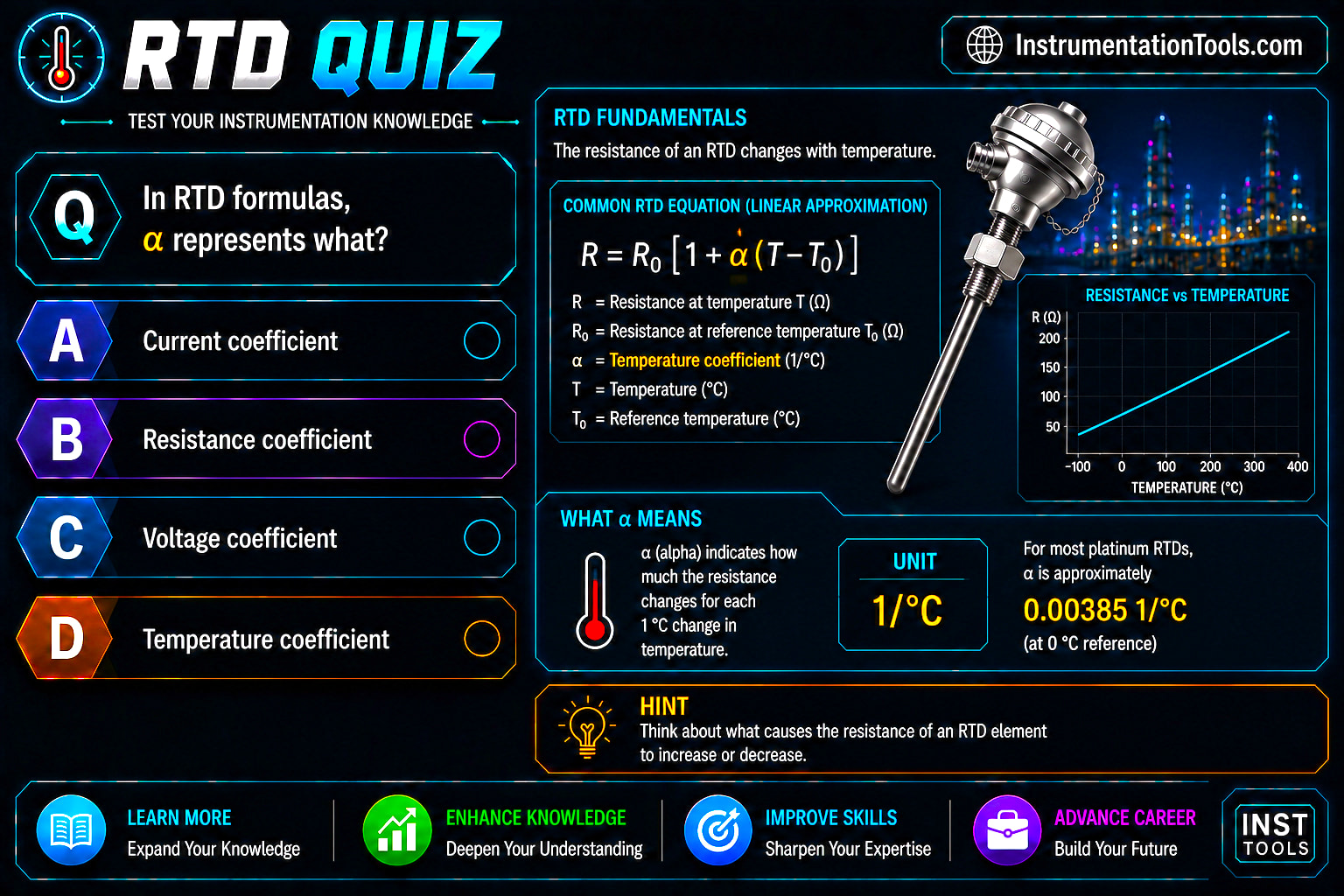
In RTD calculations, α (alpha) represents the temperature coefficient of resistance, which indicates how much the RTD resistance changes with temperature.
It appears in the approximate RTD equation:
Where:
- R = Resistance at temperature T
- R₀ = Resistance at 0°C
- α = Temperature coefficient
- T = Temperature in °C
For a Standard Pt100 RTD
- α = 0.00385 Ω/Ω/°C
This means the resistance increases by approximately 0.385 Ω per °C near 0°C for a Pt100 RTD.
Why α is Important
 Defines RTD sensitivity
Relates resistance change to temperature change
Used in temperature calculations
Standardized by IEC 60751
Why the Other Options Are Incorrect
Current coefficient
- Not represented by α in RTD equations.
Resistance coefficient
- In RTD terminology, α specifically refers to the temperature coefficient of resistance.
Voltage coefficient
- Not used in RTD temperature calculations.
Because α defines how resistance changes with temperature, Option D (Temperature coefficient) is the correct answer.