 Independent Protection Layers (IPL) — Explained Simply
In process safety, one protection is never enough…
That’s why we use multiple independent layers 
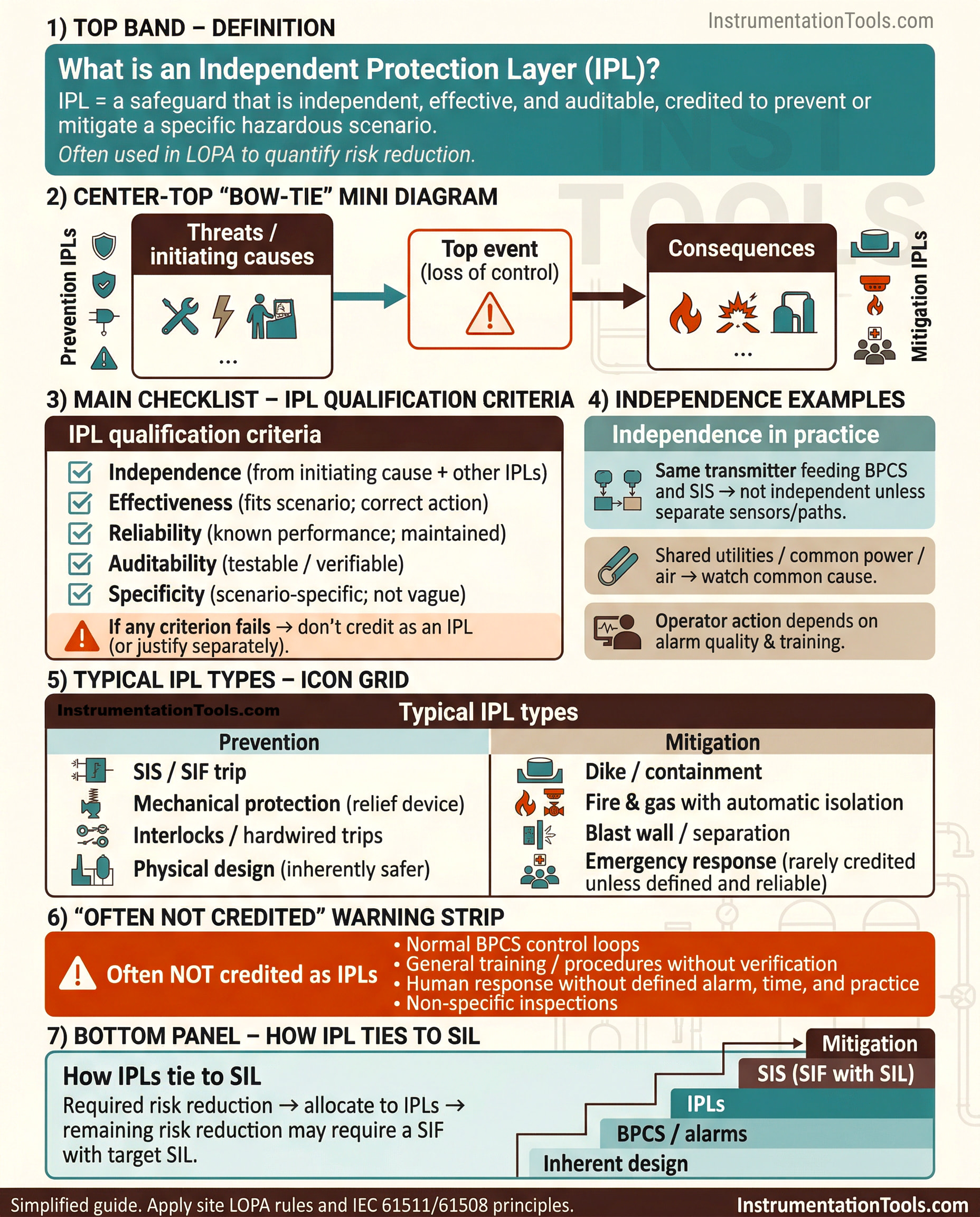
 What is an IPL?
 Independent Protection Layer (IPL)
A safeguard that reduces risk independently
Works even if other layers fail
 Simple idea
 Hazard occurs → IPL acts → Risk reduces
Each layer should be:
 Independent
Reliable
Effective
 Examples of IPLs
Basic Process Control System (BPCS)
Alarm with operator action
Safety Instrumented System (SIS)
Pressure Relief Valve (PRV)
Physical barriers
 Why IPL is important
 Reduces risk step-by-step
Prevents single point of failure
Helps achieve required SIL level
Core concept in LOPA analysis
WATCH VIDEO:
 Real example
 High Pressure Scenario:
BPCS tries to control
Alarm alerts operator
SIS trips system
PRV releases pressure
Multiple layers → Safer system
 Key concept
One layer fails → Others still protect
 Important rules
 Not all safeguards are IPLs
Must be independent (no common failure)
 Simple understanding
IPL = Multiple safety shields for one hazard
#ProcessSafety #IPL #LOPA #FunctionalSafety #SIS #Instrumentation Automation #ControlSystems #Engineering #IndustrialSafety