**  Intrinsically Safe (IS) vs SIS — One Prevents Ignition, the Other Prevents Accidents
Many engineers confuse IS and SIS because both are related to safety…
But they solve completely different problems 
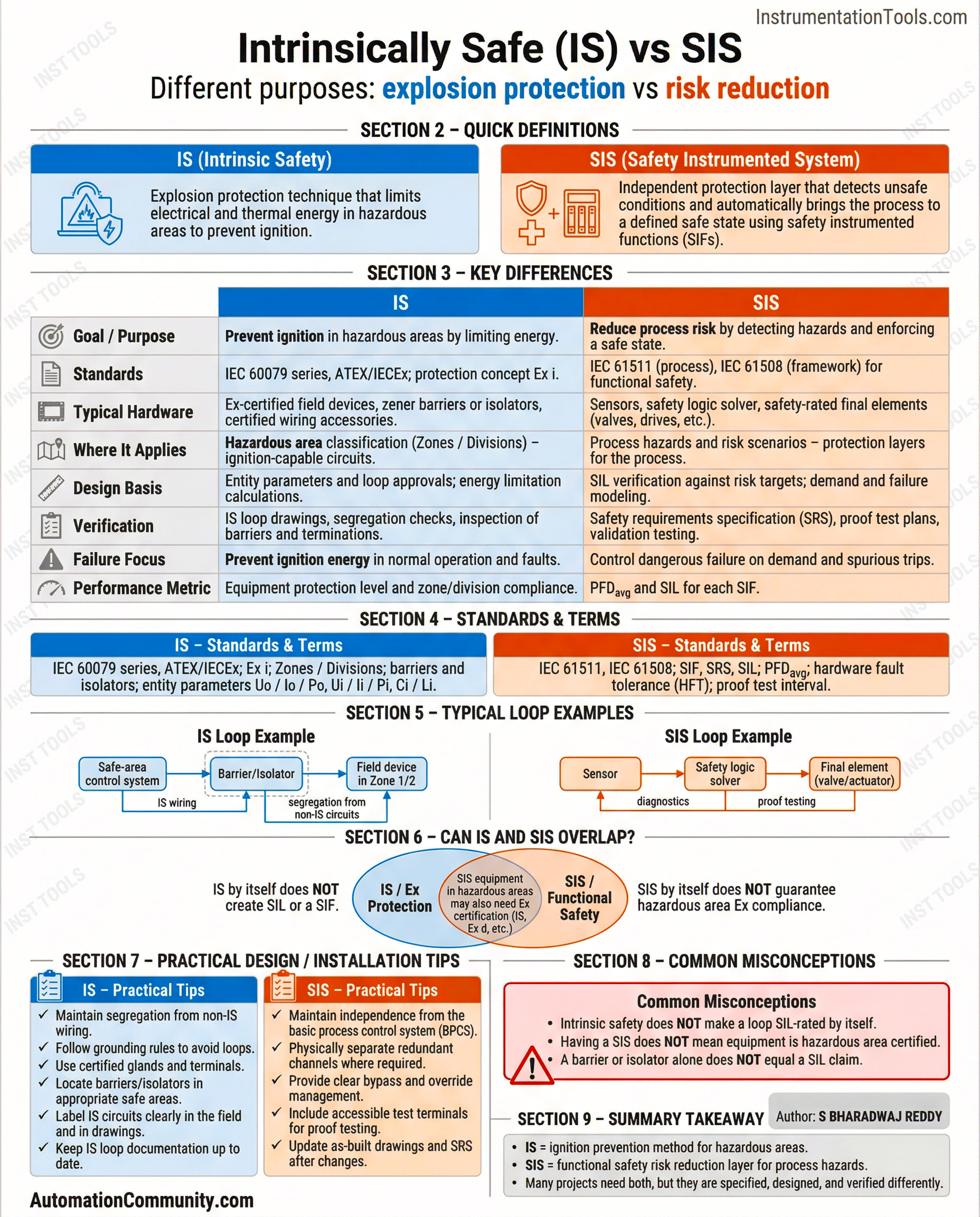
 Intrinsically Safe (IS)
 Electrical protection concept
Limits electrical energy to a safe level
Prevents sparks or heat from igniting hazardous gases
 Focus = Explosion Prevention
 Typical IS Components
 IS barriers
Isolators
IS transmitters
IS field devices
 Where IS is used
 Oil & Gas facilities
 Chemical plants
 Fuel storage terminals
Hazardous (Ex) areas
 Simple Example
 Flammable gas present
 IS design ensures the instrument cannot generate enough energy to ignite the gas.
Safety Instrumented System (SIS)
Process safety protection system
Detects dangerous process conditions
Automatically takes action to reduce risk
Focus = Process Protection
Typical SIS Components
Sensors
Safety PLC (Logic Solver)
Shutdown valves
Final control elements
Where SIS is used
Emergency Shutdown Systems (ESD)
Burner Management Systems (BMS)
High Integrity Pressure Protection Systems (HIPPS)
Simple Example
Reactor pressure becomes dangerously high
SIS trips the process and closes shutdown valves.
 Key Differences
IS → Prevents ignition sources
SIS → Prevents hazardous process events
IS → Electrical safety
SIS → Functional safety
IS → Protects hazardous areas
SIS → Protects people, equipment & environment
 Simple understanding
IS keeps sparks from causing explosions
SIS keeps process failures from becoming disasters
 Important
A plant can have:
IS devices without SIS
SIS without IS devices
Or both together
Because they solve different safety challenges.
#IntrinsicSafety #IS #SIS #FunctionalSafety #ProcessSafety #Instrumentation Automation #SafetyPLC #Engineering #IEC61511 **