 LOPA (Layers of Protection Analysis) — Explained Simply
After HAZOP, one key question remains:
 “Is the existing protection enough?”
That’s where LOPA comes in 
 What is LOPA?
 Semi-quantitative risk analysis method
Evaluates if existing protection layers reduce risk sufficiently
Helps decide SIL requirements
 Simple idea
Hazard occurs → What protections are in place?
Are they enough to reduce risk?
 How LOPA works
 Identify a hazardous scenario
 Define its frequency
 Apply independent protection layers (IPLs)
 Calculate remaining risk
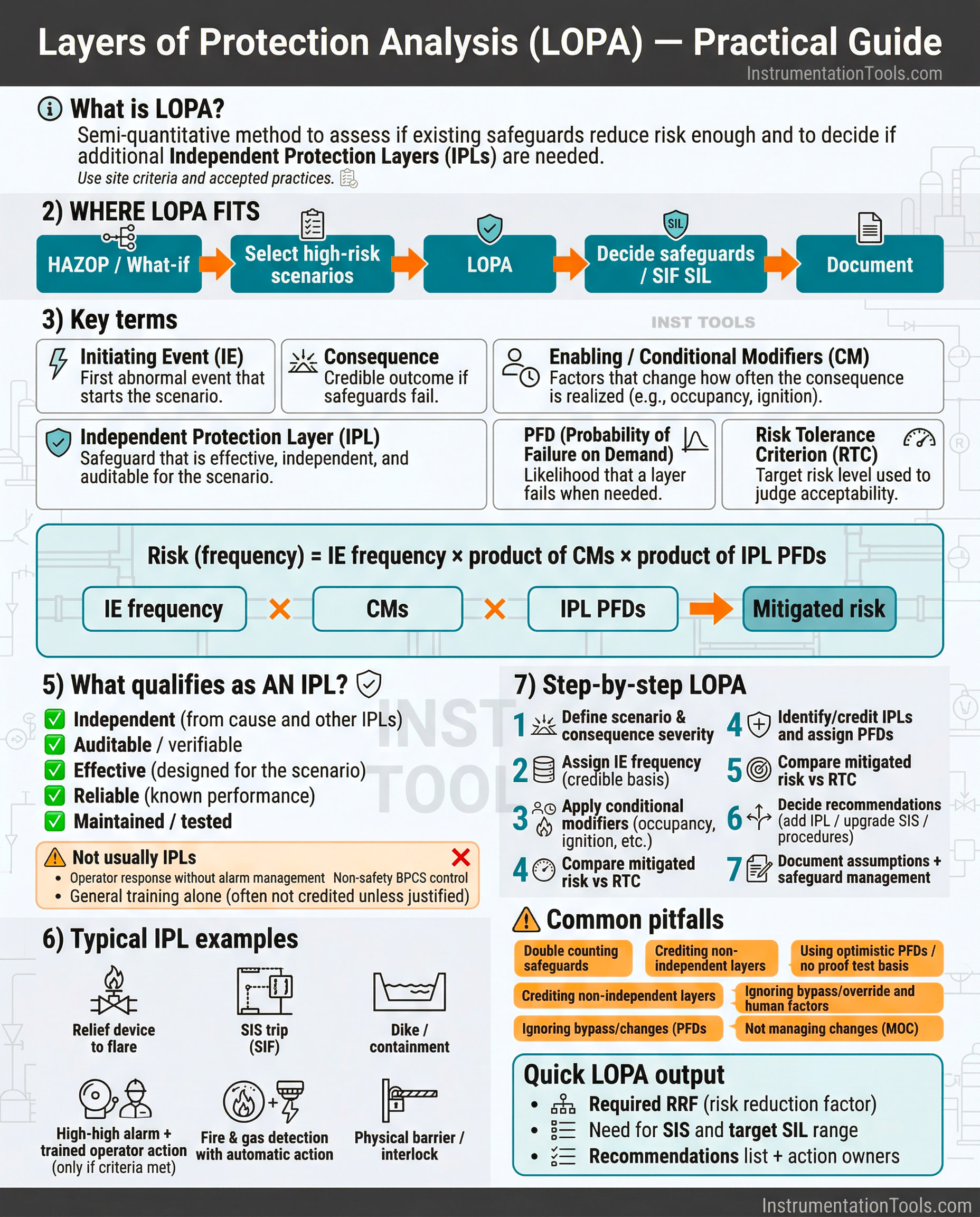
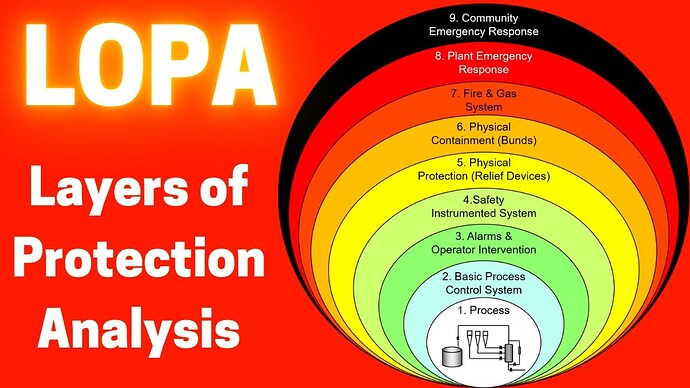
 Typical Protection Layers (IPLs)
 Basic Process Control System (BPCS)
Alarms with operator action
Safety Instrumented System (SIS)
Relief valves
Physical barriers
 Why LOPA is important
 Determines required SIL level
Avoids overdesign or underdesign
Provides structured risk decision
Links HAZOP → SIS design
 Where it is used
 Oil & Gas
 Chemical plants
Power plants
Process industries
 Key concept
Risk = Frequency × Consequence
LOPA ensures risk is reduced to acceptable level
WATCH VIDEOS:
 Important
 Not guesswork
Not just documentation
 Data-driven safety decision tool
 Simple understanding
HAZOP finds hazards
LOPA checks if protection is enough
#ProcessSafety #LOPA #FunctionalSafety #SIS #Instrumentation Automation #ControlSystems #Engineering #IndustrialSafety #IEC61511