 Control Valve Parts — Explained Simply
A control valve is the final control element in any process loop.
But what actually makes it work so precisely? 
 Main Parts of a Control Valve
 Valve Body
 The main casing where fluid flows
Designed to handle pressure, temperature & flow
Trim (Heart of the Valve)
Controls the actual flow inside the valve
Includes:
 Plug
Plug
Seat
Stem
 This is where flow regulation happens
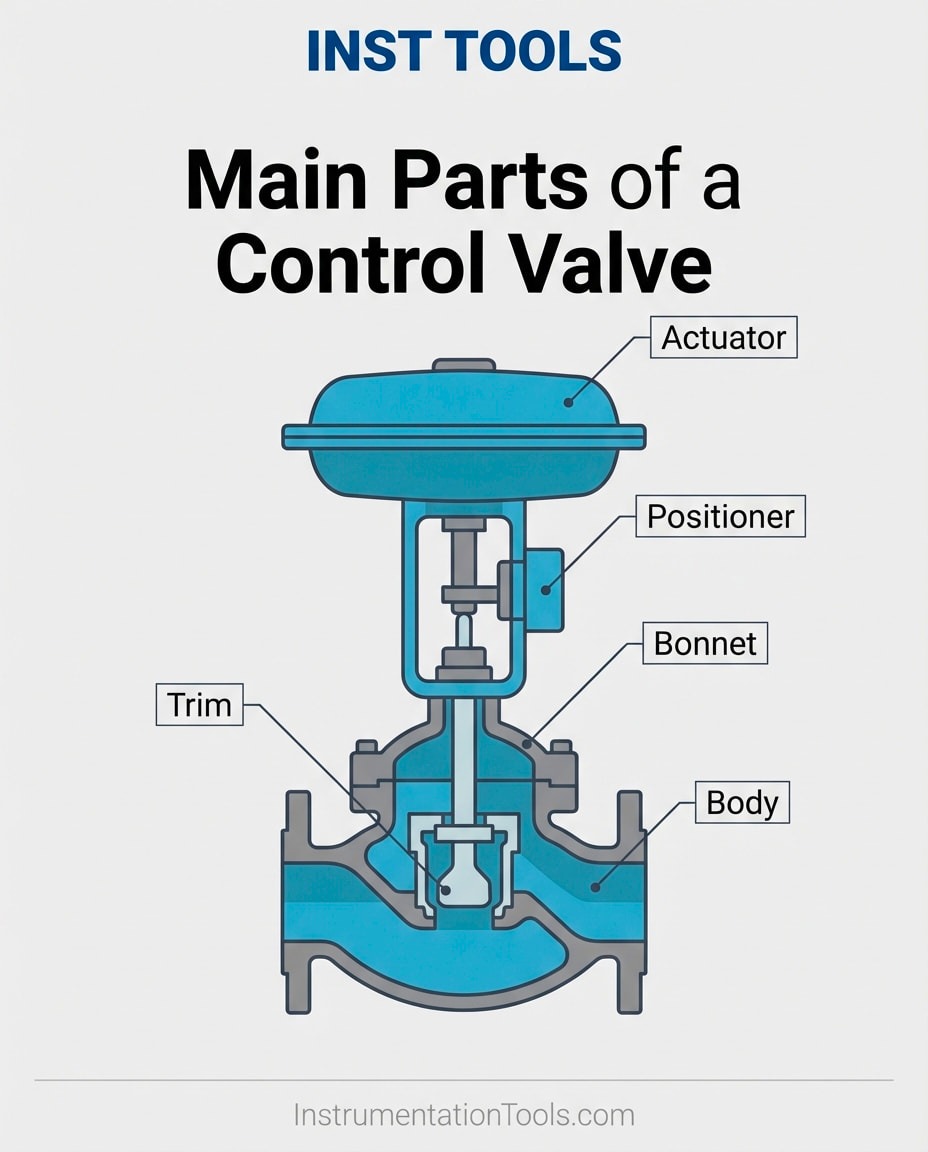
Actuator
Provides the force to move the valve
Types:
Pneumatic
Electric
Hydraulic
Positioner
Ensures valve moves to the exact position
Converts signal (4–20 mA / FF / HART) → Valve movement
Bonnet
Connects body and stem
Protects internal components
Packing
Prevents leakage along the stem
Maintains sealing
Yoke
Connects actuator to valve body
Provides structural support
Accessories
Enhance performance
MORE DETAILS HERE: Basic Parts of Control Valves - Control Valve Functions
Includes:
I/P Converter
Limit Switches
Solenoid Valve
Air Filter Regulator (AFR)
 Simple Understanding
Signal → Positioner → Actuator → Trim → Flow Control
 Control valve = Brain + Muscle + Precision working together
#Instrumentation #ControlValve #ProcessControl #IndustrialAutomation dcs #Engineering #OilAndGas #ProcessInstrumentation Automation #ControlSystems 