A shutdown valve is not considered safe just because a command was sent…
The real question is 
 Did the valve actually move to the required position?
 What is Position Feedback?
 A signal that confirms the actual valve position
Verifies whether the shutdown valve is:
 Fully Open
Fully Closed
In Transit
 Why is it important?
Sending a shutdown command is one thing…
 Confirming valve closure is another.
A failed valve can leave the process exposed even though the SIS issued a trip command.
 How position feedback is obtained
Limit switches
Proximity switches
Valve position transmitters
Smart valve positioners
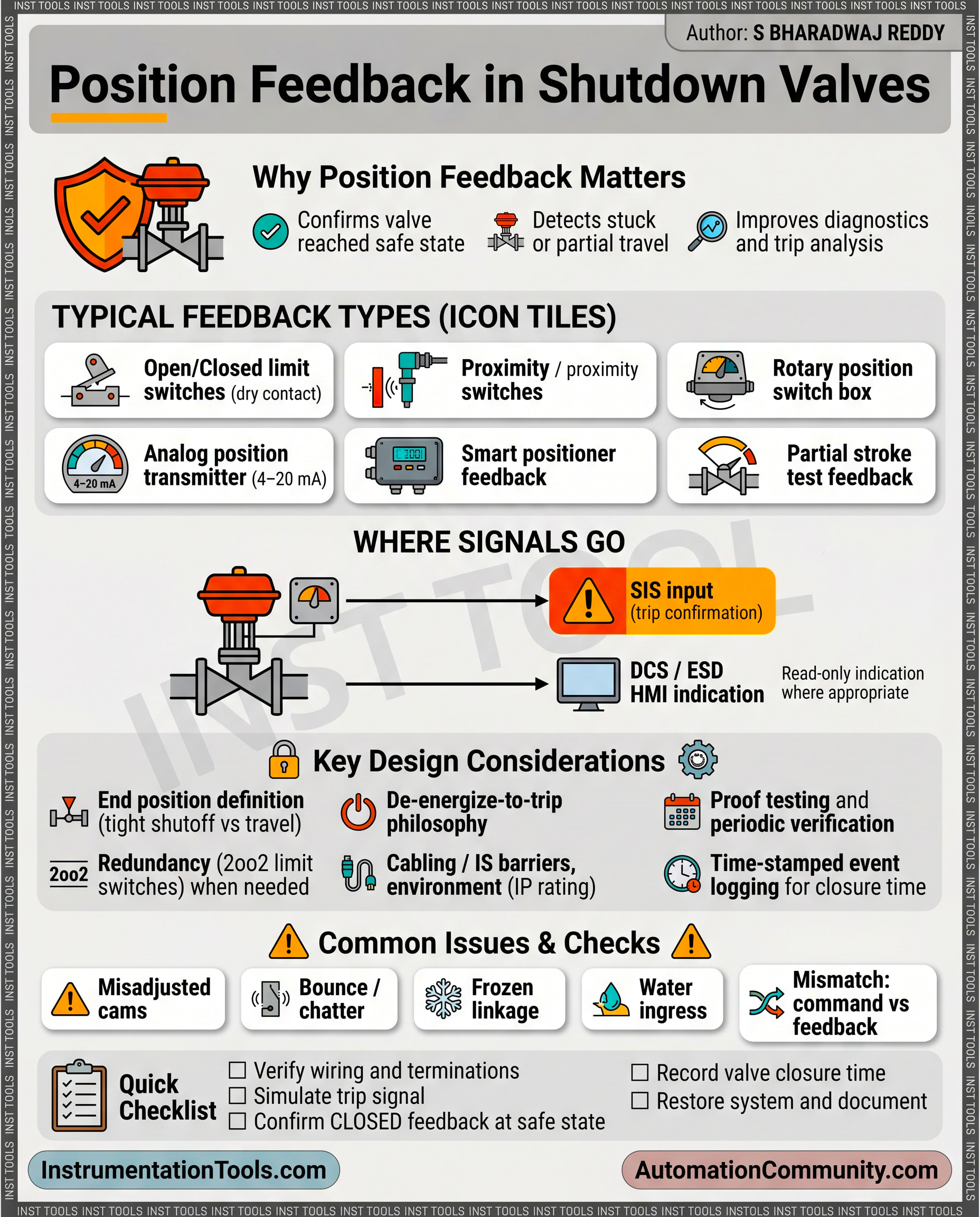
 Typical Shutdown Sequence
 Hazard detected

 SIS issues trip command
Shutdown valve moves
 Position feedback confirms closure
Safety action verified
 Without position feedback
 Valve stuck open
Mechanical failure unnoticed
Air supply failure undetected
False assumption of protection
 What operators monitor
 Valve Open Confirmation
 Valve Closed Confirmation
Valve Travel Timeout Alarm
Valve Not in Required Position Alarm
 Role during Proof Testing
Position feedback helps verify:
Valve stroke completed
Final element is healthy
Safety function is working correctly
 Key takeaway
Commanding a shutdown valve is not enough.
The SIS must know the valve actually reached the safe position.
 Simple understanding
 Trip Command = “Close the valve”
Position Feedback = “Valve successfully closed”
Both are required for a reliable Safety Instrumented Function (SIF).

#SIS #ShutdownValve #ESD #FunctionalSafety #ProcessSafety #Instrumentation #SafetyPLC #ControlSystems #IEC61511 #Engineering