 Safety PLC vs Normal PLC — Know the Difference
They may look similar… but their purpose is completely different 
 Normal PLC (Control PLC)
 Used for process control
 Controls temperature, pressure, flow
Runs continuous operations
Focus on performance & efficiency
 Goal: Keep the process running
 Safety PLC
Used for safety-critical protection
Detects dangerous conditions
Executes automatic shutdown (trip)
Designed as per IEC 61508 / 61511
Goal: Keep the process safe
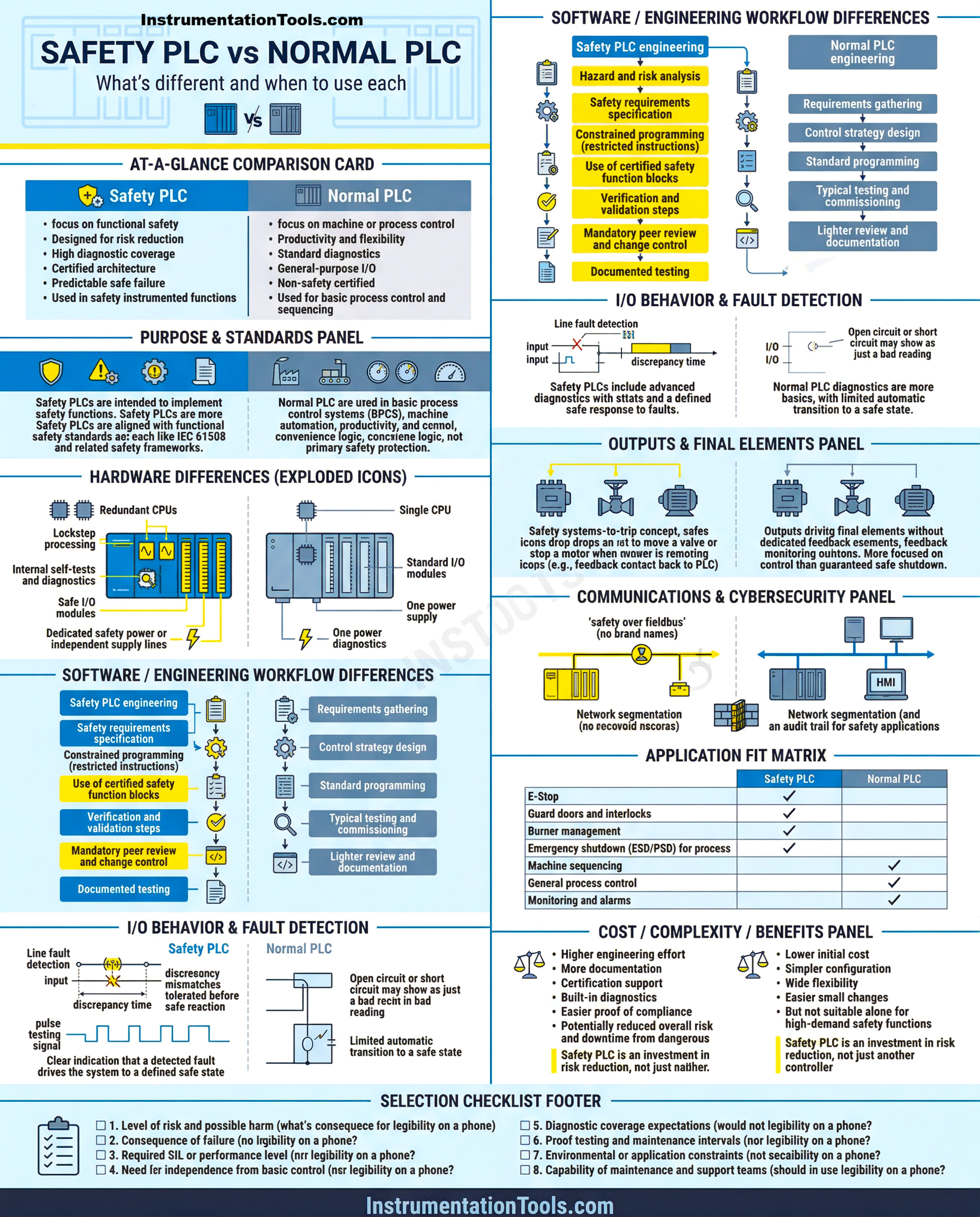
 Key Differences
 Normal PLC → Control logic
Safety PLC → Safety logic
Normal PLC → No SIL requirement
Safety PLC → Certified for SIL levels
Normal PLC → Failure → Process upset
Safety PLC → Failure → Must go to safe state
 Design approach
Normal PLC
Focus on speed & flexibility
Safety PLC
Focus on reliability, redundancy & diagnostics
WATCH VIDEOS:
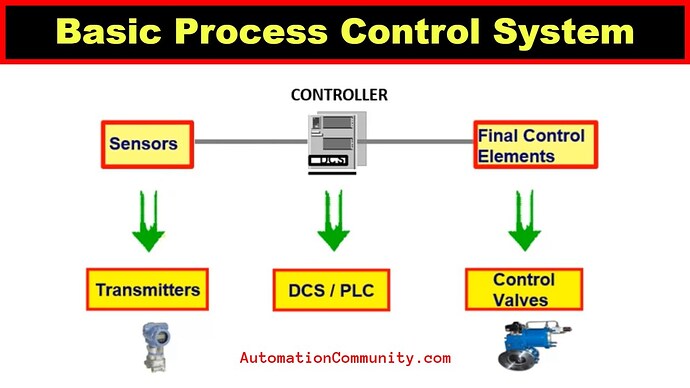
 Applications
Normal PLC → Machines, production lines
Safety PLC → ESD, BMS, critical shutdown systems
 Simple understanding
Normal PLC = Control the process
Safety PLC = Protect the process
 Important rule
 Never mix safety and control logic
 Keep SIS independent from BPCS
 Both are essential — one runs the plant, the other saves it.
#SafetyPLC #PLC #FunctionalSafety #SIS Automation #Instrumentation #ControlSystems #Engineering #IndustrialAutomation #ProcessSafety