Introduction to Temperature Measurement in Industrial Automation
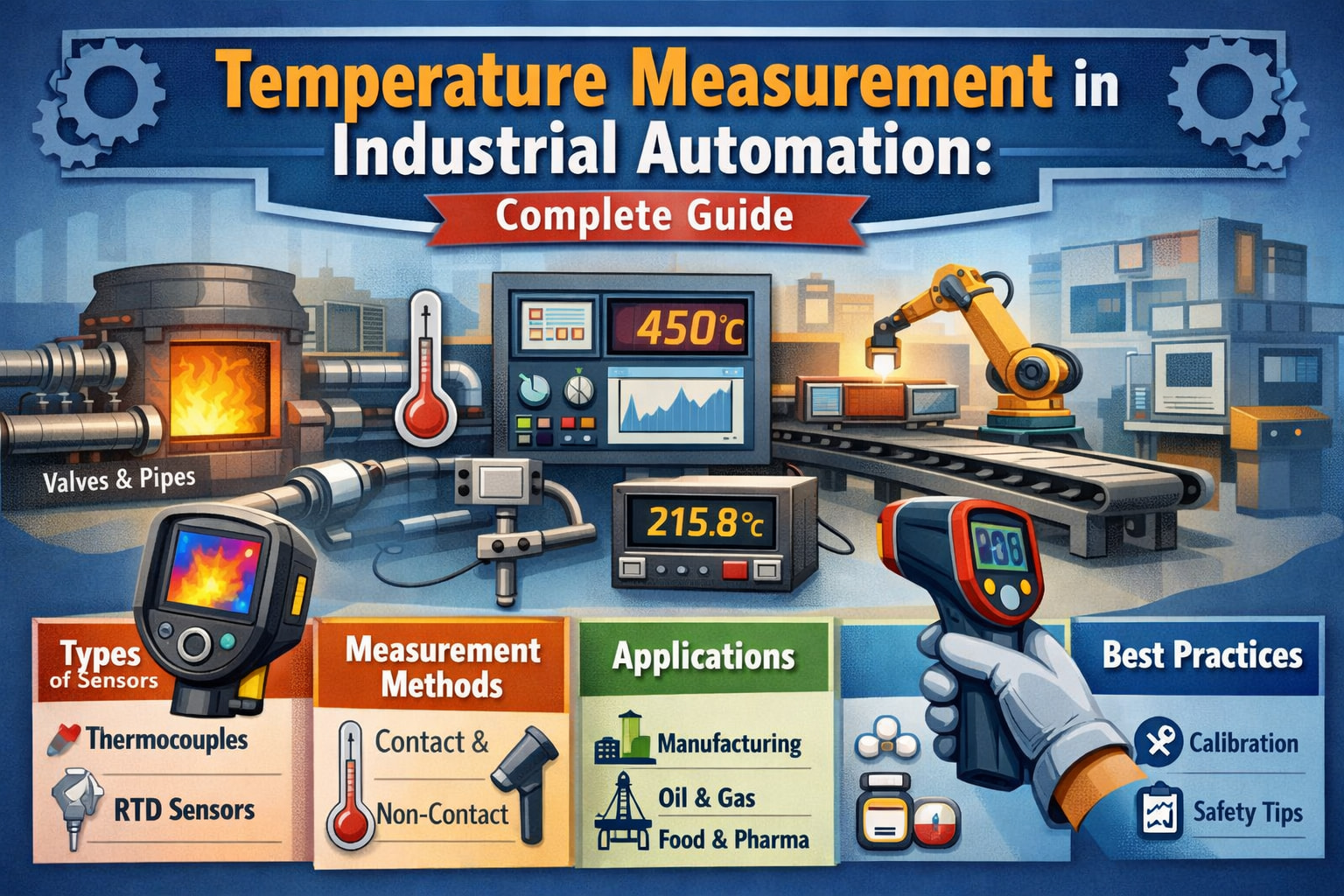
As one of the most valuable parameters in industrial automation, all the sectors like oil and gas, chemical processing, pharma, power generation, and food manufacture, require high precision and accuracy to ensure the quality of work, the efficiency of the operations, and the safety of the employees in their processes.
In the fully automated industries, the latest temperature measuring devices are used to control and stream monitor the operations of each device. The measuring device controls devices in the automation of the industrial processes through their Embedded Control Systems like PLC, DCS, and SCADA.
To identify quality devices, manufacturers of thermocouple and RTD sensors are reputed to consistently and reliably meet the most demanding industrial automation processes.
What is Temperature Measurement in Industrial Automation?
In industrial automation, temperature measurement refers to the sensing, monitoring, and controlling of temperature through the use of various specialized measurement and monitoring devices. The devices collect temperature data and convert it to measurement and control data for further processing.
These systems are essential components in industrial automation systems, making it possible for industries to achieve the optimum condition in their operations without human involvement. Based on some pre-set parameters, the temperature data collected will then influence the system to perform actions such as heating, cooling, or stopping the system.
The systems for measuring temperature typically contain:
-
Sensors like RTDs and thermocouples
-
Signal processing units or transmitters
-
Control units such as a PLC or DCS
-
Monitoring systems like SCADA or HMI
In combination, these components facilitate constant monitoring and control of various aspects of industrial operations.
The Importance of Accurate Temperature Measurement
1. Process Efficiency and Optimization
Measuring temperature accurately allows industrial processes to be carried out within the desired temperature limits. This ultimately leads to an increase in the processes’ efficiency, productivity, and a reduction in material wastage.
2. Safety and Risk Management
Fluctuations in temperature can create hazardous situations such as overheating and subsequent equipment failures, or even explosions. Quality temperature measuring equipment can identify irregularities within the temperature system, in time to prevent accidents.
3. Energy Efficiency
The monitoring system should measure and maintain the temperature at the desired limits, thereby, eliminating energy wastage. Effective temperature monitoring is essential to optimize the operational costs.
4. Regulatory Compliance
Adherence to the industry’s regulations is sometimes a necessity due to the nature of the industry. Therefore, the RTD sensor suppliers and thermocouple manufacturers’ certified sensors guarantee compliance to such regulations.
Various Temperature Sensors Utilized in Industry
1. Thermocouples
Due to the broad spectrum of flexibility and temperature range, thermocouples are some of the most popular temperature sensors used in many industries
The Seebeck effect describes the generation of voltage via a temperature disparity between two different metals. The generated voltage is then interpreted as a temperature.
Primary benefits:
-
Broad range of temperature
-
Quick response
-
Increased durability
-
Cost saving
Experienced thermocouple suppliers send thermocouples that are used in extreme conditions as in furnaces, kilns, and reactors.
2. RTD (Resistance Temperature Detectors)
For applications requiring a high degree of precision, this is the most appropriate sensor. RTD sensors are highly accurate and very stable. The RTD PT100 is the most frequent variant and is constituted of platinum, owing to its excellent temperature response.
Some of the Industries where precision temperature control is exercised include healthcare (Pharmaceutical), Food, and Laboratories.
Primary benefits:
-
Extremely accurate
-
Remarkably consistent
-
Stable in the long run
When working with a good RTD sensor supplier, you are guaranteed long-term reliability.
3. Thermistors
With high response times and sensitivity, thermistors are temperature response resistors.
They are often used in electronic devices and applications that require precision control in a close range.
4. Infrared (Non-Contact Temperature Sensors)
They measure your temperature in a distance. So, they help keep you safe in situations where direct contact is dangerous, These units sense the thermal radiation being emitted by the objects, and turn it into a temperature reading.
These sensors help in the metal, glass, and food industries.
Working Principles of Temperature Measurement
To choose a specific instrument correct to an application, it is important to understand how temperature sensors work.
Thermocouples - Seebeck Effect
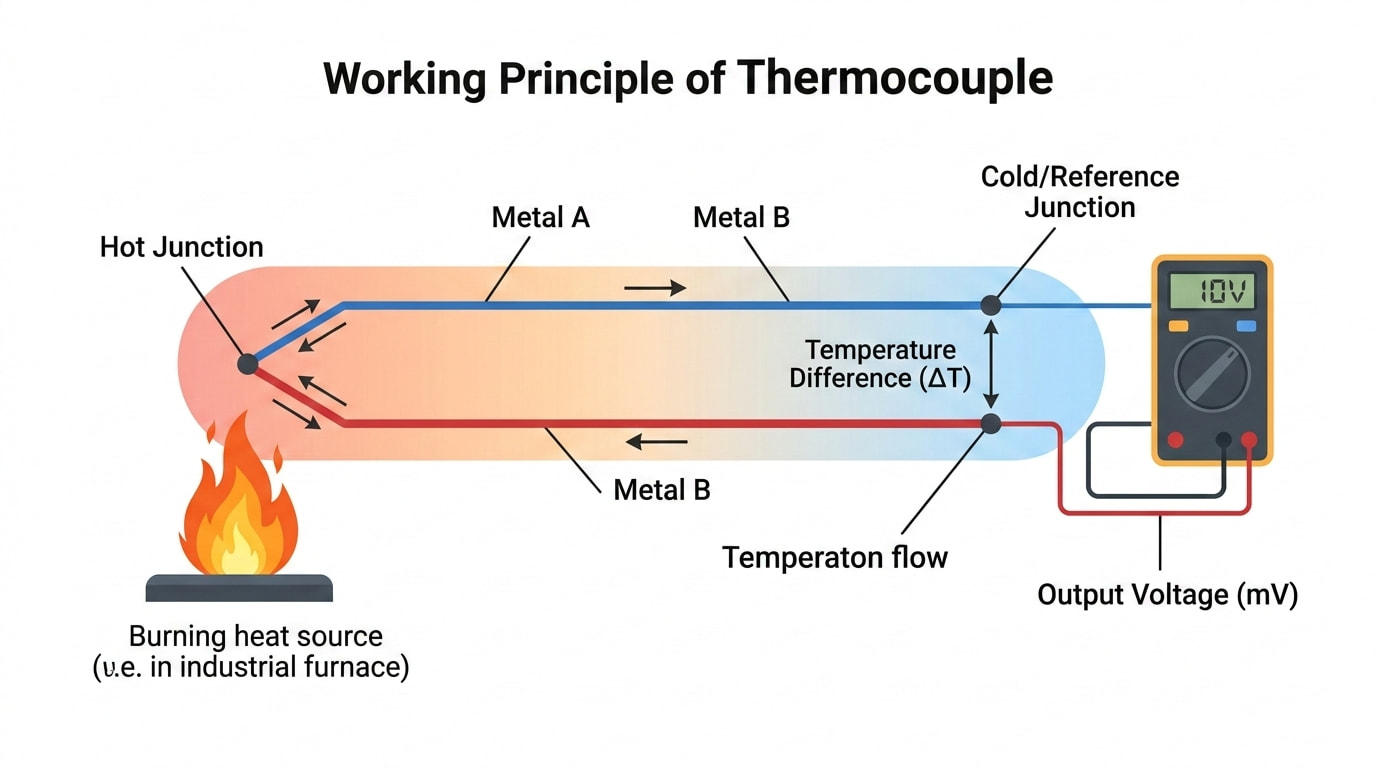
Thermocouples produce a voltage when two different metals are joined and put in the middle of a temperature differential. This voltage is a measurement of how large the temperature differential is.
RTDs - Resistance Variation
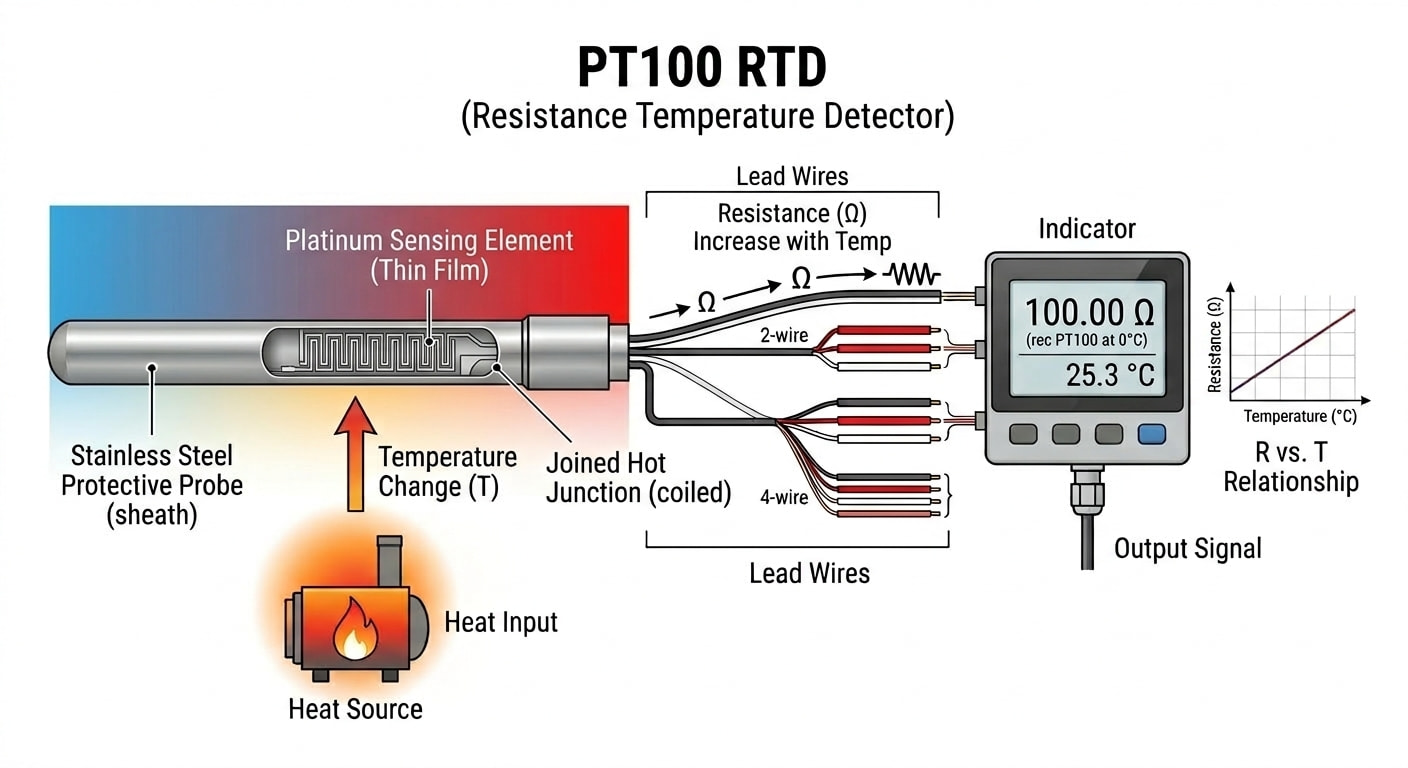
RTDs work by measuring temperature and correlating that to how much resistance a piece of metal (platinum) has. Resistance increases in a direct relationship to the temperature.
Thermistors - Semiconductor Behavior
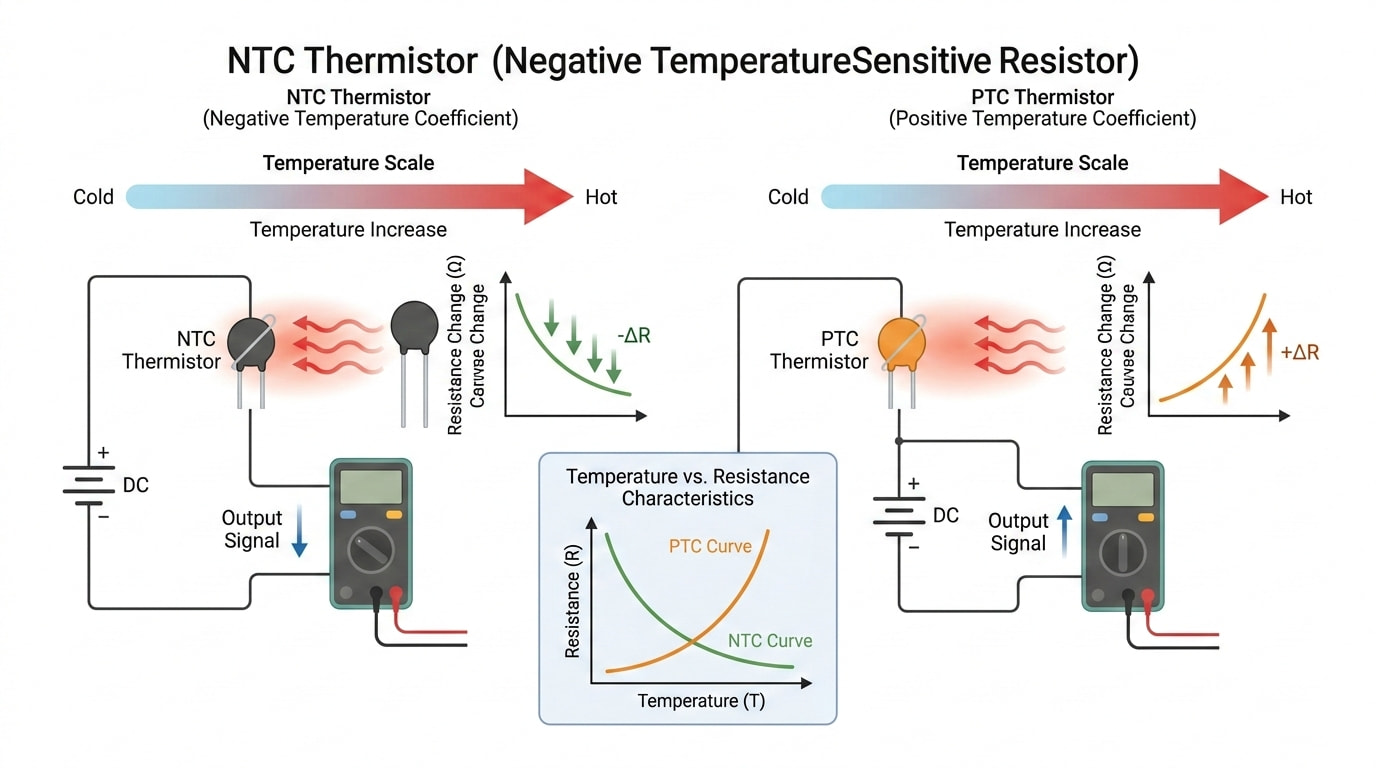
Thermistors are based on the idea of resistance in a semiconductor. They are very sensitive, but not over a very large temperature range.
These principles are the foundation of nearly all the temperature measuring tools and devices used in industrial Automation.
Industrial Applications of Temperature Measurement
Temperature Measurement is of vital importance in almost every industry, as it is one of the most central aspects of industrial automation solutions.
Oil & Gas Industry
Temperature sensors are located within pipelines, refineries, and storage systems, assisting with monitoring and controlling varying process conditions. Measuring temperature can enhance safety and improve processing efficiency in high-risk situations.
Chemical Processing
Temperature measurement and control is necessary to keep end products safe and to prevent dangerous chemical reactions. Simplified processes and improved end products are the result of controlling chemical reactions with temperature.
Power Generation
Temperature measurement is critical within power generation at steam boilers, turbines, and heat exchangers. Suitable and reliable temperature sensors can prevent equipment failure and maximize heat energy conversion.
Food & Beverage Industry
In the food and beverage industry, temperature sensors are widely used in food processing, storage, and packaging to keep food safe and quality. Temperature must be controlled during processing, packaging, and storage.
Pharmaceutical Industry
In the pharmaceuticals industry, strict guidelines and regulations dictate the control of temperature to ensure the integrity of the products. In this industry, temperature sensors come in high precision RTDs.
Best Practices for Accurate Temperature Measurement
Following the guidelines provided can enhance the overall reliability of the temperature measuring instrument used.
1. Proper Sensor Selection
This is the most important step. Temperature measuring sensors are influenced by varying conditions and each sensor is designed to withstand such variability.
2. Correct Installation
To get accurate readings, the location of sensors must be chosen carefully. Avoid areas with strong negative influences from vibration, electromagnetic fields, or favorable conditions for thermal contact.
3. Protective Accessories
In extreme conditions, sensors should be housed in thermowells, which protect them from damage due to pressure, corrosion, and flow conditions.
4. Maintenance
Preventative maintenance and inspections can identify potential problems before failures occur.
5. Calibration
Calibration is necessary for sensors to remain accurate and meet industry requirements.
Calibration and Standards in Temperature Measurement
Calibration is necessary to keep temperature measurement systems operating correctly and dependably.
Why Calibration is Important
Sensors are subject to drift due to environmental conditions, use, and age. Calibration is necessary to adjust for these deviations and to ensure continued accuracy.
Calibration Frequency
The requirements of each industry dictate how often calibrations should be performed. Critical operations will dictate calibrations be performed more often than in non-critical operations.
Industry Standards
Temperature measurement systems are required to meet:
-
ISO standards
-
IEC guidelines
It is guaranteed that thermocouple and RTD sensor vendors who are certified ensure adherence to these guidelines.
Factors to Consider When Sourcing for Temperature Sensors
For accurate and dependable measurements, protective measures should be taken.
Main considerations:
-
Temperature Range: Check what range the sensor can manage.
-
Accuracy: Pick based on the level of detail you need.
-
Response Time: Critical for processes that are dynamic.
-
Environment: Look at pressure, corrosion, and vibrations.
-
Cost: Track performance vs budget.
If you need to measure high temperatures, go to thermocouples, and for precise measurements, go to RTDs. Talking to thermocouple experts and RTD sensor experts will help identify what best fits the need.
Future Trends in Temperature Measurement
Newer technologies and automation are rapidly changing the field of temperature measurement.
Smart Sensors
Newer sensors can communicate digitally.
Wireless Monitoring
The installation of temperature sensors becomes easy and flexible in industrial setups with the use of wireless temperature sensors.
Predictive Maintenance
Systems based on artificial intelligence use the temperature measurement data to predict system failure and thus can determine maintenance in advance.
Industry 4.0 Integration
The measurement of temperature data in combination with IoT facilitates good and smart decision-making for the measurement system used.
The above mentioned innovations will bring about significant improvements to industrial automation.
Conclusion
Ensuring efficiency, safety, and quality, temperature measurement is a modern industrial automation solutions core component. Various instruments measuring temperature from RTDs to thermocouples meet the various demands of industrial applications.
Careful selection and calibration of sensors and their installation can greatly enhance the benefit of the process. Long-term accuracy and reliability are assured with the partnership of thermocouple manufacturers and RTD sensor suppliers.
As automation technologies advance in industries, temperature measurement becomes increasingly vital regarding operational excellence.