 TÜV-Certified Systems — What It Really Means
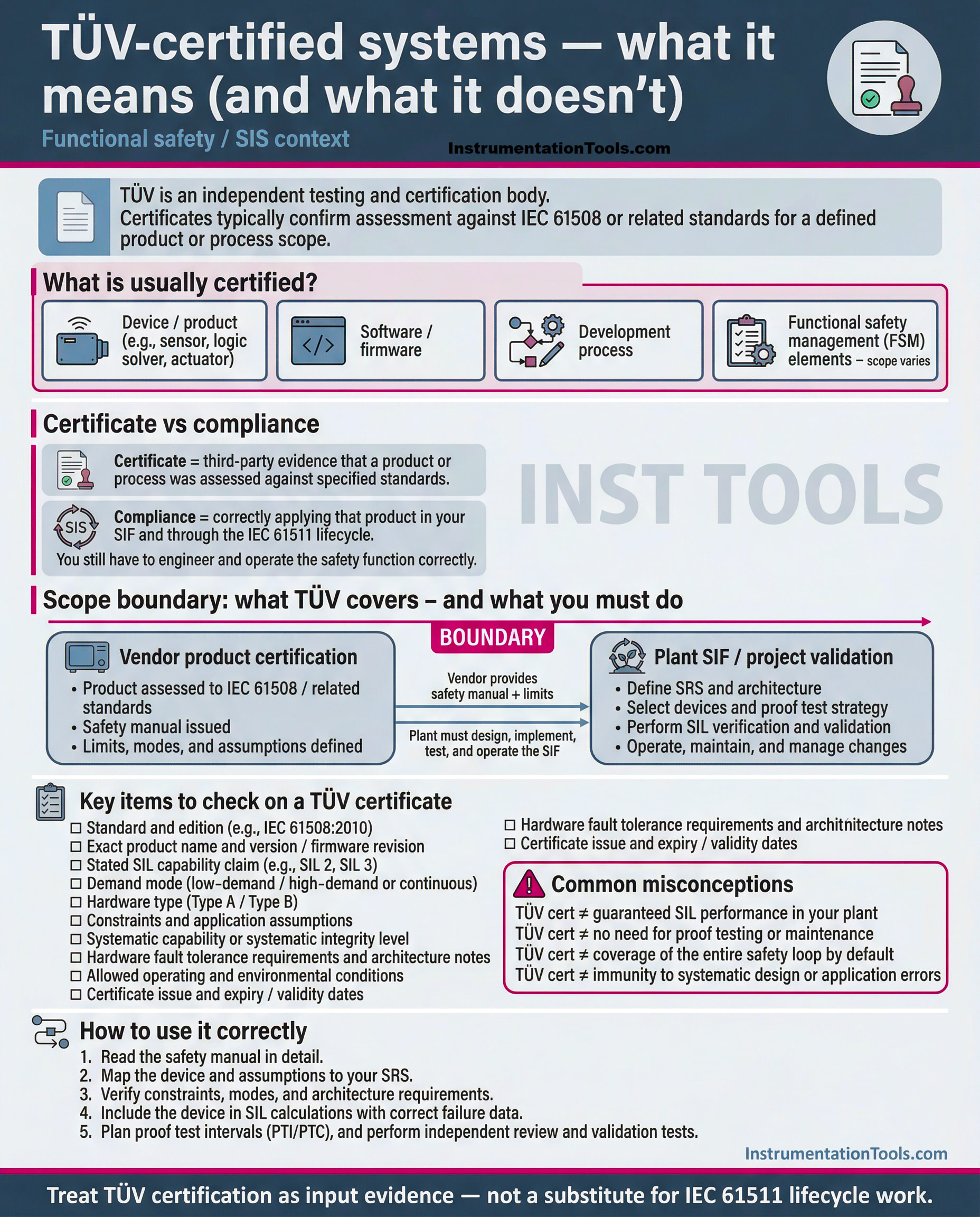
You often see “TÜV Certified” on safety PLCs and instruments…
But what does it actually guarantee? 
 What is TÜV?
 TÜV (Technischer Überwachungsverein)
Independent organization for testing & certification
Ensures systems meet strict safety standards
 What does “TÜV Certified” mean?
The system has been independently tested and verified
Meets standards like IEC 61508 / IEC 61511
Suitable for use in functional safety applications
 What is actually certified?
 Hardware design
Software/firmware
Safety functions (SIL capability)
Development & testing process
 In safety systems
 TÜV certification confirms that a device can be used for:
 SIL 1
SIL 1
 SIL 2
SIL 2
 SIL 3
SIL 3
(As per its certified capability)
 Where you see TÜV-certified systems
 Safety PLCs
Emergency Shutdown Systems (ESD)
Burner Management Systems (BMS)
Safety transmitters & valves
 Important misunderstanding
 TÜV certification ≠ System is automatically safe
 It means the device is capable of achieving required SIL
Final safety depends on:
Design
Installation
Maintenance
 Key takeaway
 TÜV = Independent verification
 Confirms compliance with safety standards
 Supports SIL-based system design
 Simple understanding
TÜV Certified = Trusted for safety use, not guaranteed safety by default
WATCH VIDEO:
#FunctionalSafety #TUV #SIL #SIS #SafetyPLC #Instrumentation Automation #ProcessSafety #ControlSystems #Engineering