 What is a Safety PLC? — Explained Simply
Not all PLCs are built the same…
When human safety and plant protection are involved, we use a Safety PLC 
 What is a Safety PLC?
 A PLC designed specifically for safety-critical applications
Built to meet standards like IEC 61508 / IEC 61511
Used in Safety Instrumented Systems (SIS)
 What makes it different from a normal PLC?
 Designed for fail-safe operation
Detects internal faults automatically
Uses redundant processors & I/O
Certified for SIL levels (SIL 1, 2, 3)
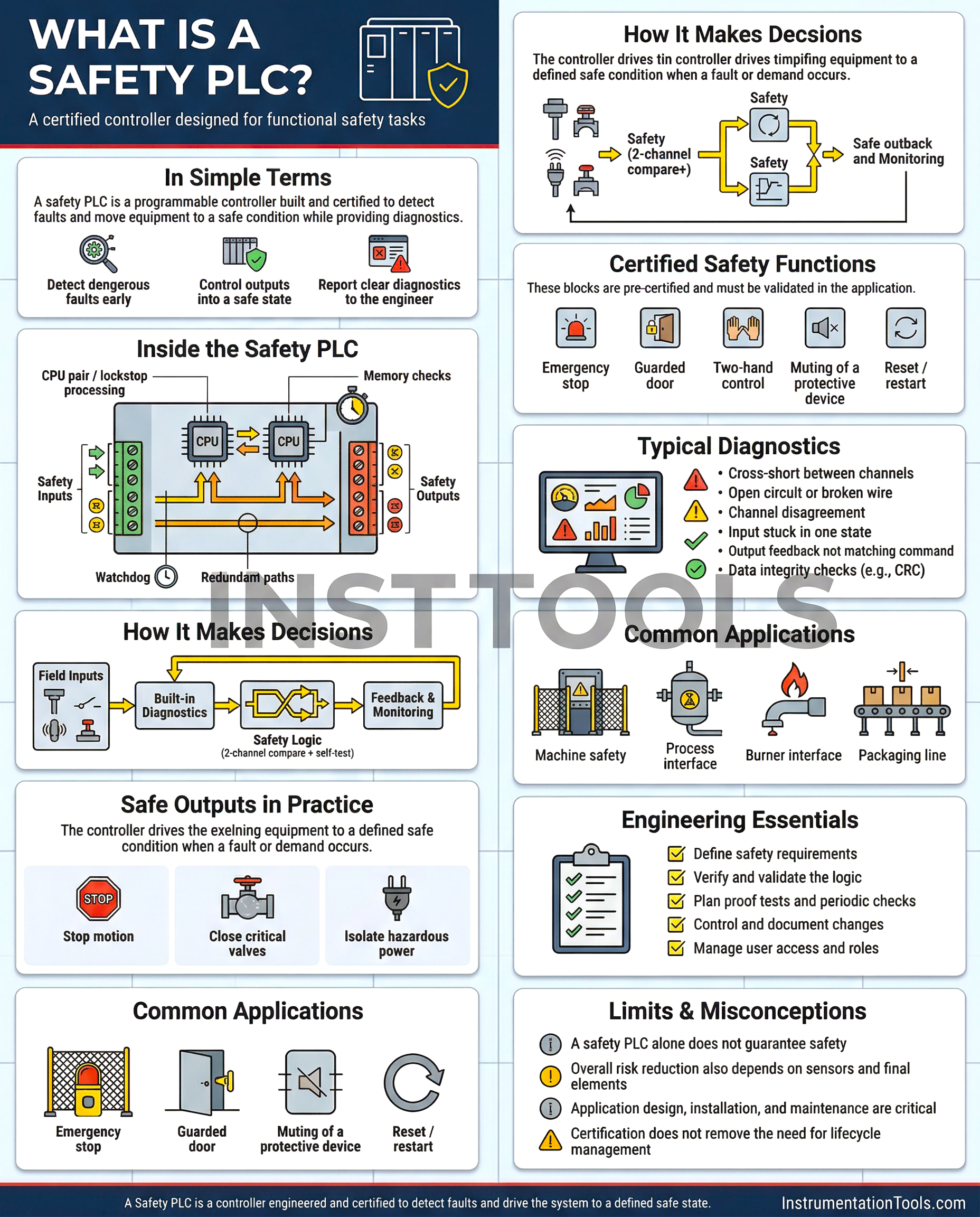
 If something fails → System goes to safe state
 Key features
 Self-diagnostics (CPU, memory, I/O)
Fault detection & safe shutdown
Redundancy (1oo2, 2oo3 architectures)
High reliability & availability
WATCH VIDEO:
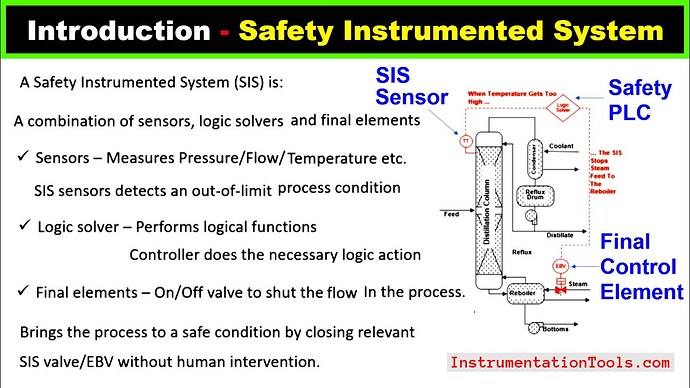
 Where Safety PLC is used
 Emergency Shutdown Systems (ESD)
Burner Management Systems (BMS)
 Oil & Gas plants
Chemical & process industries
 Important point
 Normal PLC → Controls process
 Safety PLC → Protects process
 Simple understanding
Normal PLC = Brain for operation
Safety PLC = Guardian for protection
 When failure is not an option, Safety PLC is the solution.
#SafetyPLC #FunctionalSafety #SIS #PLC #Instrumentation Automation #ProcessSafety #ControlSystems #Engineering #IEC61511