 Safety Voting Logic Explained Simply (SIS / ESD Systems)
In safety systems, voting logic determines when a shutdown should occur based on signals from multiple sensors.
The goal is to balance Safety and Plant Availability  .
.
Here are the common voting logics used in industry 
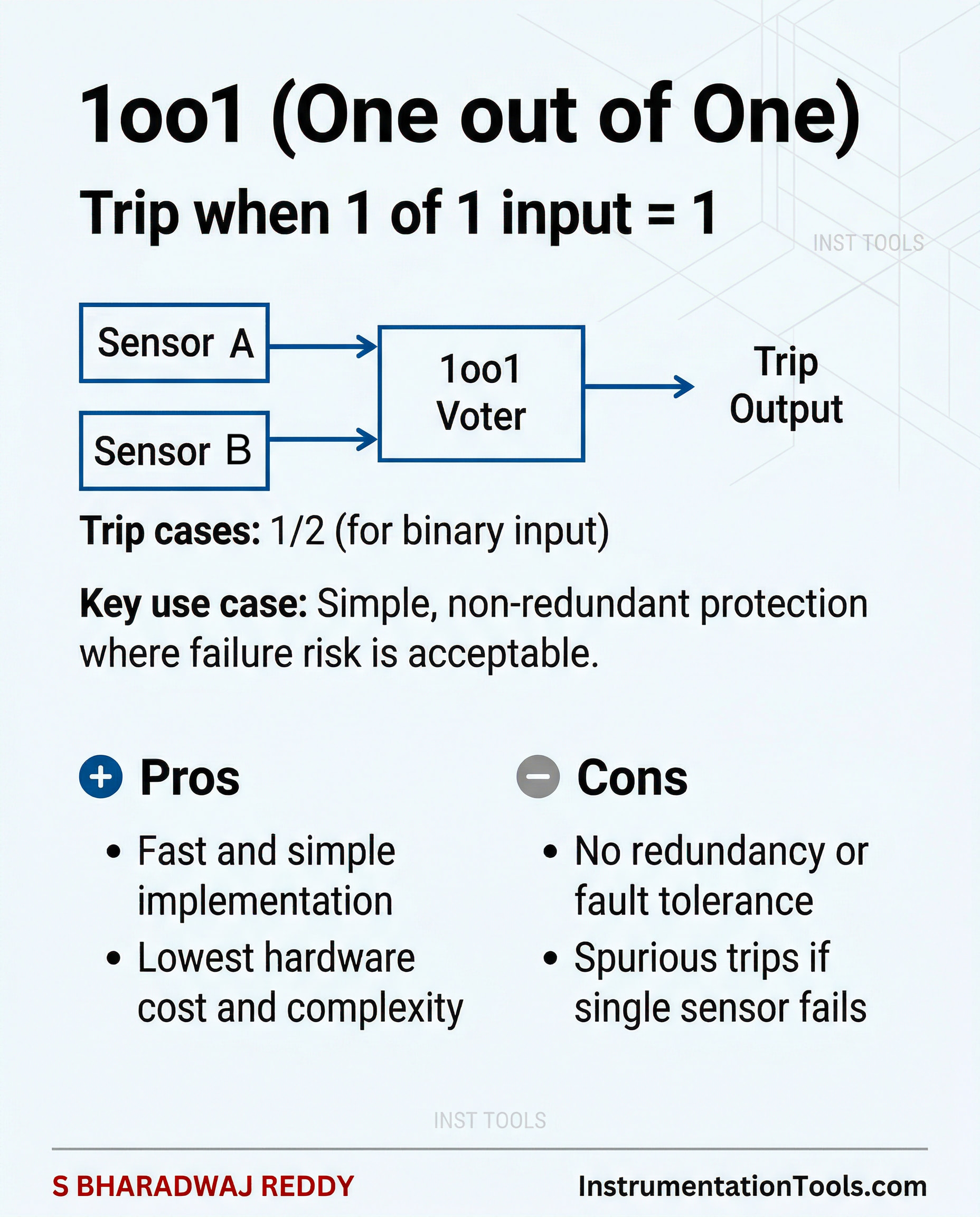
 #1oo1 Voting Logic (One out of One)
 Trip occurs if 1 sensor detects danger
 Fastest response
 No redundancy
 Sensor failure can cause false trip
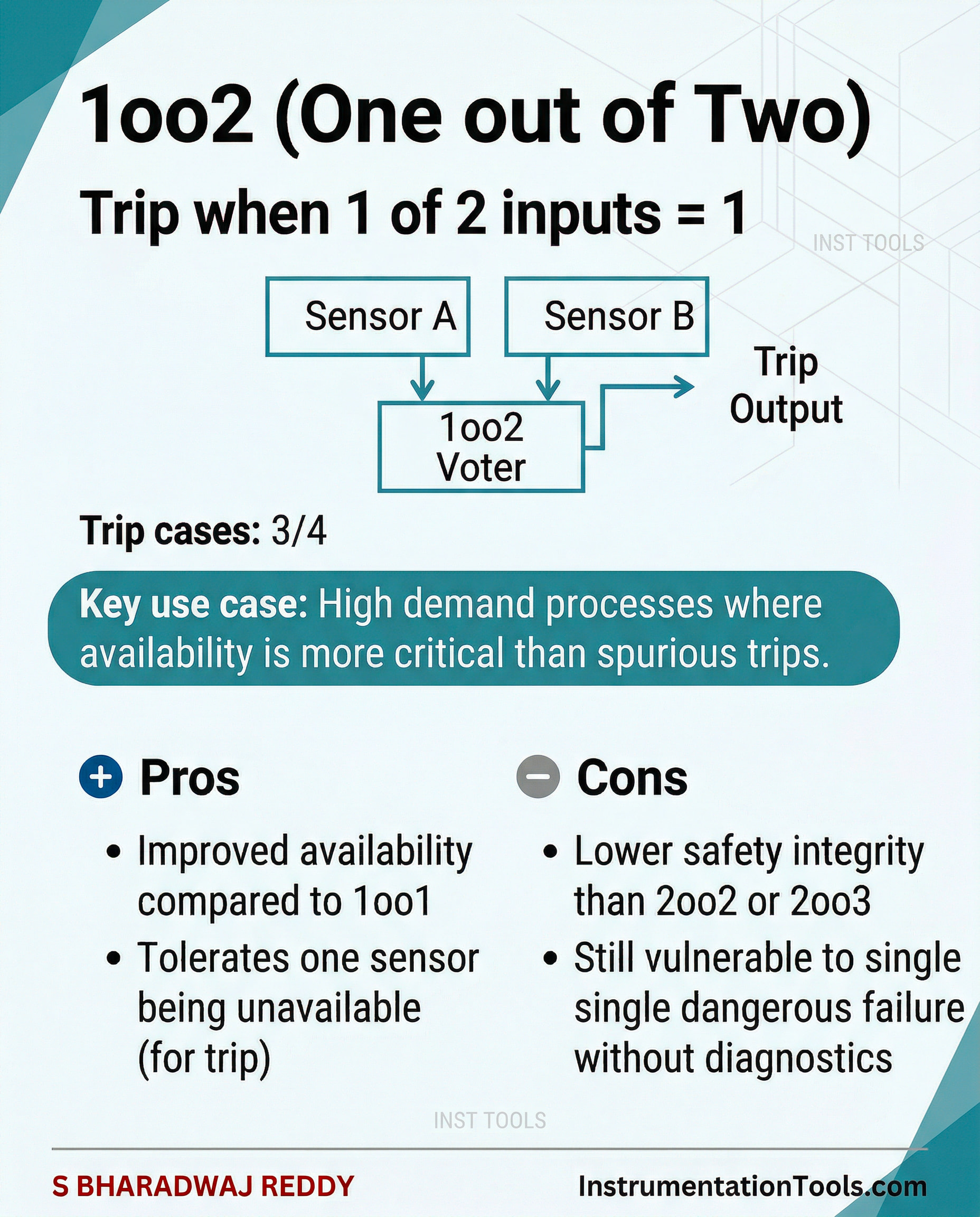
#1oo2 Voting Logic (One out of Two)
Trip occurs if any one of two sensors trips
Very sensitive protection
Higher nuisance trip possibility
 Detects hazards quickly
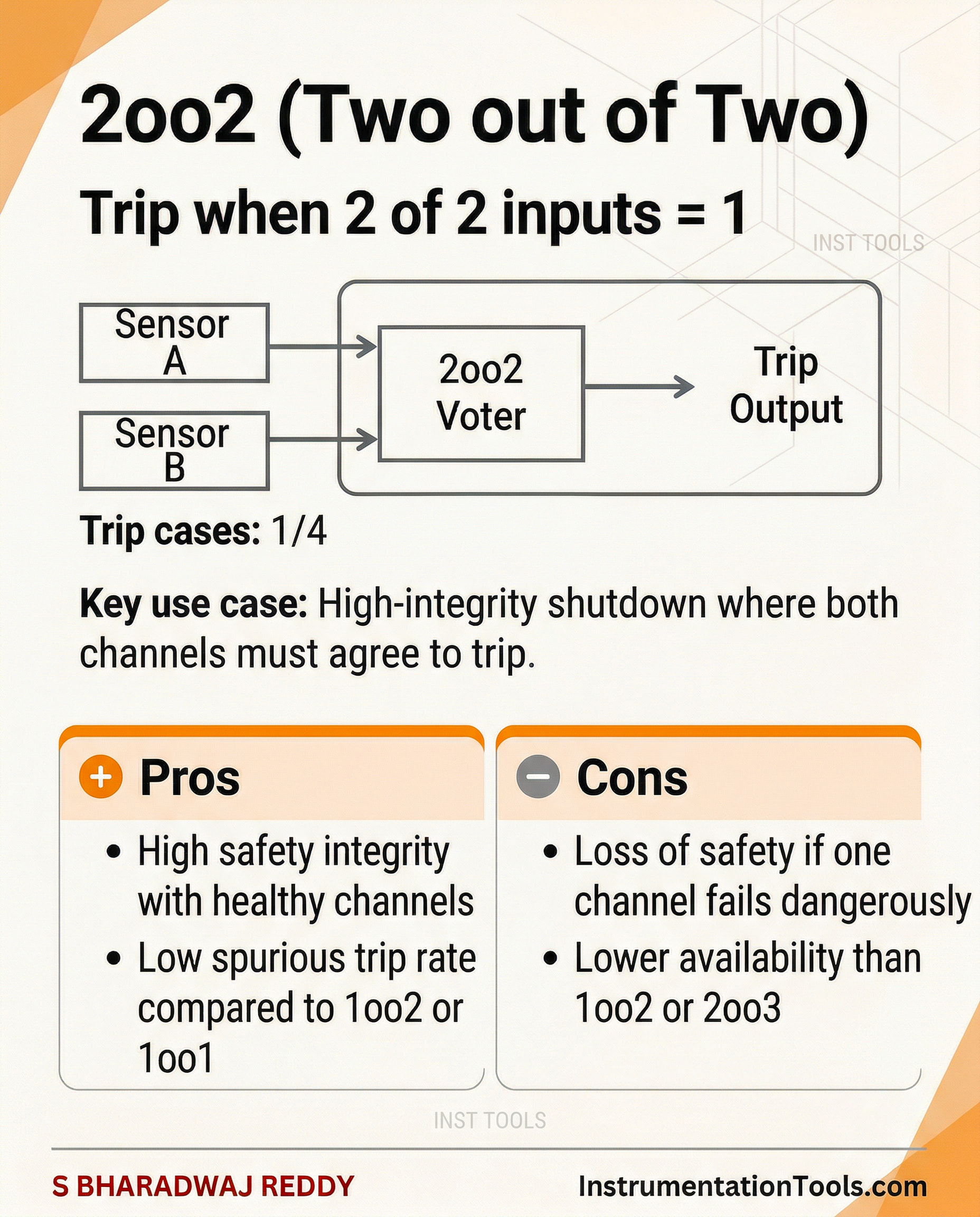
#2oo2 Voting Logic (Two out of Two)
Both sensors must trip
 Reduces false trips
 More reliable decision
 Slightly slower protection
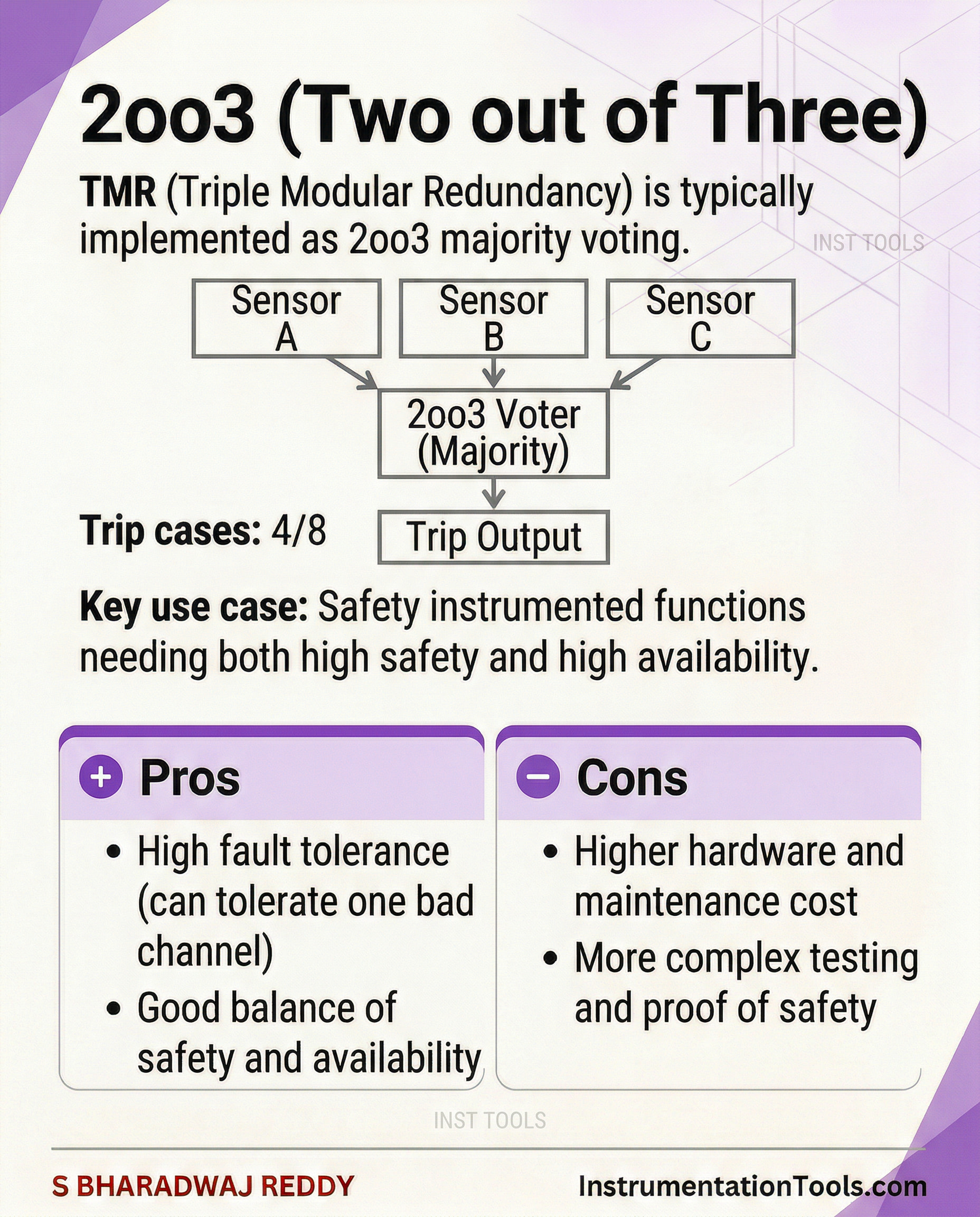
#2oo3 Voting Logic (Two out of Three)
Any two sensors out of three must trip
Best balance of safety & availability
Can tolerate one faulty sensor
 Widely used in critical processes
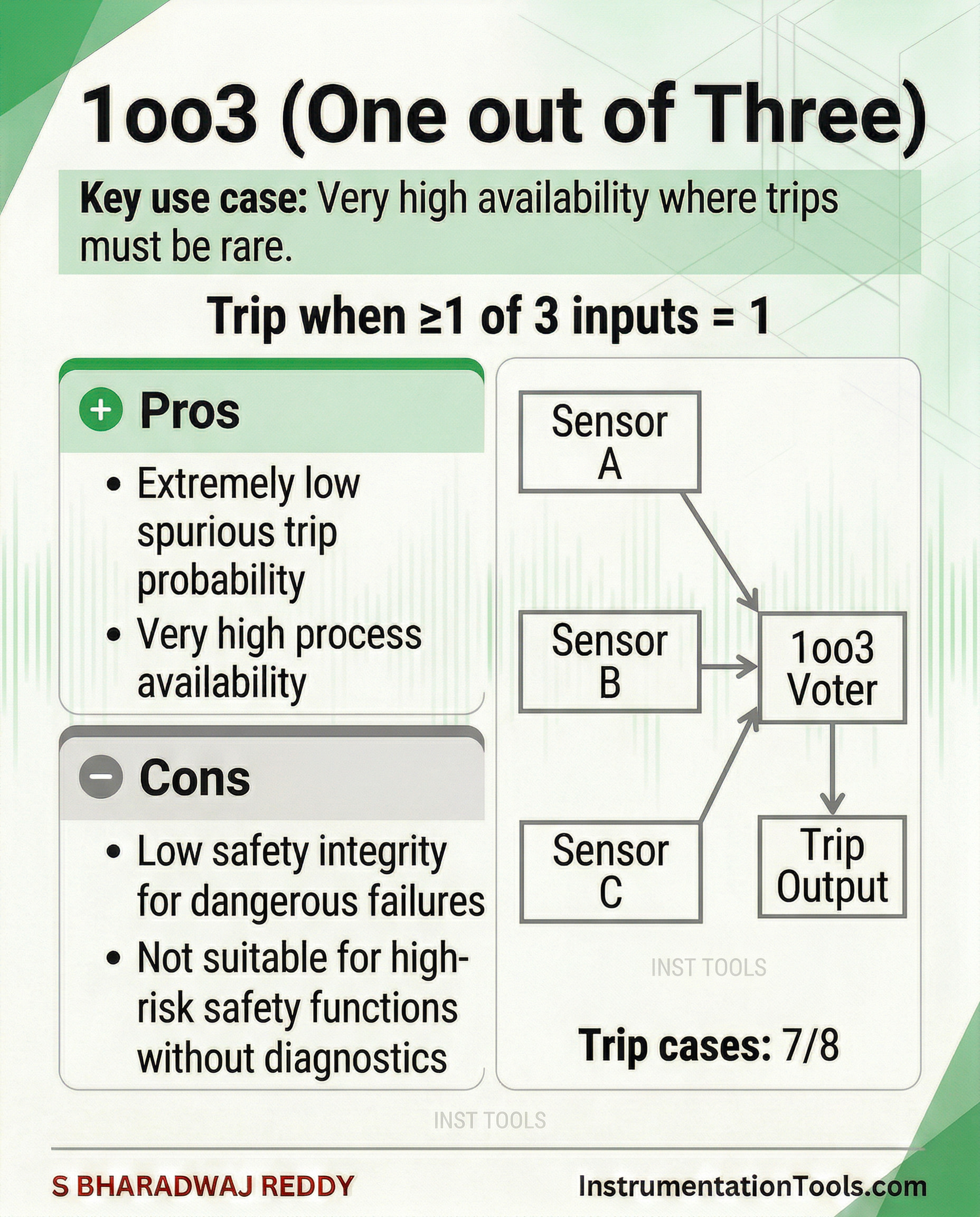
#1oo3 Voting Logic (One out of Three)
Trip occurs if any one of three sensors trips
Extremely sensitive
Fast hazard detection
Higher false trip probability
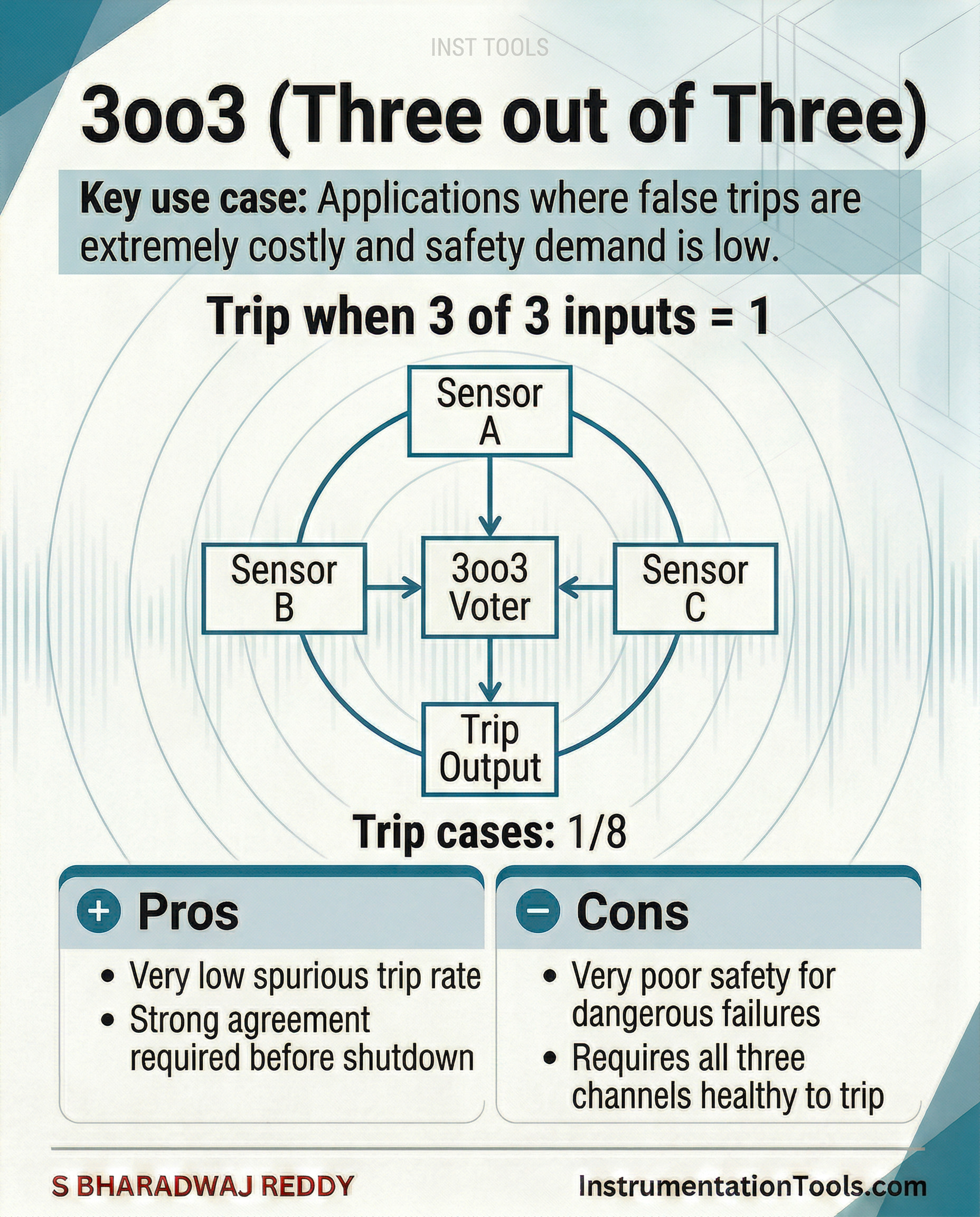
#3oo3 Voting Logic (Three out of Three)
All three sensors must trip
Very stable operation
Avoids nuisance trips
Lower safety sensitivity
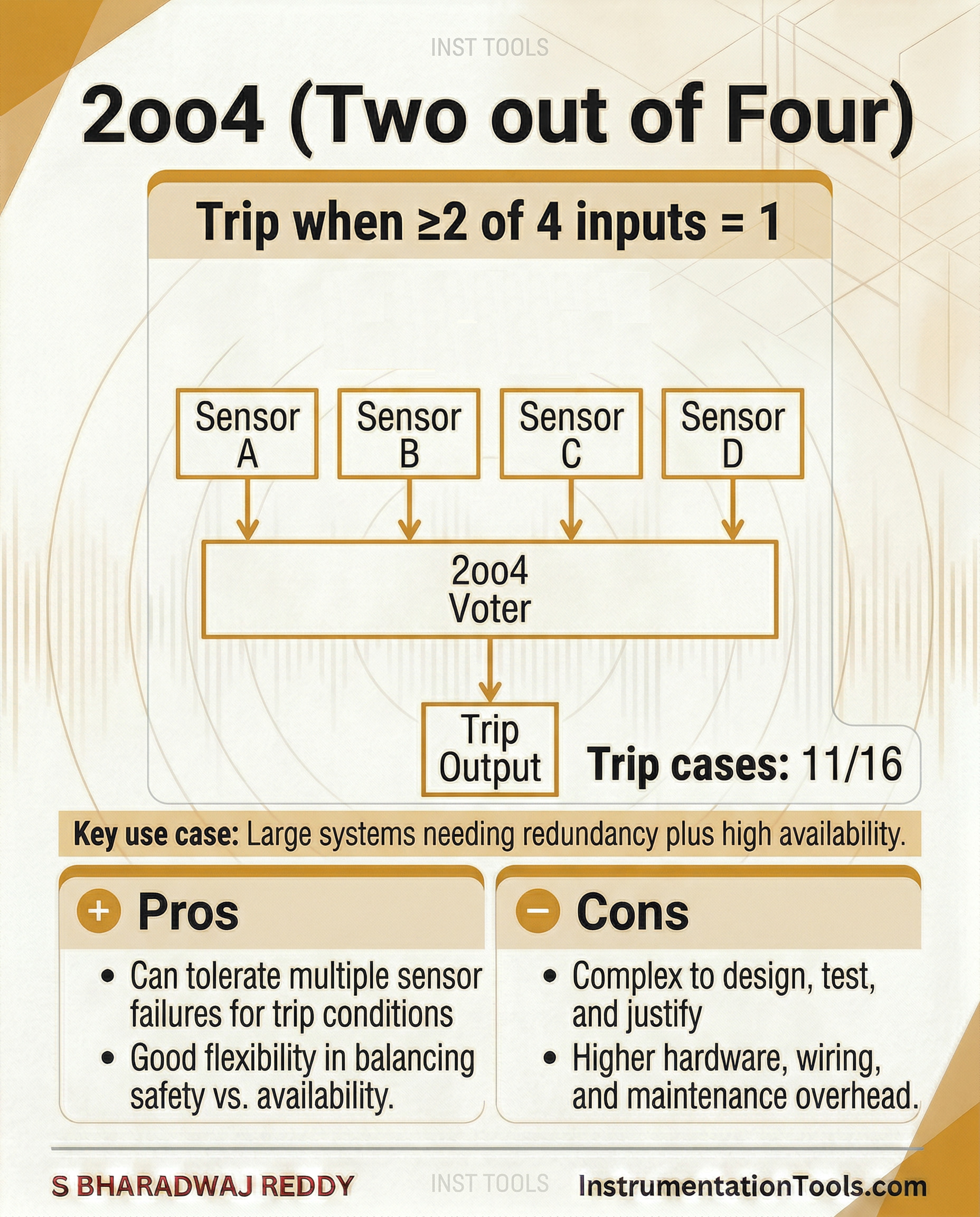
#2oo4 Voting Logic (Two out of Four)
Any two sensors out of four must trip
 Higher redundancy
Improved availability
Used in complex protection systems
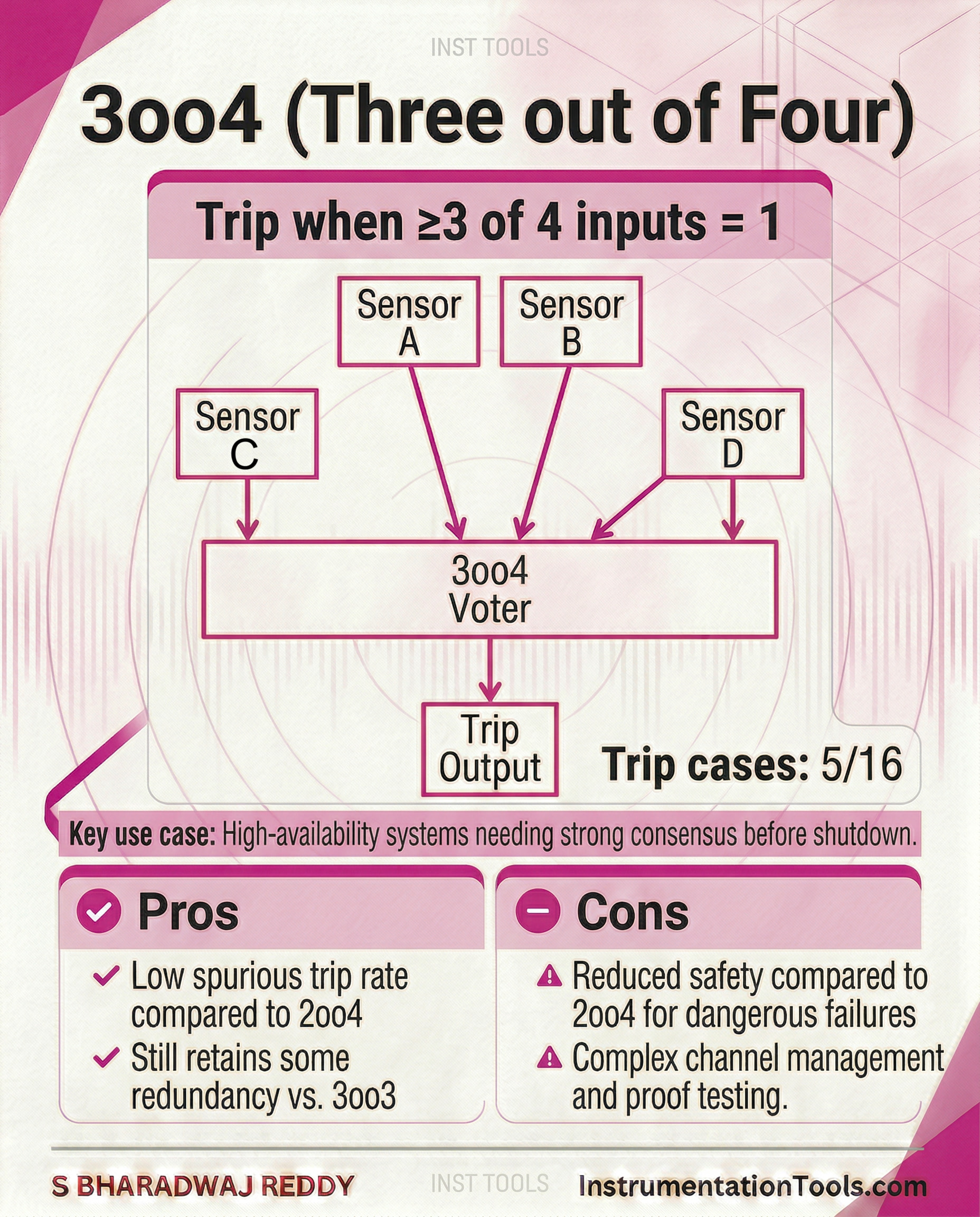
#3oo4 Voting Logic (Three out of Four)
Three sensors must agree
 Very high reliability
Fault tolerant
Used in high-risk facilities
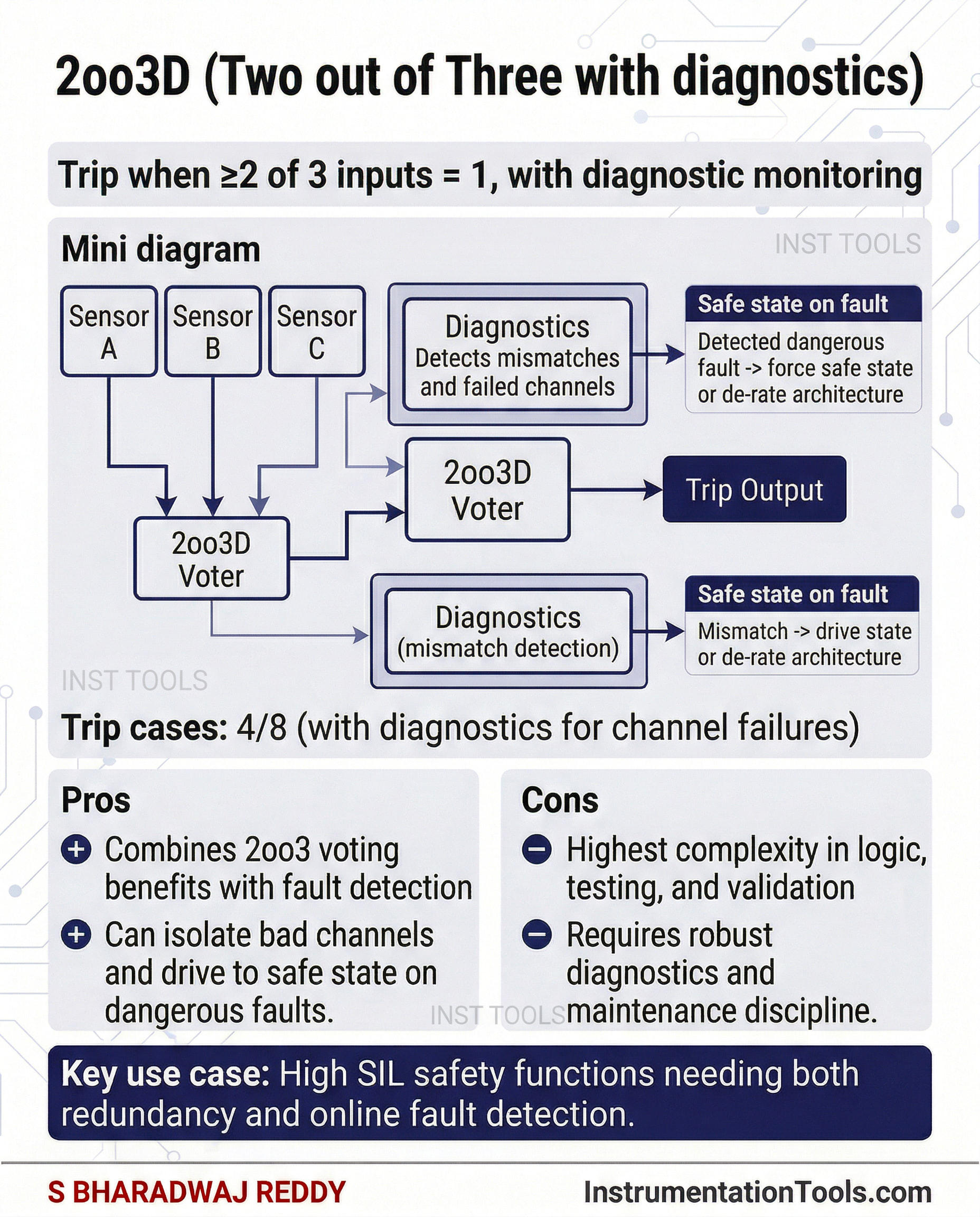
#2oo3D Voting Logic (Diagnostic Voting)
2 out of 3 with automatic diagnostics
 Detects faulty sensors
Maintains protection in degraded mode
 Used in modern SIS architectures
 Key Idea
Lower voting requirement → Faster protection
Higher voting requirement → Higher reliability
 Most commonly used in industry?
 2oo3 Voting Logic
Because it provides the best balance between safety and plant uptime.
#ProcessSafety #FunctionalSafety #Instrumentation #SIS Automation #ControlSystems #IndustrialSafety