 What is SIL (Safety Integrity Level)? — Explained Simply
In safety systems, the key question is:
 “How reliable is your protection?”
That’s exactly what SIL defines 
 What is SIL?
 Safety Integrity Level (SIL)
A measure of how reliably a safety system performs its function
Defined in IEC 61508 / IEC 61511
 Simple idea
SIL tells you the probability that a safety function will fail when needed
Lower failure probability = Higher SIL
 SIL Levels
 SIL 1 → Basic risk reduction
 SIL 2 → Medium risk reduction
 SIL 3 → High risk reduction
 (SIL 4 exists, but not used in typical process industries)
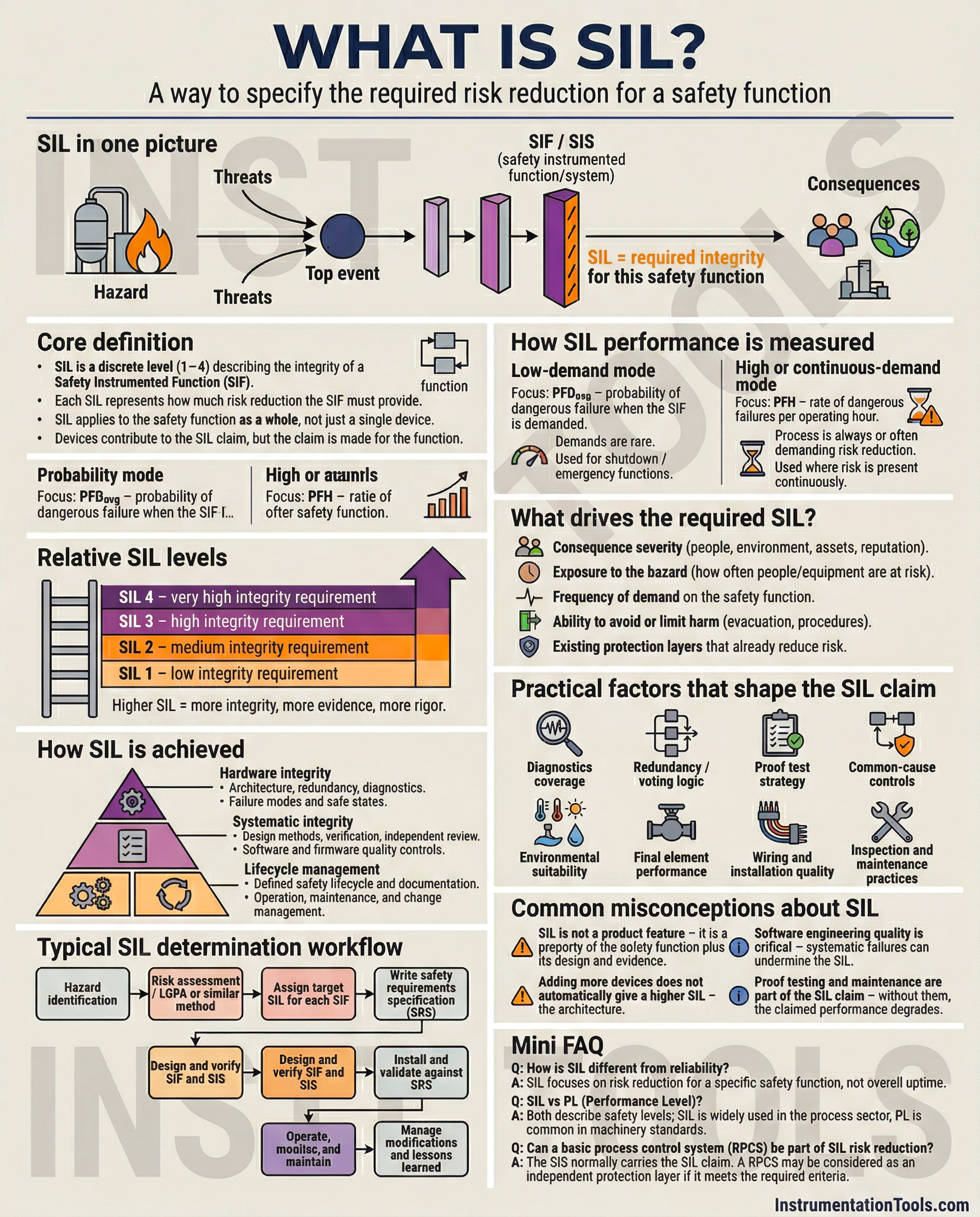
 Failure Probability (Low Demand Mode)
SIL 1 → 10⁻² to 10⁻¹
SIL 2 → 10⁻³ to 10⁻²
SIL 3 → 10⁻⁴ to 10⁻³
Smaller number = More reliable system
 Where SIL is used
 Emergency Shutdown Systems (ESD)
Burner Management Systems (BMS)
 Oil & Gas plants
Critical process protection systems
 How SIL is decided
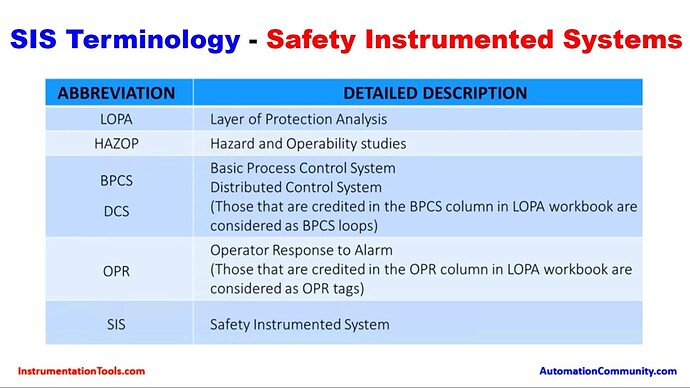
Based on risk assessment (HAZOP / LOPA)
Not chosen randomly
WATCH VIDEO:
Important
 Higher SIL is not always better
 Correct SIL = Right balance of safety & cost
 Simple understanding
SIL = Confidence level that your safety system will work when required
#FunctionalSafety #SIL #ProcessSafety #Instrumentation Automation #ControlSystems #Engineering #IndustrialAutomation #IEC61511 #SafetyEngineering 