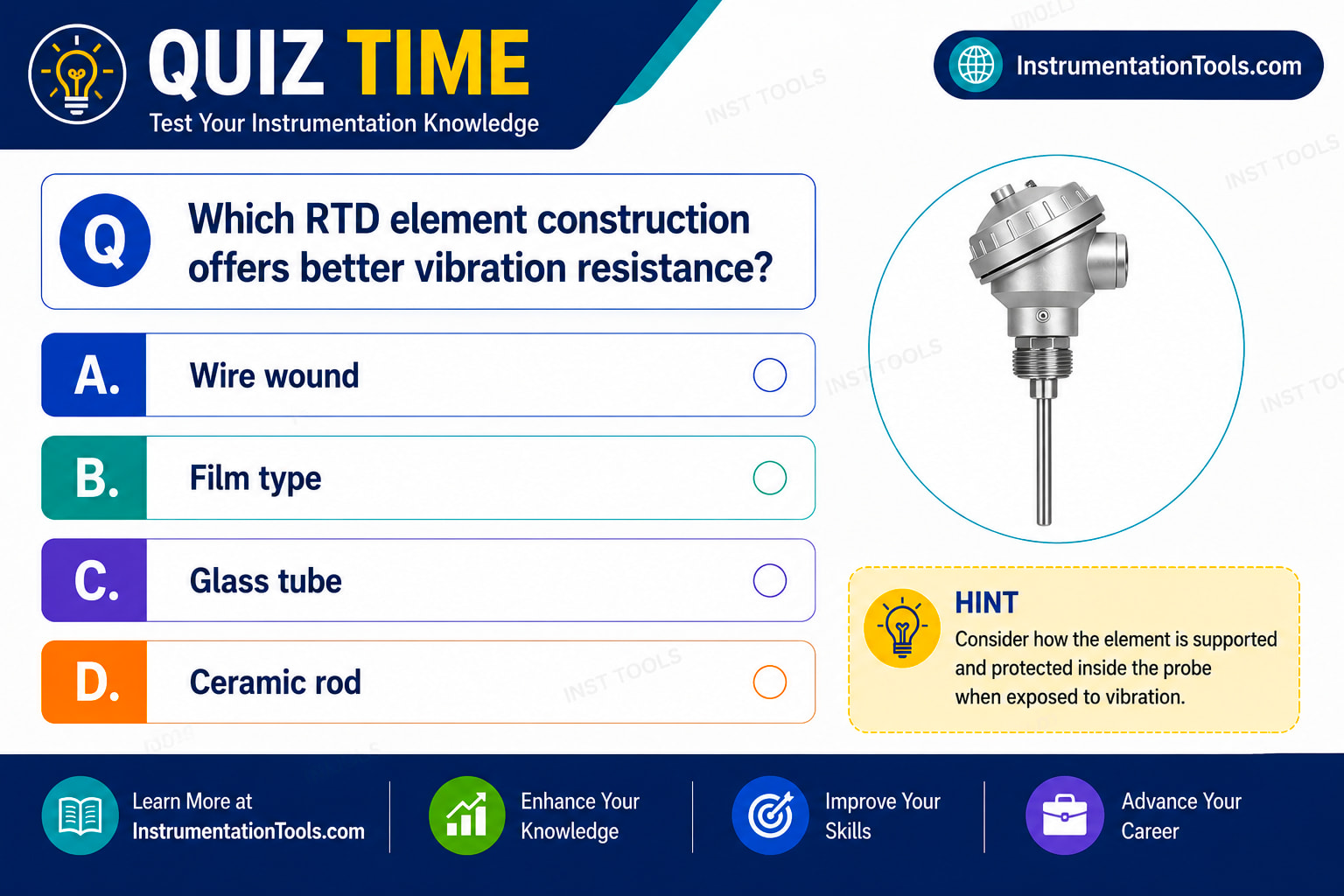
Which RTD element construction offers better vibration resistance?
A. Wire wound
B. Film type
C. Glass tube
D. Ceramic rod
View Answer
Answer: B
Explanation:
Film-type RTDs generally offer better vibration resistance than traditional wire-wound RTDs.
In a film RTD, a very thin layer of platinum is deposited onto a ceramic substrate and protected with a coating. This compact construction makes the sensing element more resistant to mechanical shock and vibration.
Comparison of RTD Constructions
Wire-Wound RTD
- Platinum wire wound around a core
- Very high accuracy and stability
- More sensitive to vibration and mechanical stress
- Common in laboratory and precision applications
Film-Type RTD
- Thin platinum film deposited on ceramic substrate
- Excellent vibration resistance
- Faster response time
- Smaller size
- Widely used in industrial applications
Glass Tube
- Not a common industrial RTD element construction
- Mainly used for protection or special designs
Ceramic Rod
- Used as a support structure in some RTDs
- Not typically considered a separate RTD element type
Because of its rugged construction and superior resistance to mechanical vibration, Film Type RTDs are often preferred in applications involving motors, compressors, pumps, turbines, and other vibrating equipment.
Therefore, Option B (Film type) is the correct answer. 