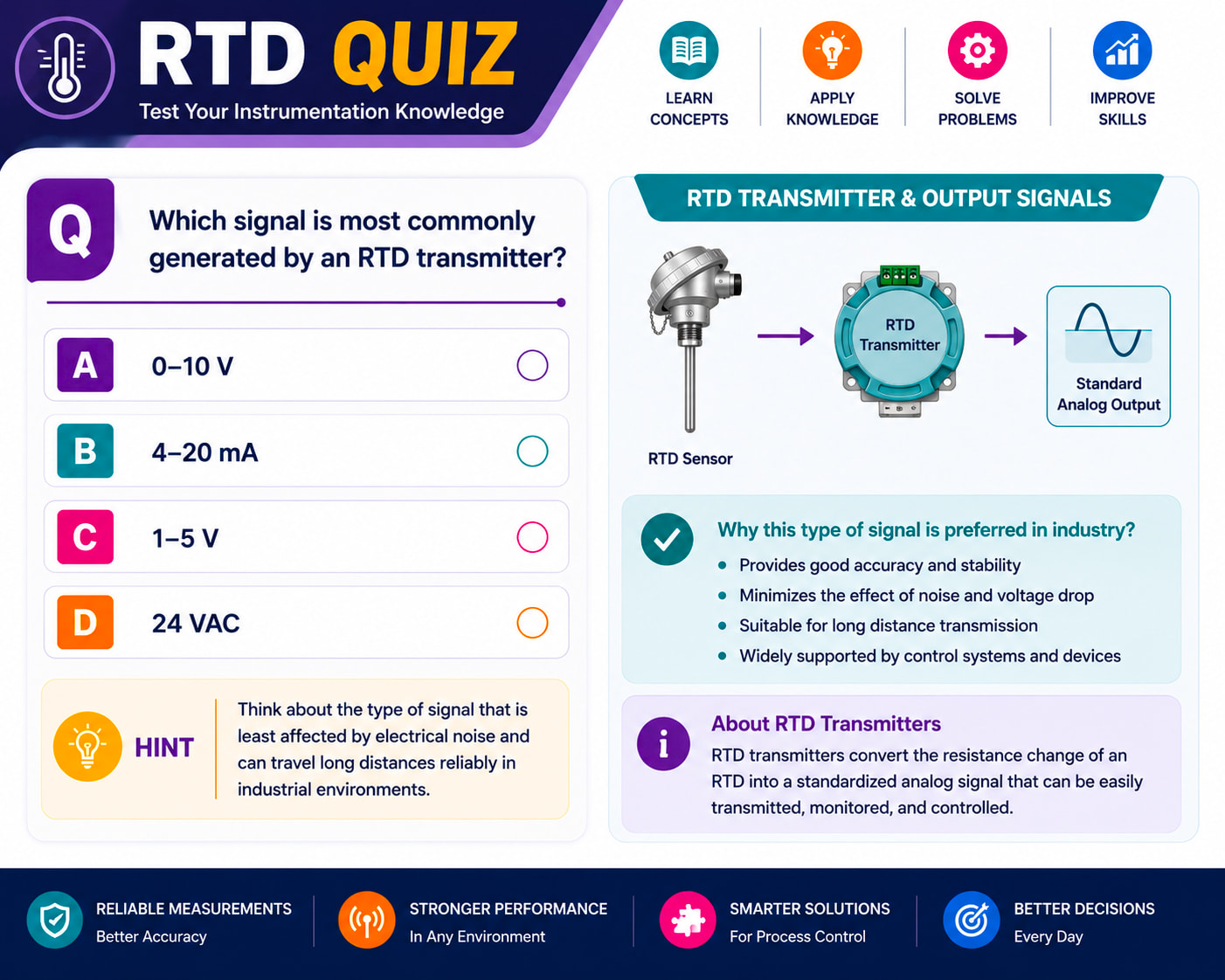
Which signal is most commonly generated by an RTD transmitter?
A. 0–10 V
B. 4–20 mA
C. 1–5 V
D. 24 VAC
View Answer
Answer: B
Explanation:
An RTD transmitter converts the resistance signal from the RTD sensor into a standardized industrial signal for transmission to PLCs, DCSs, SCADA systems, and indicators.
The most commonly generated output signal is:
 4–20 mA
Why 4–20 mA is Preferred
- Excellent noise immunity
- Suitable for long cable runs
- Easy fault detection (live zero at 4 mA)
- Industry-standard analog signal
- Compatible with most PLC and DCS analog inputs
Typical Conversion Example
- 0°C → 4 mA
- 50°C → 8 mA
- 100°C → 12 mA
- 150°C → 16 mA
- 200°C → 20 mA
Why the Other Options Are Incorrect
0–10 V
- Used in some control systems and HVAC applications
- Less common in industrial process plants
1–5 V
- Can be derived from a 4–20 mA signal using a 250 Ω resistor
- Not the most common direct transmitter output
24 VAC
- A power supply voltage
- Not a measurement signal generated by an RTD transmitter
Because of its reliability, noise resistance, and universal acceptance in process industries, 4–20 mA is the most common output signal generated by an RTD transmitter.
Therefore, Option B (4–20 mA) is the correct answer.